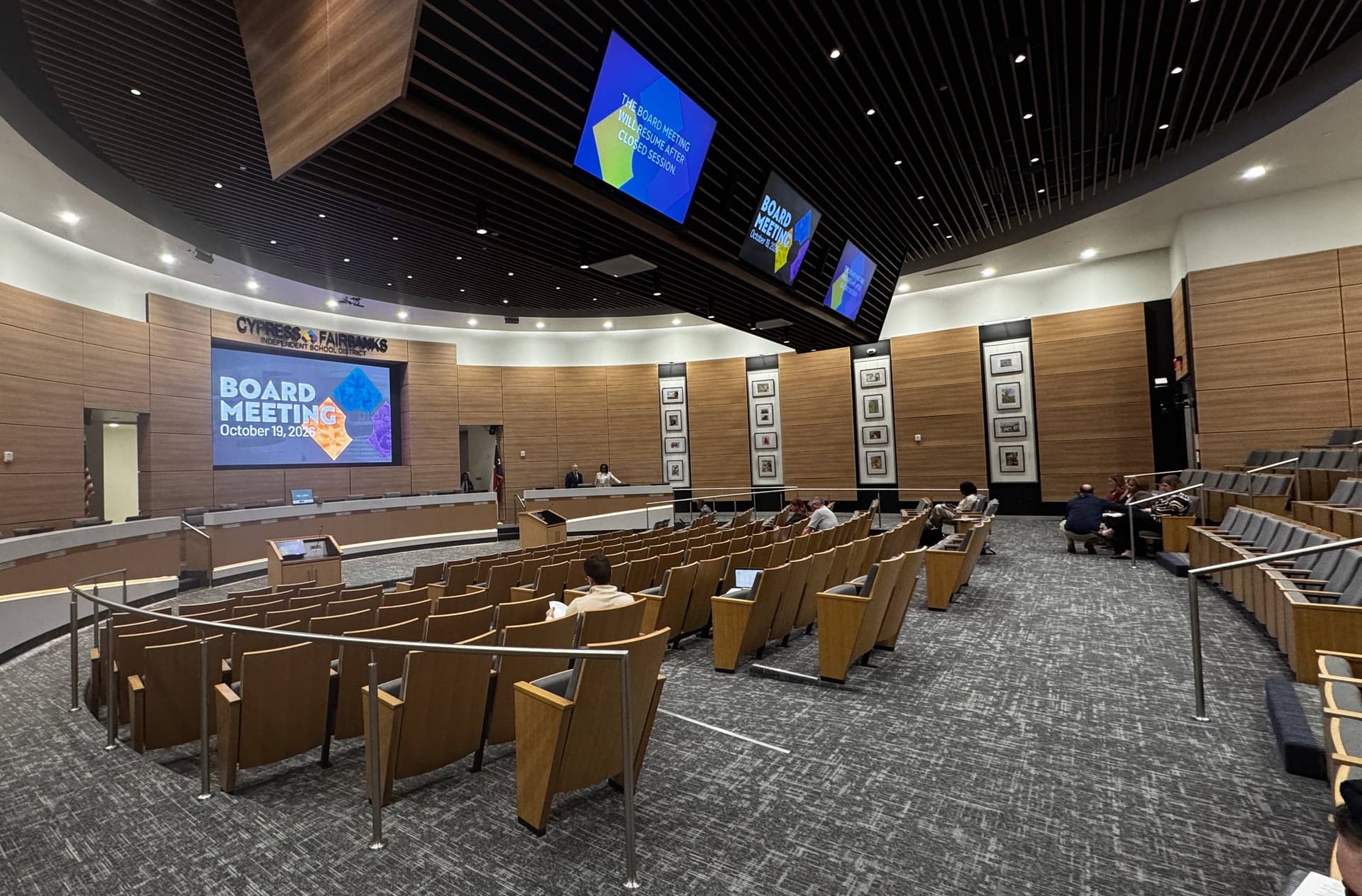
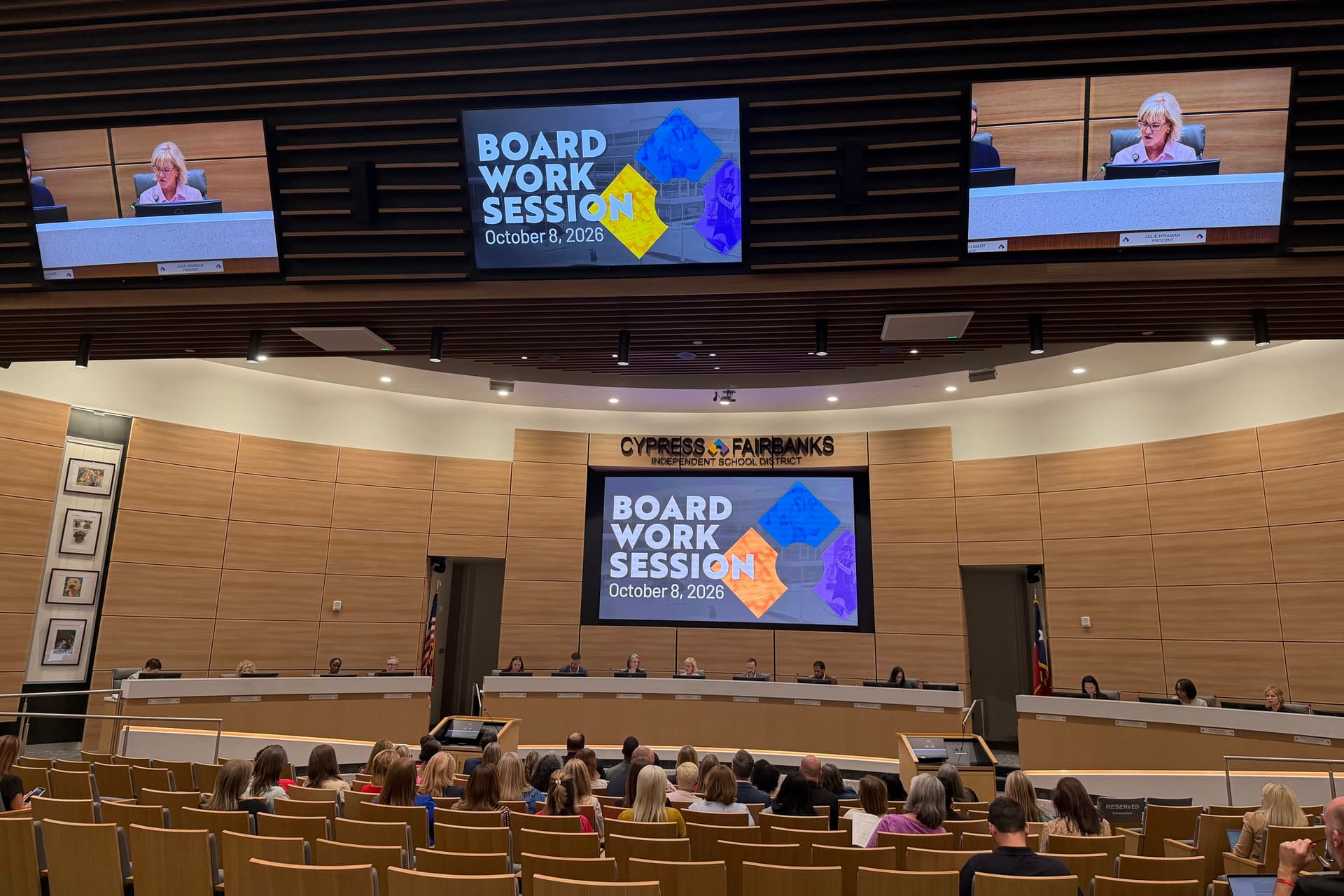
Preliminary budget projections show Cy-Fair ISD could end fiscal year 2025-26 with a shortfall of approximately $33.7 million, according to a March 2 presentation to the board of trustees.
The discussion marks the start of monthly finance updates from the administration in preparation for the district’s FY 2026-27 budget adoption in June.
The big picture
While the projected shortfall is less than the initial $45.5 million shortfall shared in June 2025, officials said CFISD still faces challenges related to enrollment and limited state funding.
According to the presentation, the reduced shortfall is largely due to ongoing results of property value audits from the Texas Comptroller’s Office, which allow school districts to protest the total taxable value of all property in their boundaries—similar to a homeowner’s protest.
Chief Financial Officer Karen Smith said the deficit will likely fluctuate as the district receives more information. CFISD is on track to conclude the fiscal year with about five months of fund balance if the deficit holds steady at approximately $33 million, she said.
Smith said factors that may increase the shortfall include dips in average daily attendance during the spring semester, unfilled positions and a reduction in federal reimbursements for school-based health services. On the other hand, the shortfall could also decrease further pending potential interest income and FEMA reimbursements, she said.
Zooming in
CFISD gained about $62.5 million, or $584 per student, in state funding for FY 2025-26 as a result of House Bill 2, a law from the 89th Texas legislative session that increased funding for public schools by $8.4 billion.
However, Smith said some of the funding was restricted to specific areas of district operations, such as the teacher retention and early education allotments. After accounting for those, CFISD was left with approximately $23.5 million in flexible dollars from HB 2.
“Although the district is grateful for the additional funding, districts are still experiencing financial difficulty and challenges due to the lack of funding since 2019, as well as inflation,” Smith told the board of trustees.
A regional comparison of school districts shows CFISD received the least amount of per-student funding before and after implementation of HB 2 compared to other Houston-area school districts with at least 10,000 enrolled students. Galena Park ISD near Channelview receives the most per-student funding in the area—$12,734 after HB 2—according to the data.
Explained
Smith said several factors contribute to CFISD’s low state aid, one being its 20% local optional homestead exemption, which is not accounted for in state funding. CFISD loses about $99 million in property tax revenue by offering the exemption, per the district’s website.
Additionally, enrollment is down an additional 2,000 students than what was accounted for in the FY 2025-26 budget, equivalent to a $13 million reduction in state funding.
CFISD has been able to keep its administrative ratio low compared to neighboring school districts, per the presentation, meaning administrative expenses make up a smaller portion of total annual expenditures. However, officials said maintaining the low ratio comes at a cost to staff.
“The job doesn’t go away, there’s just less people to do that job, so they’re worked harder,” Superintendent Doug Killian said during the board meeting. “That’s both at the campus level and at the central office level.”
Going forward
CFISD’s administration will continue to analyze budget projections ahead of FY 2026-27, with the next update expected to be presented to trustees in April. The new fiscal year begins July 1.
A special-called budget workshop is scheduled for May 21, and the board will adopt the new budget in June, Smith said.