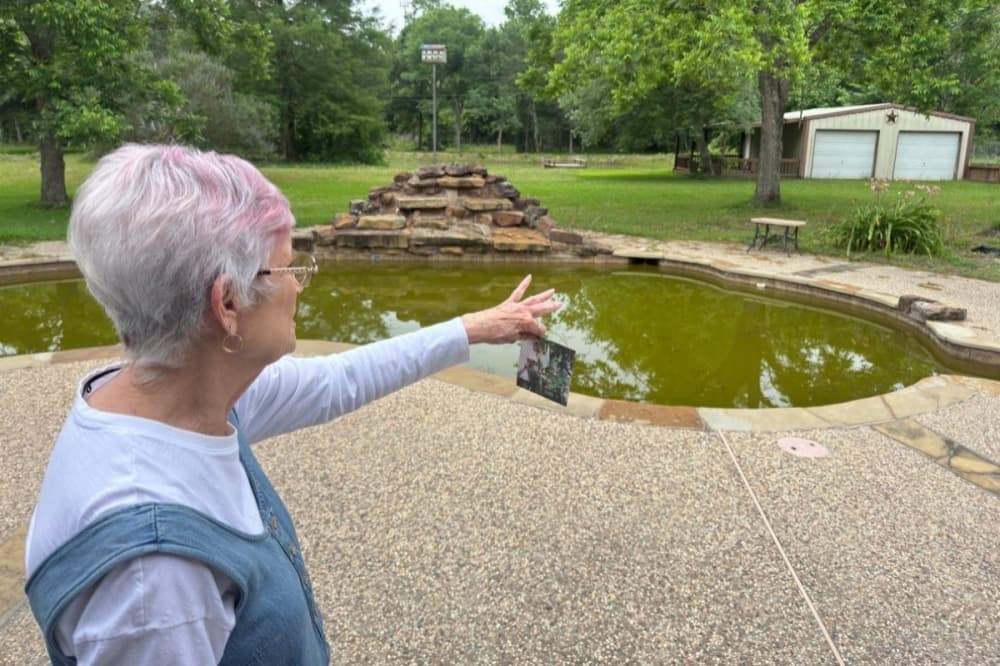
Kathleen Adams used to call her home her “forever.” The Conroe-area property had room for reunions, a pool and a 1,400-square-foot porch. Now, much of her life is boxed upstairs.
After repeated floods, she said she watches the weather, tracks river levels—and waits for a buyout process that can take years.
“I love it here,” Adams said. “I have so many mixed emotions about leaving it, but I can’t stay.”
Federal Emergency Management Agency flood maps, insurance rules and federal grant programs can shape what happens after the water leaves. County data shows 144 homes have been bought out through six mitigation programs to date.
For homeowners, the question isn’t whether it’ll flood again. It’s what they can afford to do next.
The big picture
A FEMA flood map—which outlines the areas within flood zones—does more than show where water may go.
In Montgomery County, it can affect whether a homeowner needs flood insurance, what permits are required after a storm and how expensive it may be to rebuild, officials said.
Montgomery County requires permits for development or work in the 100-year floodplain, and post-flood repairs in floodplain or floodway areas can trigger compliance requirements, said Morgan Lumbley, disaster recovery manager with the Montgomery County Office of Homeland Security and Emergency Management.
FEMA defines a Special Flood Hazard Area—or high-risk A or V zones—as land that has a 1% annual chance of flooding. County guidance states homes in high-risk A or V zones with federally backed mortgages must carry flood insurance.
A floodway is more restrictive. FEMA defines it as the river channel and nearby land that must stay open to carry base floodwaters.
However, a map is not a guarantee that a home won’t flood. County recovery staff said residents homes often flood even when a map doesn’t show them in a floodplain.
Lumbley said residents have told her on multiple occasions that they are not labeled in the floodplain but still experience flooding.
“Anywhere can flood at any time,” Lumbley said. “Homeowners need to take steps to protect themselves at all costs, regardless of where their property falls on a map.”
For Adams, the risk became impossible to ignore. She views her only option as Montgomery County buying out her property.
“You start paying attention when it’s sitting at your front door,” Adams said. “You have to.”
A closer look
Data shows that since 2017, the county has bought out 144 homes—87 in Precinct 4. The Conroe-area neighborhood River Plantation in Precinct 2 has also seen sustained buyout activity.
Lumbley said east Montgomery County has been a focus in recent years, and newer areas saw increased activity after 2024.
In January and May of 2024, parts of the county flooded twice.
“It’s the little things I’ve lost through life that I’ll never be able to replace,” Adams said.
Why it matters
Lumbley said the full process typically takes between 2 1/2 and three years, depending on the federal funding source. Once funding reaches the county and homeowners stay engaged, she said, closings can move in 60-90 days.
But need outpaces availability. About 100 people have called asking for a buyout, Lumbley said.
“We have zero control as to how long things sit at the federal and state level,” Lumbley said.
How it works
Two main federal programs fund property buyouts, and each has its own rules.
The Flood Mitigation Assistance grant targets homes with “repetitive loss” or “severe repetitive loss” designations, per documents—meaning multiple significant claims have been filed through the National Flood Insurance Program. An active NFIP policy is needed for eligibility.
NFIP insurance cost Adams nearly $2,400 last year—and it keeps climbing, she said. Without it, she wouldn’t qualify for a buyout.
The second, Community Development Block Grant-Disaster Recovery program, is tied to specific storms.
The years in between a buyout can still bring repair bills, as homes, if not purchased, may have to become compliant with regulations, Lumbley said.
Houston Association of Realtors Chair Theresa Hill said buyers should get flood insurance quotes early in the homebuying process, since rising insurance costs can significantly affect a home’s overall monthly payment.
Before you go
For homeowners in flood-prone areas, Lumbley said documentation matters.
Residents should save photos, repair receipts, insurance claims, FEMA documents, Small Business Administration Disaster loan information and anything tied to storm damage. Lumbley said to also keep digital copies and store records somewhere outside the home.
“You are not a number, or a file. You are a person,” Lumbley said. “At the end of the day, we still have to follow the program and rules and guidelines, but we want you to feel like you are heard, and we try to look at all different aspects to make sure we are sending you down the right path, or open up other options if they exist.”
If a buyout opportunity opens years later, those records can help prove damage and keep the process moving.