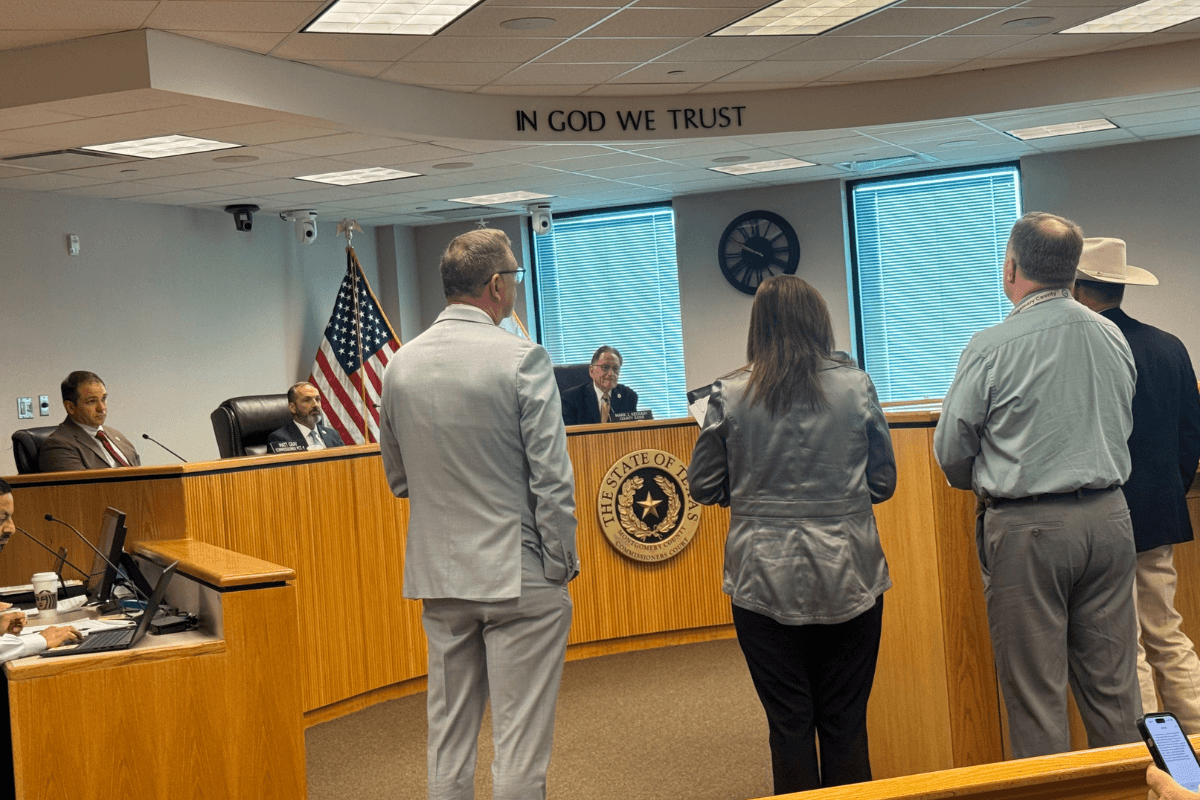
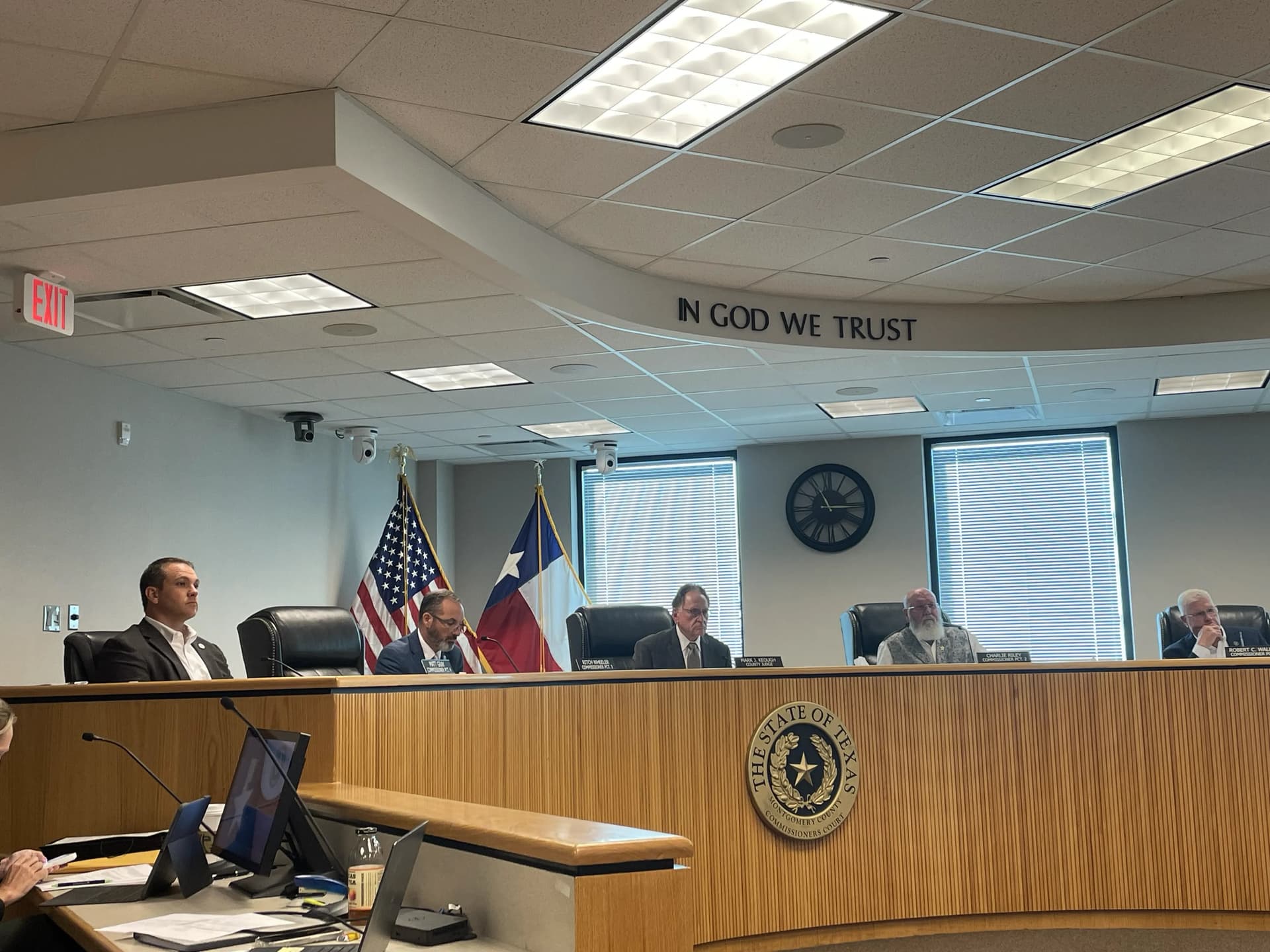
Montgomery County Commissioners Court on April 9 dug into what could come next for the Montgomery County Jail, as county leaders weighed options ranging from a new facility to an expansion of the existing jail.
Commissioners moved with contingencies to look into building a new jail, and discussion began a deeper look at what officials said is becoming a more urgent issue as the county grows and the 40-year-old jail continues to age.
The gist
Sheriff Wesley Doolittle told commissioners the county has made short-term changes to ease crowding, including speeding up transfers to the Texas Department of Criminal Justice and temporarily housing inmates in Waller County. But he said those steps do not solve the county’s larger jail capacity and infrastructure problem.
“We are in real trouble here,” Doolittle said.
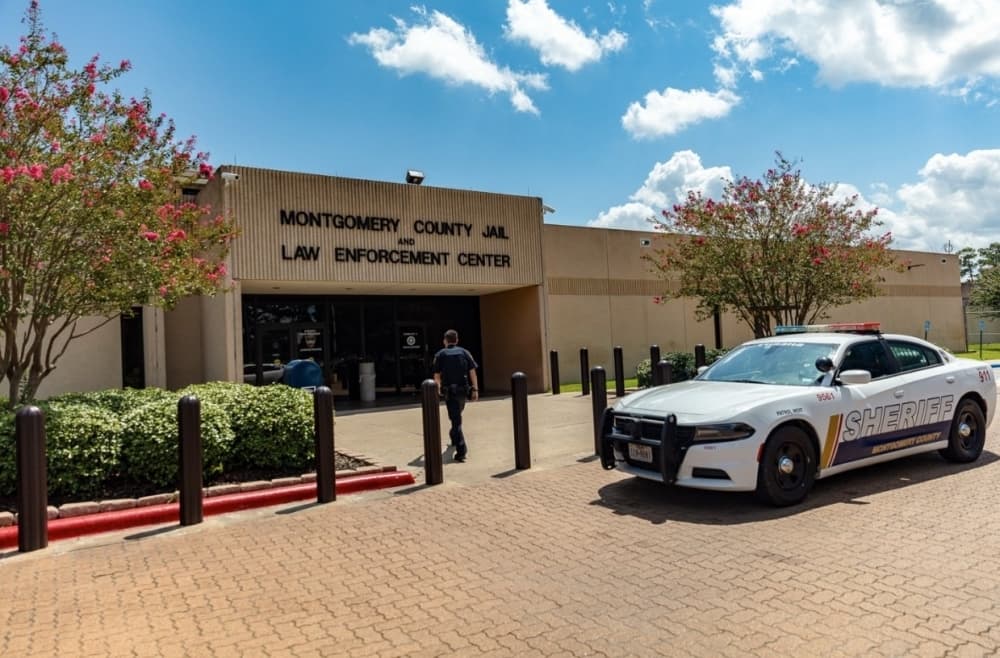
He said the current jail was originally built for about 380 inmates and now has 1,317 rated beds, including a 64-bed variance. He also said the county has already exceeded the building’s expected useful life and continues spending money just to keep it functioning.
“It’s costing the county money just to maintain what we have,” Doolittle said.
Why now
Representatives from engineering firm HDR told the court the county’s long-range jail planning shows a need for about 2,352 beds by 2040.
Consultants and county officials described the current jail as outdated and difficult to operate.
According to the presentation by HDR, the jail is nearing or at an unsustainable operating point, has poor sightlines that increase safety risks for staff and inmates and faces recurring structural, mechanical, electrical and plumbing issues.
Planner Paul Vlnar said the facility is in poor condition and called it a challenge both physically and operationally. He said the jail is a 24/7 operation that puts constant strain on building systems, unlike most other public buildings.
Commissioners also discussed how population growth is adding pressure. County Judge Mark Keough said Montgomery County could reach 1 million residents by 2030.
Doolittle said for every 1,000 residents, there are 2.2 inmates.
“We need to build for the future,” Precinct 1 Commissioner Robert Walker said.
What they’re saying
Doolittle said the county is no longer housing inmates in Waller County, after recent operational changes helped reduce some pressure at the jail. Budget Officer Amanda Carter told commissioners the county spent $257,250 on six months of Waller County invoices.
Still, Doolittle said the jail remains vulnerable. He said inmates sometimes stay in custody for years while awaiting trial, and the county also houses people who are not yet competent to stand trial.
He said about 65% of the jail population is made up of pretrial felony inmates.
“I think we would be negligent if we don’t prepare for what’s coming and what’s already here,” Doolittle said.
Precinct 4 Commissioner Matt Gray said the county may not be ready to build immediately, but it needs to choose a direction and be ready.
“We can pick a site, pick a path and have a shovel-ready project,” Gray said.
The options
Option A: New jail at 700 Hilbig Road
- Total project cost: about $976.8 million
- Would support a 2,352-bed facility
- Would include a fully modern detention center designed to current jail standards
- Would provide more long-term flexibility, improved staffing efficiency and avoid reliance on aging infrastructure, according to consultants
- Would take about 4 1/2 years to plan, design, construct and transition into the new facility
- Proposed site next to the Montgomery County Mental Health Facility
Option B: Expand the existing Montgomery County Jail
- Total project cost: about $705.3 million
- Would add 1,008 beds and bring total capacity to about 2,325 beds
- Would meet immediate bed needs and Texas Commission on Jail Standards requirements, according to consultants
- However, would require major investment into a building beyond its useful life, including an estimated $80 million-$100 million in repairs, according to the presentation
- Would take an estimated 8 1/2 year construction timeline
Option C: Private detention facility
- Appraised at $105 million
- Estimated sale price: $200 million-$250 million
- Estimated renovation costs: $60 million-$100 million
- Presentation materials said this option would be staff-intensive, require duplication of services such as medical and food service and still leave the county dependent on end-of-life infrastructure.
By the numbers
- 1,317 rated beds currently at the Montgomery County Jail, including a 64-bed variance
- 2,352 projected beds needed by 2040, according to the planning presentation
- $257,250 spent on six months of Waller County housing invoices
- 4 1/2 years estimated to complete a new jail under Option A
- 8 1/2 years estimated to complete an expansion of the current jail under Option B
How we got here
Doolittle's presentation traced the county’s jail planning back years. According to his presentation:
- In 2005, then Sheriff Tommy Gage commissioned a Texas Commission on Jail Standards study projecting a need for 2,352 beds by 2025.
- In 2008, the county built the Joe Corley Facility with 1,000 beds for $44 million.
- In 2013, the county sold the Joe Corley Facility for $65 million.
- Also in 2013, the county hired a firm to conduct another jail needs assessment after immediate overcrowding followed that sale.
- In 2014, that study found a minimum of 2,200 beds would be needed by 2032 and estimated a new jail at $202 million.
What’s next
The court also reviewed the financial scale of the options. Carter said a rough calculation for a bond to support Option A would have a tax impact of about 3.5 cents, or roughly $106, based on a 25-year projection.
Walker said the county should build for what it needs in the future, not just what it needs today.
“Build for what we need and plan for what’s to come,” Walker said. “We can’t let it go this long.”