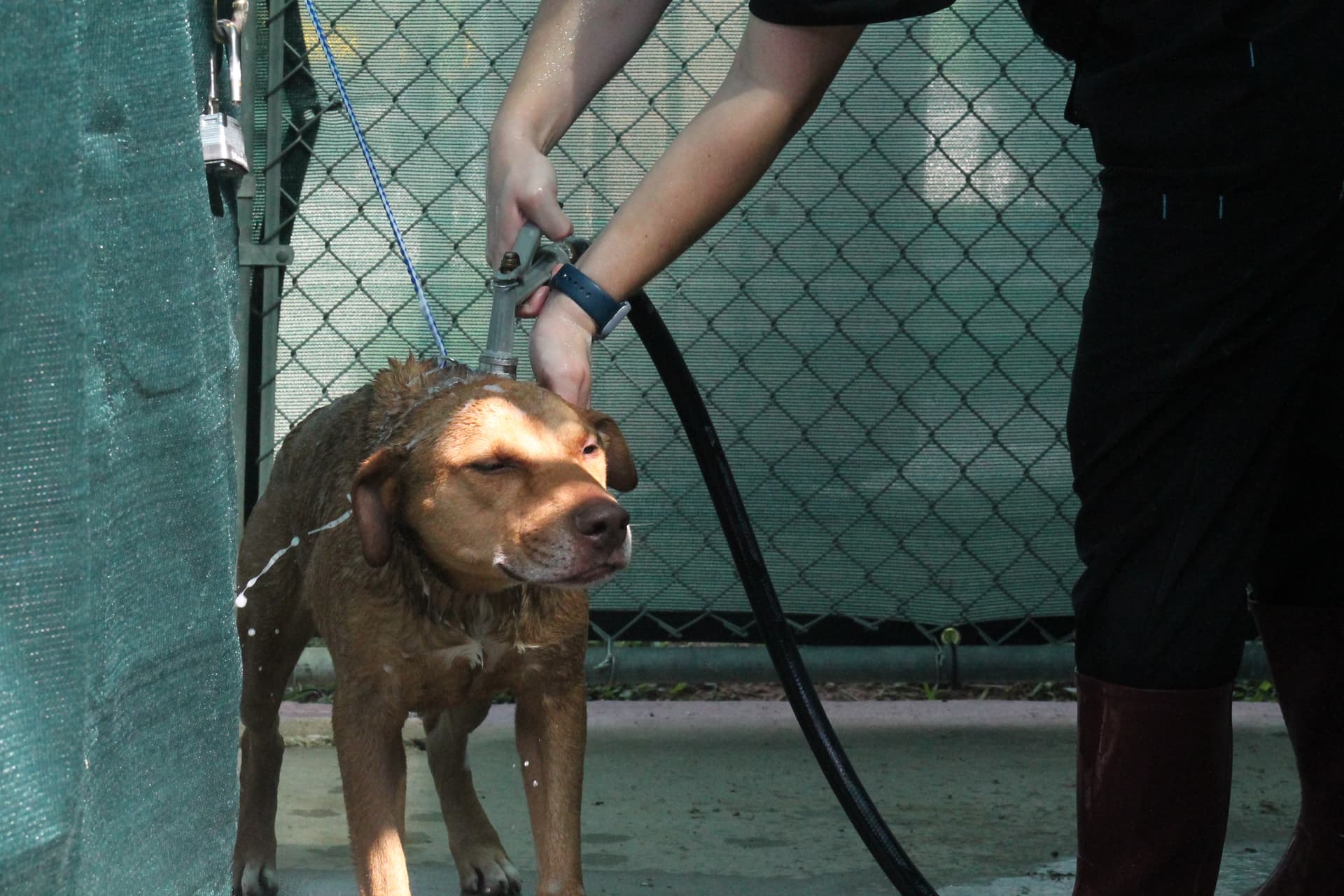
Nearly two years after the Conroe Police Department took control of the city animal shelter, officials said the operation has changed from moving animals through kennels to one focused on saving animals.
Two-minute impact
The city ended its contract with Care Corporation and assumed operations Sept. 20, 2024, after an investigation into the treatment of a dog named Casey. The shelter’s live release rate rose from 76.8% in 2024 to 92.5% in 2025, while euthanasia cases dropped from 805 animals to 168, data shows.
“There’s goals now,” Police Chief Jon Buckholtz said. “There’s a care plan for the animals and we’re seeing the successes month after month after month.”
Best Friends Animal Society, a charity organization, has since recognized Conroe as a no-kill shelter. Buckholtz said the designation is “an outward reflection of a plan that’s working,” rather than the reason employees do the work.
Council member Shana Arthur credited employees, volunteers, donors and rescue groups with helping the shelter improve.
“We have gone from asking what was wrong with our shelter to asking what more we can do for the animals in our care,” Arthur said.
Buckholtz hired Conroe Animal Shelter Operations Manager Lesa West in June, giving the shelter a new executive operations leader after two years under the police department’s purview.
A closer look
Intake fell from 3,330 animals in 2024 to 2,265 in 2025, partly because Huntsville opened a facility and stopped sending animals to Conroe, Animal Shelter manager Lesa West said. However, Conroe still receives animals from Willis and kennels remain full.
“Every animal that you see go out, we have just as many come in the same day,” West said.
Most animals arrive through animal control, West said. Intake also shifts with puppy and kitten seasons, which occur over the summer months.
The shelter prioritizes Conroe residents because taxpayers fund the operation. West said staff sometimes turn away animals brought from elsewhere.
“I’m going to give that animal as long as it needs,” West said.
Also of note
Recently added programs give dogs time away from their kennels and introduce them to potential adopters. Dog Days Out allows residents to take dogs out for several hours, while Paws Away Weekend runs from Friday through Sunday.
“Every time that we can get that animal out on a leash, or for a day out or for a weekend away, that’s more time that animal can be better socialized,” West said.
The shelter also formalized a foster program for animals needing medical care, socialization or a quieter place to recover. West wants a hospice foster option for seniors unlikely to be adopted.
“Maybe we can find them a soft place to land,” she said.
Volunteers and rescues remain vital. A core group of about 10 volunteers helps on weekdays, West said, while as many as 20 may visit each day on weekends.
“We try to service the citizens of Conroe,” she said. “That’s the taxpayer base that supports us.”
Fixing the gaps
Conroe budgets about $1.7 million for animal services, which helps fund 18 employees. West said she would like another veterinary technician and kennel technician.
“Less turnover means there’s less training,” Buckholtz said. “Having consistent staff is important.”
A climate-controlled mobile trailer and an X-ray machine are also new additions to the shelter’s equipment.
The shelter is also awaiting laboratory equipment, allowing more decisions to be made on-site. West said staff work with outside veterinarians when animals need specialized care.
Renovations are estimated to take six months and cost $428,750, West said. Funds for the renovations come from reserves.
Buckholtz said the existing design limits operations and the city may eventually need to enlarge or replace the facility as Conroe grows.
Upcoming shelter renovations include:
New indoor adoption visiting room
Secured outdoor play area with shade
Additional storage space
New employee bathroom
Stronger outdoor fencing
Lobby and office improvements
Possible kennel noise-reduction measures
What's next?
Buckholtz said animal services could eventually have its own executive leader role, although no timeline exists.
“My goal was to get it functional and responsible,” he said. “I think the next logical step is independent leadership.”
Additional goals of the shelter include:
Add an in-house veterinarian
Launch hospice fostering
Build partnerships with more rescue groups
Transport adoptable dogs to northern states for more opportunities