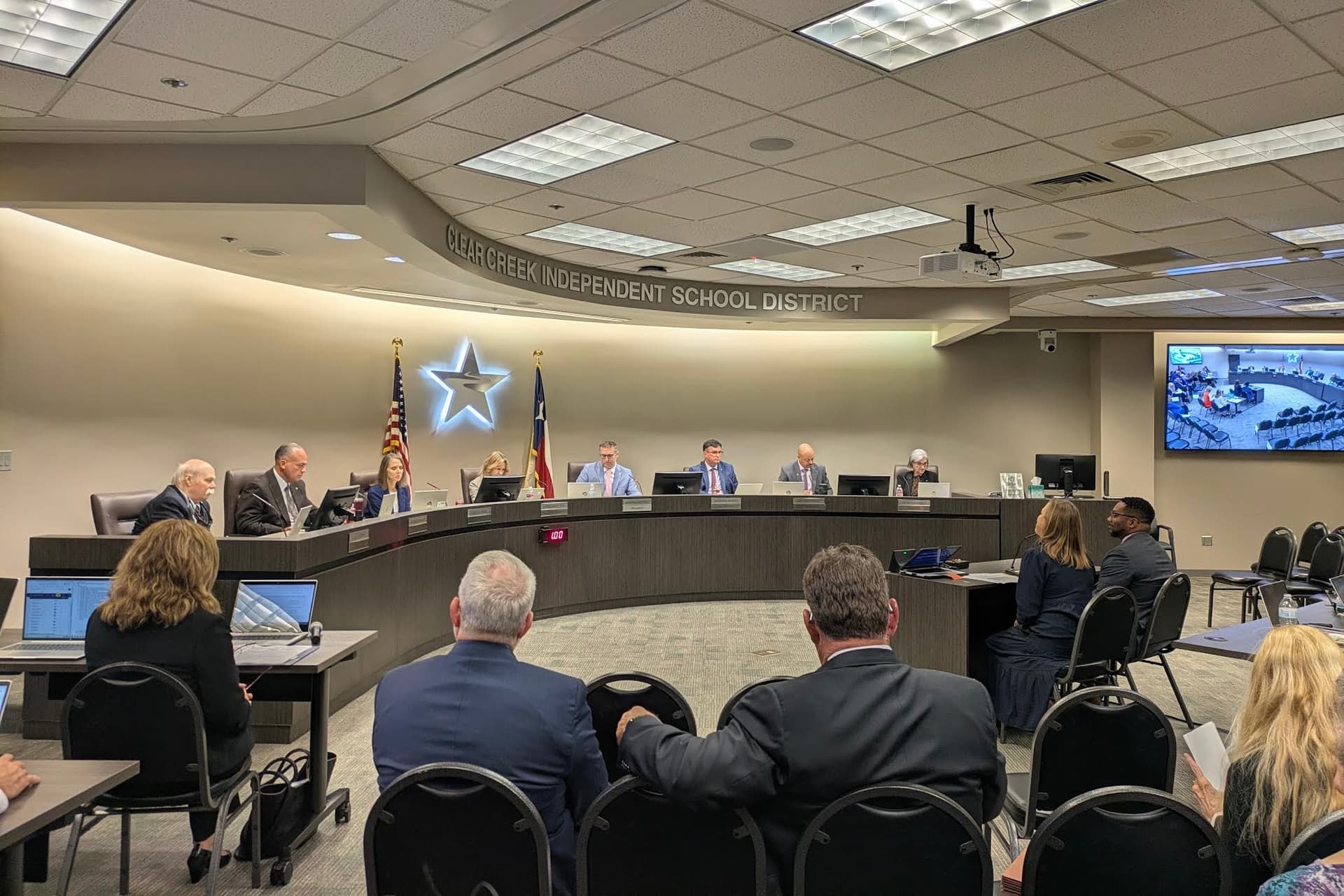
On Sept. 9, the Willis ISD board of trustees reviewed a presentation from Sue Clardy, WISD’s executive director of accountability, research and evaluations. The report focused on the Lone Star Governance program and the various educational standards the district met and failed to meet.
The breakdown
The Lone Star Governance program was included in House Bill 3, which the Texas Legislature passed in 2019. The purpose of the plan was for district school boards to create frameworks and use test scores to monitor and improve student performance and outcomes in key educational subjects.
Each year, WISD has a specific progress measure for student growth in key areas such as math, reading and SAT scores. Clardy said that the district improved its year-over-year scores in some areas but also missed the mark in other key subjects.
Early literacy was one of many subjects WISD set out to improve. WISD hopes to have 77% of third-grade students reach the “meets performance” level measured by the State of Texas Assessments of Academic Readiness (STAAR) by 2030.
The goal for this year was to have 58% of third-grade students at the “meets performance” level; however, the district only reached 46%.
“We did not meet this year's target, and that deserves our attention; more importantly, this is not simply a number on a graph,” Clardy said. “Third grade reading is an important indicator of whether students are developing the literacy foundation necessary for success in the content areas that follow.”
Along with early literacy, Clardy said the district failed to reach the internal goals in third-grade early math.
Items worth mentioning
Although it missed internal goals for key metrics, WISD did manage to exceed other important goals for 2026. The largest difference between the internal district goal and the actual results was for the second-grade Measures of Academic Progress (MAP) math test.
According to its website, MAP is a computer-adaptive academic assessment used by schools to measure students' learning levels and track their growth. The district's goal for this year was for 60% of second graders to meet the district standards; the actual result was 71%.
“This is significant," Clardy said. “We have evidence of strong growth in the early grades, but that growth is not yet translating into third grade STAAR outcomes at the level we need. This is a system question for us, not simply a third grade question. We need to understand the transition from early mathematical growth to demonstrated grade-level mastery.”
Another area where WISD saw growth was in college readiness among seniors. Goal 3 for WISD by 2026 was to have 23% of graduating seniors earn a College, Career, and Military Readiness (CCMR) point and demonstrate college readiness in math and English. The district managed to reach 26%.
The target for Goal 4 was for 11% of WISD graduating seniors to earn an industry-based certification, earn a CCMR point and demonstrate college readiness. A total of 16% of seniors in the district managed to meet this requirement.
Next steps
Looking to the future, Clardy said that she and the district will examine the results of the Lone Star Governance report and bring forward some revisions to the overall goals and plan at the meeting in October.
“Over the past year, we have learned more about our students, our data systems and the changes occurring with state and federal accountability,” Clardy said. “We have also continued our work with Lone Star Governance. In October, I will bring forward recommendations for revised and, where appropriate, new House Bill 3 goals and progress measures for the board to consider.”