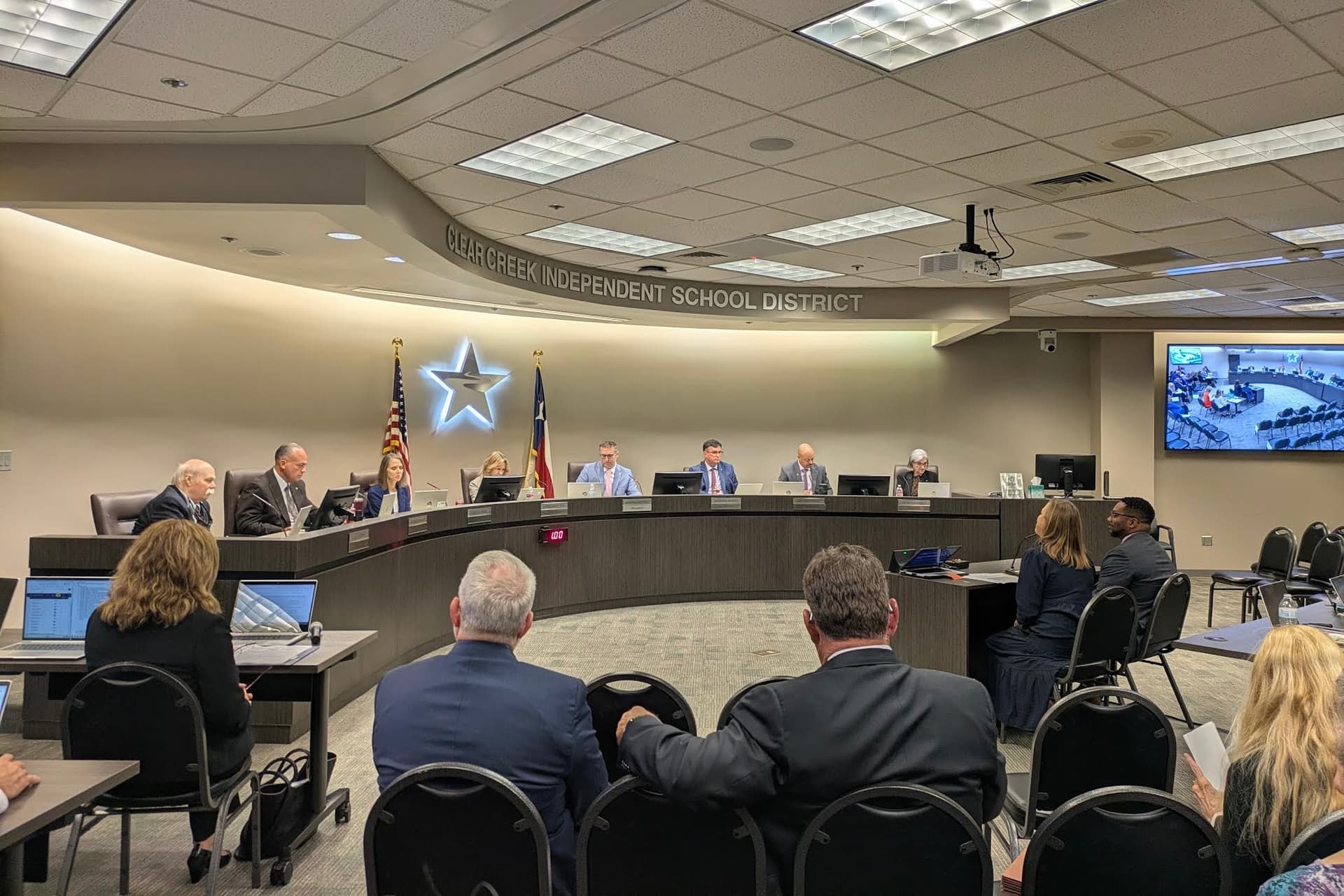
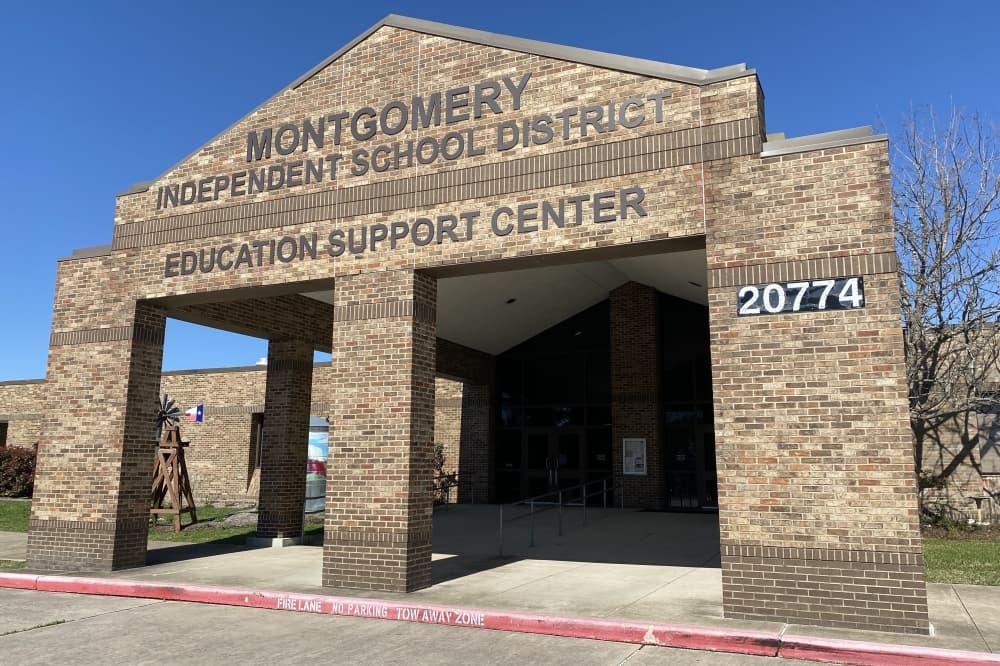
Montgomery ISD officials are rolling out new guidelines for faculty and students this 2026-27 school year in regards to generative artificial intelligence usage in and outside of the classroom, according to pending plans presented at the June 9 board of trustees special meeting.
The intended purpose of the AI guidelines overhaul is to expand students’ knowledge of the growing systems and encourage responsible usage, while at the same time holding parties accountable for mishandling of school-provided tools, MISD’s technology department staff said.
In a nutshell
Beginning this fall, MISD students will obtain access to AI-approved platforms through credentials provided by their respective schools, according to the showcased plans. The types of platforms and how much freedom the individual student has to use them will vary depending on their age and grade level.
Younger students, for example, will be introduced to generative AI only through guided group activities led by teachers, MISD officials explained. In this hands-off approach, students will learn about AI from afar by watching instructors as they navigate different systems.
Students in grades 3-5, middle school and high school are on track to possess more flexibility with using these tools on their own based on the available curriculum resources and the expectations established by teachers in the classroom. This means that AI usage will only be permitted as detailed by faculty for certain tasks and assignments, and not for every item of work that a student completes.
The outlook
MISD officials emphasized during the meeting that as generative AI becomes more prevalent in and outside the walls of academia, it is important that its institutions teach students how to use said tools responsibly and ethically.
By establishing the boundaries of this AI usage with a districtwide protocol, district officials said they believe that faculty will be able to better support their students’ educational needs.
However, teachers voiced several concerns about the guidelines, according to discussion at the meeting.
Another point of view
Many teachers within the district raised concerns about plagiarism occurring more frequently as a result of AI being permissible in certain instances, MISD officials said.
MISD’s technology department staff said the district plans to include clearly defined objectives, examples of AI plagiarism and examples of AI usage citations in its guidelines to counteract this potential problem. In situations that call for disciplinary action to be taken or grade penalization, teachers will be referred back to the grading criterion established by the student code of conduct.
MISD officials went on to say that the responsibility falls on teachers to review student work for plagiarism instead of relying solely on AI checkers, noting that those platforms can be inconsistent, inaccurate or biased.
To assist teachers with this, a portion of the pending guidelines have been specifically tailored for staff members to outline how they should approach their students if unapproved AI usage on assignments is suspected.
One additional safeguard already built into MISD’s school-provided AI tools is a nondeletable chat function, which allows instructors to see in real time what students have prompted AI to do when completing assignments.
Diving in deeper
As outlined by Texas compliance laws, the school district is required to comply with two separate forms of legislation regulating AI system deployment and development.
The first one is House Bill 149, aka the Texas Responsible Artificial Intelligence Governance Act, which targets the intentional misuse of AI platforms by requiring governmental entities like MISD to publicly disclose where, how and why AI is being used in their services. Gov. Greg Abbott signed the bill in June 2025, and it went into effect Jan. 1.
The second law, Senate Bill 1964, mandates that heightened scrutiny and human oversight be employed over AI systems used by those same entities to mitigate algorithmic risks and protect users’ data. This framework, also signed by Abbott in June 2025, became effective in September 2025.
In adhering to this practice, MISD officials clarified in their presentation that they do not use AI to filter information pertaining to student data or staff applications. They do, however, already utilize AI-approved platforms such as Google Gemini, Google NotebookLM and Microsoft Copilot to complete various tasks and are publicly transparent in instances where this usage occurs.
What’s next
MISD officials said they aim for the new AI guidelines to be finalized over the summer and to be ready by the start of the 2026-27 school year. The first day of classes for students is Aug. 12. Parents and guardians can view MISD’s academic calendar for the upcoming school year in full here.