Texas senators indicated Sept. 1 that they intend to tighten regulations on data centers during next year’s legislative session, which begins in January.
“I think every member's district has had an impact from a data center conversation, so there will be plenty of bills trying to put things in place that are reasonable, responsible regulatory frameworks for data centers,” state Sen. Charles Perry, R-Lubbock, said during the latest legislative hearing on the booming industry. “I'll have a standalone bill to address data center water consumption [and] implement guardrails where determined appropriate.”
The big picture
With some Texas residents and conservation groups sounding the alarm about water-intensive technologies used by some data centers, state agencies have warned that limited information is available on how much water the industry actually uses.
The Texas Water Development Board and the Public Utility Commission of Texas each sent surveys to data center developers early this year, requesting information about their facilities’ water use. Officials said that:
- 97 data centers, or 30% of the 324 facilities surveyed by the water development board, responded
- 57 companies representing 168 facilities—144 of which are data centers—responded to the 377 surveys issued by the PUC
The surveys are required under state law, although officials said there is little they can do to force developers to complete them. Connie Corona, the PUC’s executive director, said officials have also had trouble determining exactly how many data centers are operating in the state today, as there is no “comprehensive statewide list” of existing and planned facilities.
Estimates from state agencies and the University of Texas at Austin suggest that roughly 370 data centers are currently operating in Texas, with about 100 facilities under construction and another 180 being proposed.
“Our purpose is really trying to track what is [happening], even including announcements,” said Ning Lin, the chief economist at UT Austin’s Center for Energy Economics. “I don't want people to look at the numbers and get alarmed, but we are trying to get the whole lay of the land. Many of them, we know they're not going to get built.”
Something to note
Corona also told the Senate Water, Agriculture and Rural Affairs Committee that a “significant number” of data center developers contacted the PUC about “the confidentiality of their information.”
“I'm glad you bring that up—water is a fungible asset available for all 30 million-plus Texans, so there will be no confidentiality on water use,” Perry, who chairs the committee, said. “If that's a proprietary problem for [data centers] as a business model, your business model needs to work differently because you're asking for a public resource. That's not an excuse, and I would love to know who used that as an excuse because that indicates a lack of integrity, pretty much.”
Throughout the Sept. 1 hearing, Perry asked state agencies, county leaders and local residents to share lists of data center developers that failed to respond to state surveys or refused to collaborate with the communities they are building in, which he called “bad actors.”
“I believe many [data center developers] are good actors, but as always, there are bad actors,” Perry said. “I will mention specifically by name the one that I have dealt with in my district today. ... Beacon is not a good actor. They choose not to answer their phones; they choose not to communicate on local levels; they choose to operate in secrecy. And for that and that alone, as of today, [I will do] whatever I need to do to keep them from [building] wherever they're going.”
More details
Three data center developers testified during the hearing, telling lawmakers they were committed to using water resources responsibly, pouring money into local communities and covering their own infrastructure costs.
“You guys are talking about giving a tremendous amount of money back to communities,” Sen. Roland Gutierrez, D-San Antonio, told the developers. “We’ve got a whole bunch of people coming to Texas—over 377 of these entities—and y'all may be the best actors out there.”
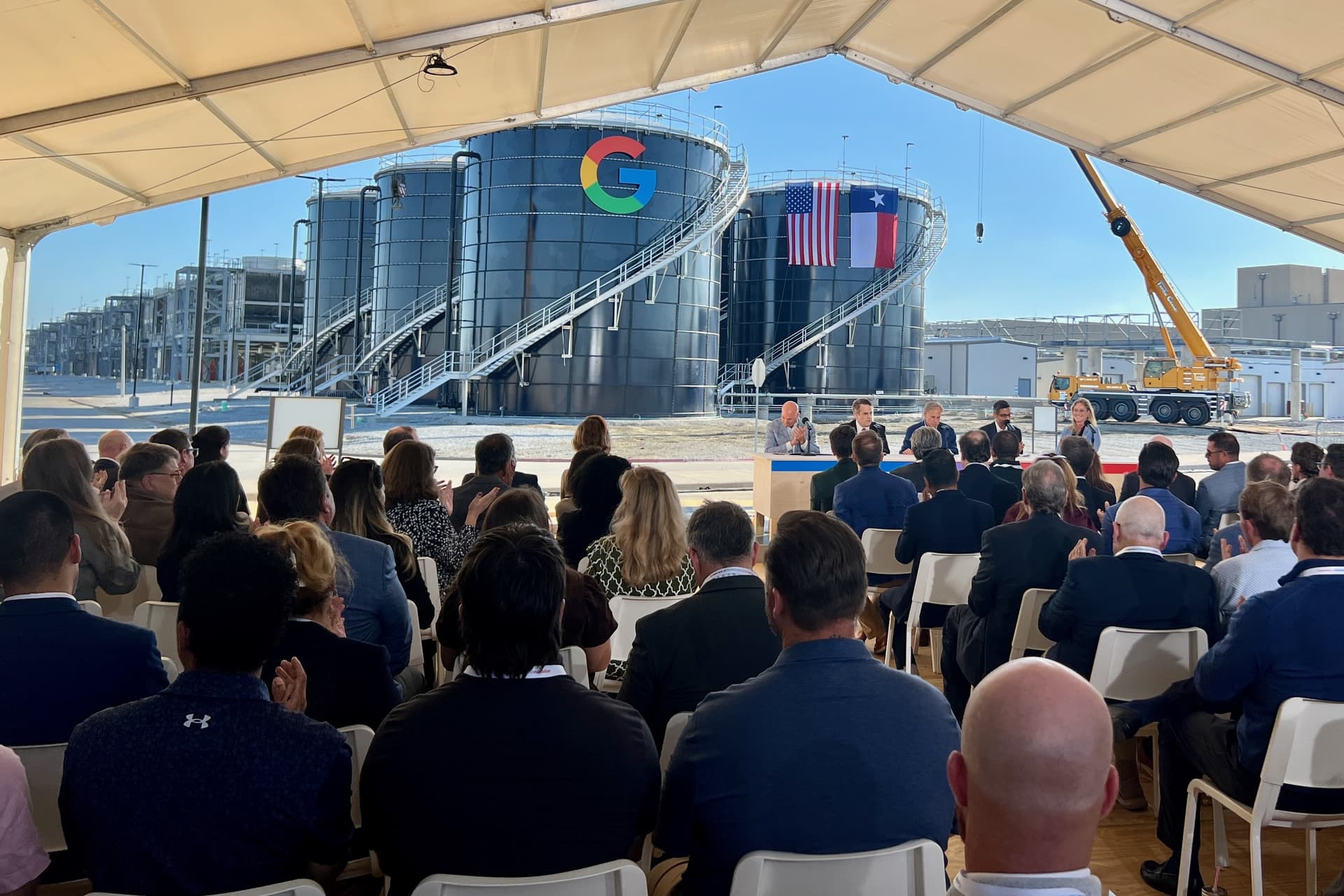
The developers who testified represented Google, which has data centers in Midlothian and Red Oak, plus three more facilities planned for 2027; Lancium, a company based in The Woodlands with three West Texas facilities; and QTS Data Centers, which has campuses in the Dallas-Fort Worth and San Antonio areas.
Those companies said they largely use closed-loop cooling systems to maintain safe temperatures in the server rooms at their data center campuses. Closed-loop systems recirculate cooling fluids and cool air inside a “sealed loop,” allowing facilities to use less water than some other types of cooling systems.
“Water cooling is only considered if local water resources are healthy and resilient, and in locations facing threats of scarcity or depletion, we look for alternatives like air cooling or reclaimed water,” said Ben Townsend, Google’s head of infrastructure and sustainability. “All of our planned data centers in Texas ... are conscientious of limited community water resources and are designed with advanced closed-loop air cooling systems that will help us eliminate freshwater consumption for cooling.”
In June, Gov. Greg Abbott asked lawmakers to consider requiring that all new data centers be built with water-efficient technology, including closed-loop systems. Ryan Kuithe, senior vice president of facility operations for QTS, suggested that lawmakers should “not force just closed-loop, and leave it open-ended and more focused on water usage, and not directed at a specific technology.”
By the numbers
Of 102 currently operational data centers surveyed by the PUC, 15 of them reported using evaporative cooling systems, which rely on the natural evaporation of water to lower air temperatures in a data center’s server room. Evaporative cooling uses less energy than other cooling options, but significantly more water.
“What we found in the data is that operational facilities using evaporative cooling technologies reported disproportionately high water intake,” said Chris Brown, the PUC’s data analysis program manager. “These facilities represented less than a fifth of the sample examined, but they accounted for nearly half of the total reported water intake.”
Another 65 facilities said they used non-evaporative methods, such as closed-loop cooling, while 22 data centers reported using another type of cooling technology, per a PUC presentation.
“Most operational facilities in this data set report using non-evaporative cooling technology systems, and nearly all planned facilities expect to adopt them, suggesting future growth may be less water-intensive overall,” Brown said.