Electric car manufacturer Tesla will receive less of a tax rebate than initially expected from Travis County due to “partial noncompliance” with the performance-based agreement.
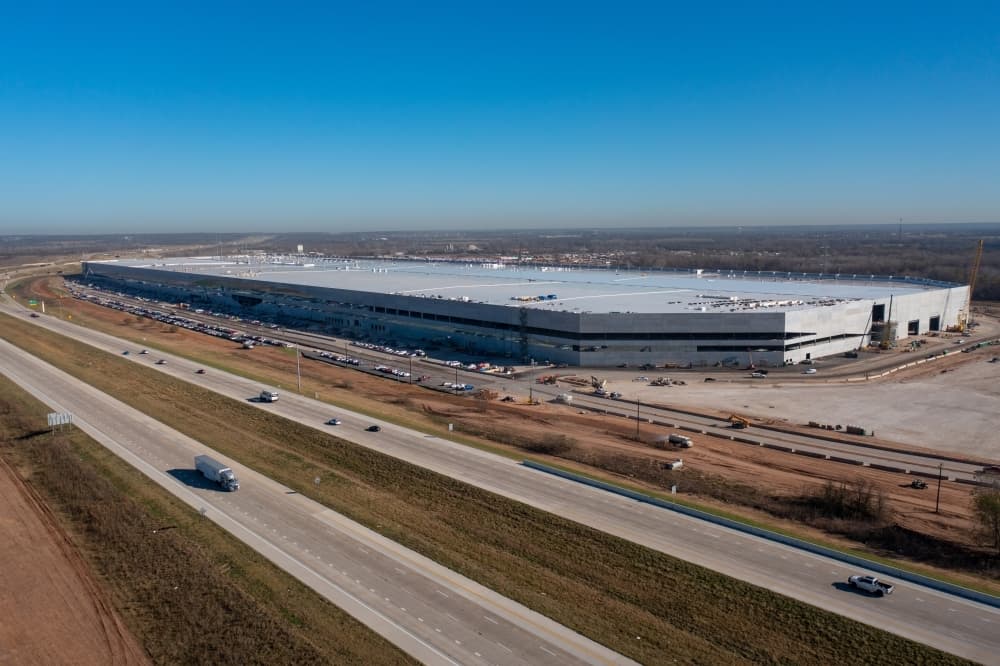
Since 2020, the county has promised Tesla millions in tax incentives to build Giga Texas—a 10-million-square-foot electric car manufacturing plant near Del Valle. At an April 7 meeting, the Travis County Commissioners Court voted to withhold 9% of funds allocated for 2020-22 after receiving “incomplete documentation” from the Colorado River Project, a subsidiary company of Tesla, County Judge Andy Brown said.
"We have to continue to demand accountability in future compliance conversations," Commissioner Ann Howard said. "I'm grateful for the work and the good, but it comes with a price, and we need to be accountable to the people for that."
The overview
Under the agreement, Tesla would receive a 70% rebate on its maintenance and operations property taxes for the first $1.09 billion invested through Giga Texas. The company could receive a 75% rebate for investments beyond $1.09 billion and up to an 80% rebate for investments beyond $2 billion.
Tesla was projected to receive a $14.65 million rebate over 10 years, according to initial county estimates from 2020. A Travis County spokesperson said the county has not yet calculated how much of a rebate Tesla will receive for 2020-22.
To acquire these rebates, the company was required to create at least 5,001 new full-time jobs—50% of which had to be filled by Travis County residents—among other requirements. All employees had to receive a minimum base wage of $15 per hour and at least $47,147 a year for full-time jobs, according to county documents.
The update
Tesla provided “significant but incomplete documentation” in four areas outlined in the country’s contract, including the Green Building Program, construction site safety, minimum hourly wage, and contractors for janitorial and food, Brown said. The Green Building Program required the company to build its facility “in an environmentally conscientious manner," the agreement states.
Despite being docked for “partial noncompliance,” Tesla exceeded many of the agreement’s provisions, said Christy Moffett, the county's director of economic development and strategic investments. As of 2022, the company had invested over $5.8 billion into the property, surpassing the original target of nearly $178 million, Moffett said.
Additionally, the company created nearly 12,300 new jobs with an average salary of $39.72 an hour and $26.53 hourly wage for construction contractors, Moffett said.
“We are holding Tesla accountable," Commissioner Brigid Shea said. "They have also met and significantly exceeded the key requirements in the contract of creating a very large number of very good paying jobs for people who have less than a college degree."
What else?
The court approved Tesla’s proposal to invest $5.25 million into community programs in 2025, including Austin and Del Valle ISDs, Austin Community College, local nonprofits and University of Austin.
In 2026, the company proposed building a $21.7 million wastewater interceptor and $2.7 million reclaimed water line along SH 130. Tesla will invest $976,000 into teacher salaries and a technology manufacturing lab at DVISD.
The county’s agreement mandates that Tesla invest at least 10% of its maintenance and operations property tax value into the community, Moffett said.
What residents are saying
During the public comment portion, some residents shared concerns about Tesla fulfilling its promises to the community, including constructing Tesla Road and an “ecological paradise." In late March, Tesla filed a permit with the city of Austin to restore a 28-acre riverfront property featuring a shared use path, decomposed granite walking tail, and an elevated wood boardwalk.
Commissioner Jeff Travillion requested that Tesla prioritize the construction of Tesla Road—formerly Harold Green Road. Voters approved a $11.9 million extension of the roadway in the county’s 2017 bond election.
“What will likely happen is that Tesla continues to build nothing while collecting tax rebates and saving face with these promises,” resident Christina DeStefano said. “I do want you to consider that Tesla is not going to uphold its end of the bargain.”
Tesla's self-driving robotaxis, which launched last year, have faced community pushback. Tesla was subject to a federal investigation assessing the safety of the company's autopilot system and its Full Self-Driving, or FSD, software after several reported fatal collisions, according to previous Community Impact reporting.
Some residents have not been receptive to Tesla’s new Cybercabs—fully autonomous vehicles designed without a steering wheel, DeStefano said.
In case you missed it
Tesla Inc. owner Elon Musk recently announced plans to build "the largest chip manufacturing facility ever” in Austin, according to Tesla information.
Terafab—a joint venture between Tesla, SpaceX and xAI—would produce artificial intelligence chips for electric cars, humanoid robots and solar-powered satellites in space with a combined compute capacity of 1 terawatt annually, Musk said at a March 21 livestreamed event in downtown Austin.