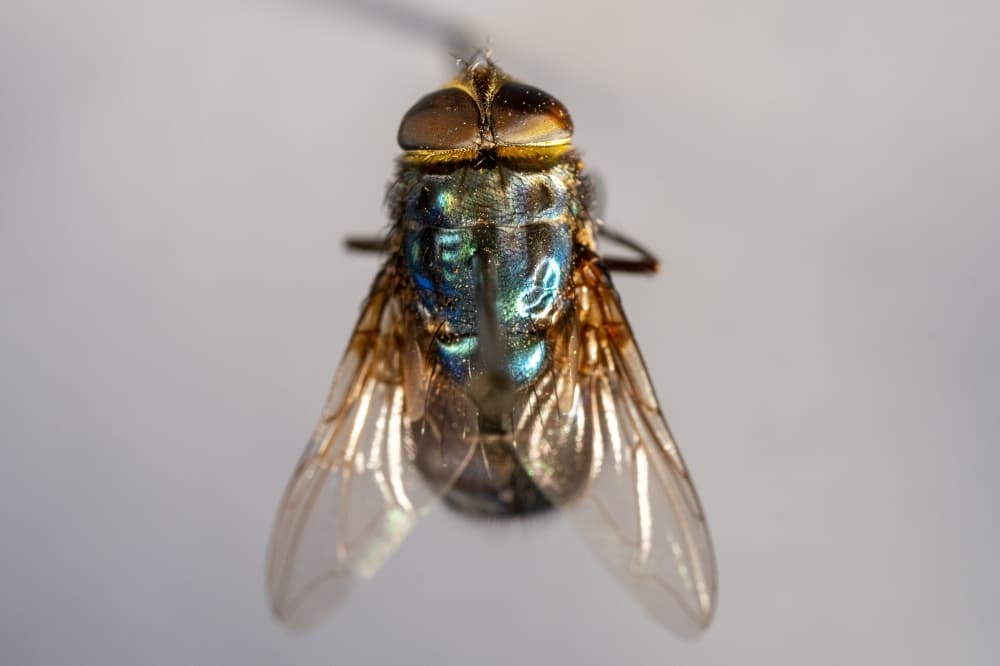
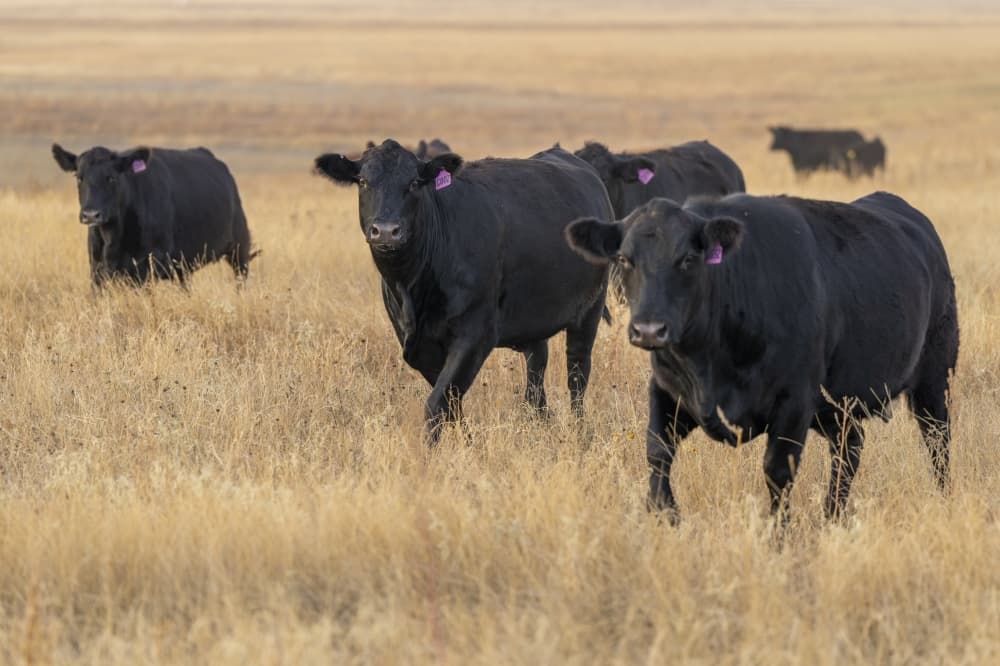
Five cases of the New World screwworm, a flesh-eating parasite, have been confirmed in Texas and New Mexico, federal officials said June 8. (Courtesy Michael Miller/Texas A&M AgriLife)
Updated 6:10 p.m. June 8
Three more U.S. cases of the New World screwworm were confirmed June 8, federal officials said. Four animals in Texas and a dog from New Mexico have been infested with the flesh-eating parasite.
The June 8 announcement marked the first infestation outside the Lone Star State, after maggots were discovered five days earlier on a 3-week-old calf in South Texas.
“These developments obviously represent a serious threat to our livestock and wildlife, but they haven't caught us off guard,” U.S. Department of Agriculture Secretary Brooke Rollins said during a June 8 news conference in Kerrville. “We have been tracking this pest for a long time. We have fought it before, and we will do so again.”
The latest
According to the USDA, the confirmed screwworm cases include:
A 1-month-old calf in Zavala County, about 5.6 miles from the first case
A calf in La Salle County, located southeast of the first two detections
A goat in Gillespie County in the Texas Hill Country
A dog from Lea County in eastern New Mexico, near the state’s border with Texas
A Texas veterinarian in Andrews County reported the dog’s infestation, but the dog and its owner live across state lines in New Mexico, USDA officials said in a June 8 news release.
The screwworm was largely eradicated in the U.S. in 1966, Community Impact previously reported, and the pest had not been seen in Texas in decades. The number of confirmed cases has slowly increased since the first detection June 3.
The parasite feeds on living animals, posing a particular threat to livestock and wildlife. No wildlife infestations had been reported as of press time, although officials noted June 8 that cases can be harder to track in wild animals.
“Wildlife are not like cattle—you can't gather them up and look at them,” said Alan Cain, wildlife director for the Texas Parks and Wildlife Department. “So we need [landowners], when you're out there in your pastures and driving around, checking your cameras, checking wildlife, especially during the hunting season. The quicker we can find those detections, the quicker we can respond.”
The Texas economy could take a more than $1.8 billion hit due to a widespread screwworm outbreak, the USDA estimated in 2024.
More details
State and federal officials acknowledged June 8 that the government needs to continue ramping up its response to the screwworm.
The federal government is building a South Texas facility to breed sterile flies, which are used to stop screwworms from reproducing by breaking their reproduction cycle. Gov. Greg Abbott has pushed for that project to be fast-tracked, warning June 5 that infestations are “likely to spread over the course of the summer.”
Texas’ emergency operations center, located in Austin, will be open 24/7 to track and respond to the pest, Abbott said during the June 8 news conference.
“Here's what Texans can do right now: check your animals daily; check for any wounds, even small wounds like tick bites on navels of newborns or other openings,” the governor said. “Treat wounds promptly and work to reduce fly populations around your operations. Report immediately any suspicion of New World screwworm and wounds to the Texas Animal Health Commission.”
John Bellinger, a food safety entrepreneur and member of the Texas A&M University Board of Regents, was appointed the federal government’s senior adviser on screwworm preparedness June 8, the USDA announced.
“We are going to turn over every stone to find more sterile flies,” Bellinger said in Kerrville. “We have to be ready next spring, and that's the bottom line.”
While the federal government does not have a timeline in its efforts to exterminate the screwworm, Rollins told reporters that it will happen more quickly than in decades past.
“Rather than years and years, which is what happened in the 1950s and 1960s, our goal is to have enough sterile flies deployed into Texas and wherever else this happens to be before the next summer season,” she said. “Most people would say that is an impossible goal, ... but this is Texas.”
Updated 7:25 p.m. June 5
A second case of New World screwworm has been confirmed in South Texas, the U.S. Department of Agriculture announced June 5.
Government officials said earlier June 5 that while they expect screwworm infestations will spread this summer, "Texas is resilient" and it is possible to eradicate the pest.
Updated 4:05 p.m. June 5
State and federal officials are escalating their response to a New World screwworm infestation in South Texas, Gov. Greg Abbott announced June 5.
What you need to know
The flesh-eating parasite was found this week in a 3-week-old calf in Zavala County. The calf’s herd has been inspected, officials said, and no other cases have been reported.
However, the governor warned that screwworm infestations can “spread like wildfire” and said additional animals would likely be affected.
“This is likely to spread over the course of the summer,” Abbott told reporters during a June 5 news conference at the State Operations Center in Austin. “[The] winter months may kill off the flies or reduce their number, but we cannot make it through a second summer.”
The screwworm feeds on living, warm-blooded animals, threatening Texas’ $15.5 billion cattle industry and $9.6 billion white-tailed deer hunting industry.
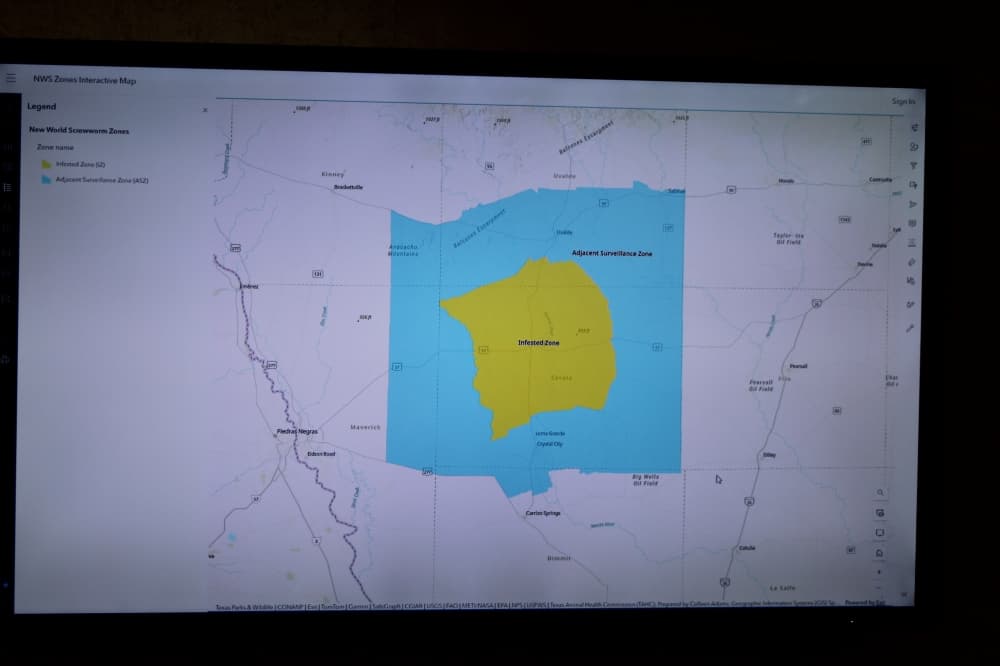
To prevent other animals from being infested, the U.S. Department of Agriculture established a 20-kilometer quarantine zone around where the screwworm was found. A wider “surveillance zone” stretches into the surrounding counties.
The federal government established a 20-kilometer quarantine zone and a larger surveillance zone around where the screwworm was found in Zavala County. (Hannah Norton/Community Impact)
Federal and state agencies are releasing millions of sterile flies in South Texas in attempts to break the screwworm’s reproduction cycle and stop the spread. The federal government previously released about 500 million sterile flies per week to fight infestations in the late 20th century, USDA officials said, and about 100 million flies are currently being released weekly.
“We are looking at building up to that number, but we're also using science and technology and innovation to do whatever we can to make the best use of the flies that we have and hopefully decrease that number,” said Michael Schmoyer, who leads the USDA’s screwworm directorate.
Michael Schmoyer, head of the USDA’s screwworm directorate, speaks to reporters about the response to a South Texas screwworm case June 5 in Austin. (Hannah Norton/Community Impact)
A federal facility to breed sterile flies in South Texas is scheduled to open next fall, and Abbott said he hoped to fast-track its construction.
“We need a high volume of sterile flies as quickly as possible,” Abbott said. “What I'm pushing for is to try to get the facility ... completed by May of next year, as opposed to November of next year. I'm offering any and all assets and resources by the state of Texas to accelerate the completion of that construction project.”
More details
Abbott also expanded a state disaster declaration June 5, authorizing the use of “all available resources of state government to respond to this disaster ... [and] accelerate the movement of sterile flies into the state of Texas.” He originally issued the screwworm disaster declaration in January after federal officials began tracking the pest’s movements through Mexico in 2024.
Officials emphasized June 5 that while the screwworm poses a serious threat, it is possible to push it out of the state.
“Bottom line: Texas is resilient,” Abbott said. “We have, in the past, prevented as well as eradicated this pest, and we can do it again.”
Texans can report potential screwworm cases in livestock or pets to a veterinarian with the Texas Animal Health Commission by calling 1-800-500-8242, the governor said. To report wildlife showing signs of a screwworm infestation, individuals can call the Texas Parks and Wildlife Department at 512-389-4505.
“This is a highly treatable condition if your animal does have an infestation,” TAHC Executive Director Bud Dinges said June 5. “We have many tools in our toolkit today to prevent devastating impacts that we didn't have before.”
Officials said the screwworm is not expected to cause issues with the food supply chain. The parasite only targets live animals and does not infest meat, fruit or vegetables.
Posted 6:10 p.m. June 4
The U.S. Department of Agriculture confirmed June 3 that a case of the New World screwworm, a parasitic fly, was detected on a cattle ranch in South Texas.
The case marks the first domestic detection of screwworm in a decade and the first Texas case in approximately 50 years. The flesh-eating parasite is a threat to the state’s $15.5 billion cattle industry, which lost more than $132 million due to a 1976 outbreak.
No additional infestations have been identified, U.S. Secretary of Agriculture Brooke Rollins told reporters around 2 p.m. June 4. Federal and state officials have emphasized that they do not anticipate issues with the food supply chain, as the screwworm only targets live animals and does not infest meat, fruit or vegetables.
However, experts have warned that a larger, prolonged screwworm outbreak could cause a spike in beef prices. A widespread infestation is estimated to cost Texas at least $1.8 billion per year in damages, according to a USDA analysis of a 1976 screwworm outbreak.
Keep reading for more details about the June 3 case and the concerns the screwworm presents for the cattle industry.
The USDA confirmed the first U.S. case of New World screwworm June 3 in South Texas. A 3-week-old calf was infested. (Courtesy Michael Miller/Texas A&M AgriLife Marketing and Communications)
The big picture
The New World Screwworm is a parasitic fly that is attracted to fresh wounds in live, warm-blooded animals, including cattle, sheep, pets, wildlife and sometimes humans. After a female screwworm fly lays eggs, maggots hatch and burrow into the flesh of living animals, according to the Texas A&M AgriLife Extension.
The infected animal is a 3-week-old calf in La Pryor, the USDA reported. The South Texas community is about a one-and-a-half-hour drive from San Antonio and less than an hour from Eagle Pass on the Texas-Mexico border.
“This is a serious animal health threat, particularly for Texas, but it is not a food safety issue and ranchers and landowners should not panic,” Stephen Diebel, president of the Texas & Southwestern Cattle Raisers Association, said in a June 3 statement.
The USDA established a 20-kilometer “infested zone” around the detection site with quarantines and movement controls in the area, officials said. There are no other confirmed cases, and more information about the federal and state response to the infestation is available here.
“If we all work together and follow animal treatment and the movement restriction guidance, there is no reason to believe that this incursion will result in any sort of establishment of the pest,” Rollins said during a June 4 news conference. “It is really important ... for us to contain the pest in the limited area we're talking about without disrupting too much commerce and too much of our livestock producers' ability to make a living.”
Zooming in
Federal and state officials told reporters June 4 that the screwworm will not cause any immediate food supply issues, as the case is contained. The New World screwworm feeds on live animals and does not infect meat or other food sources.
“The food supply is not compromised at all. This is not a disease, it is not a virus,” Rollins said. “Once that larva is removed and the wound is clean, animals treated early enough will survive, will recover, and will be back to normal.”
Texas Agriculture Commissioner Sid Miller said he was concerned that Texas beef prices would rise as ranches are quarantined in the infested zone.
“We already have a shortage of beef,” Miller told Community Impact. “This is going to create, possibly, a [larger] shortage. Probably, the markets will crash and then afterwards they're going to spike extremely high, because what will happen is these ranches will get quarantined and they can't sell the cattle, so that's less cattle available for the market.”
Miller has criticized the federal government’s response to the screwworm threat, urging the USDA to use certain pesticides to kill the flies in addition to existing eradication efforts.
Natalie Stewart, an assistant professor with Texas A&M University’s Department of Agricultural Economics, said she did not anticipate changes in the beef supply chain; however, production costs may rise for cattle farms.
“The significant impact for cattle producers in the short term will be to production costs,” she said in a statement to Community Impact. “Added production costs will come from the additional time, labor, and medicine needed to closely monitor and treat animals (either preventatively or in response to screwworm detection).”
Looking ahead
A widespread screwworm outbreak could cost Texas more than $1.8 billion, the USDA estimated in 2024. Texas cattle, sheep and goat producers would face about $732 million in annual losses.
Screwworm was eradicated in the U.S. in 1966, although the parasite reemerged in parts of the country, including in Texas, in the 1970s. A 1976 outbreak in Texas cost the state nearly $330 million, according to the USDA.
U.S. producers have not treated livestock for screwworm in about 40 years. Industry leaders urged Texans to keep a close eye on their livestock, pets and nearby wildlife to ensure the infestation does not spread.
“Texas livestock producers and all Texans must now be vigilant in their efforts to manage and combat the invasive pest,” Texas Farm Bureau President Russell Boening said in a June 3 statement.
The Texas Animal Health Commission is leading the charge on the June 3 case with support from the federal government, officials said. Information about monitoring, quarantines and how to report a potential screwworm case is available on the commission’s website.