A recent Austin Community Court training program led to hundreds of people addressing their outstanding cases or warrants at city courts, an initiative that followed other recent additions to local court services.
“Austin Community Court is focused on removing barriers and improving equitable access to services for people navigating difficult circumstances,” Court Administrator Robert Kingham said in a statement. “This pilot allowed us to meet people where they already receive support by working alongside trusted community partners. By helping individuals check their case status and address cases early, we can prevent warrants being issued and help resolve existing warrants, reducing disruptions that often make it harder for people working to move out of homelessness.”
What happened
Austin's "problem-solving" community court largely handles cases involving homeless clients, and also offers several related services from case management to personal storage. Formerly the Downtown Austin Community Court, it now covers a citywide service area and provides mobile resources away from its physical location in the One Texas Center offices at 505 Barton Springs Road.
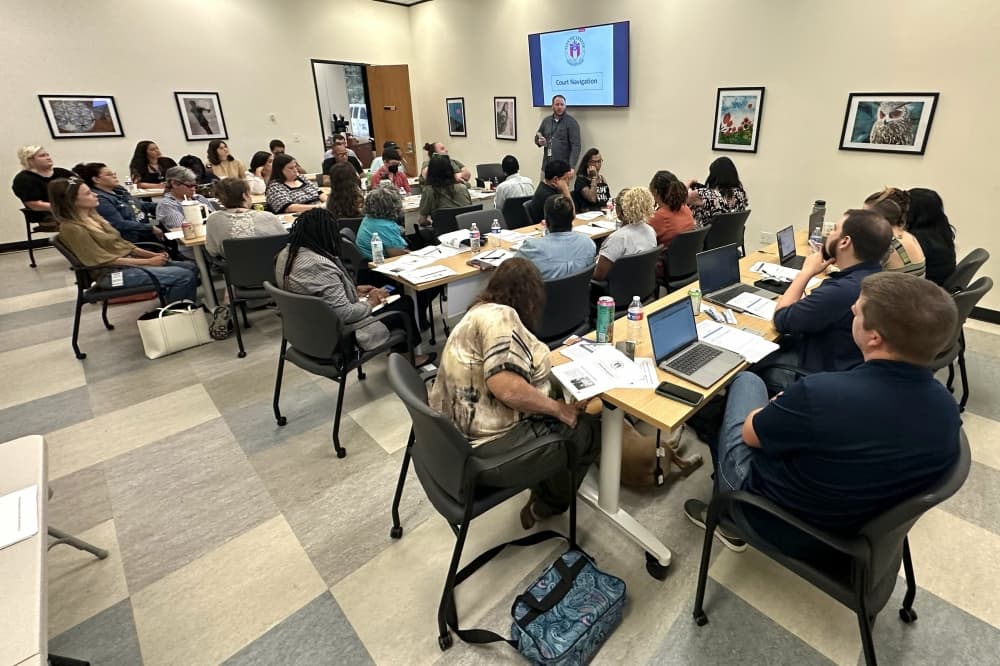
The recent pilot—labeled the Court Navigation Training mini-grant program—stemmed from past City Council direction seeking to build on the court's expanded reach by partnering with local organizations on services and outreach. The program was aimed at training more case managers and staff from those groups to help individuals connect with court services, according to the city.
A closer look
The program involved distributing over a dozen $2,500 grants to participants in the court's navigation training. After taking applications last summer, the city offered training related to case identification and resolution, overall court processes, and working with individuals without disrupting their stability in mid-September.
Newly trained service providers then started helping clients with their cases at both the community court and Austin Municipal Court, which generally handles local low-level offenses. Over two months from Sept. 17-Nov. 17, 2025, the program:
- Resulted in 692 case checks, leading to clients' identification of more than 250 cases and 57 direct connections with the court to work on resolutions
- Involved 14 local organization
- Trained 41 case managers and outreach staff
In the many instances where no outstanding cases were identified, the city reported clients still felt relief after confirming their status and reducing uncertainty about potential legal issues. The program also saw success due to clients receiving personal information from a source they may trust more or have a personal connection with, rather than another government agency.
"This approach built on the same values as Austin Community Court’s Mobile Court, in that it meets people where they already are and supports trusted relationships between organizations and the people they serve to remove barriers to services and improve equitable service access," court business process consultant Laura Martinez said in an email.
A city news release states the program was based around established relationships between clients and service groups, and was meant to improve access to equitable legal services. During a December debriefing session, the city said participants reported clients having more confidence in the local court system.
“We’re incredibly grateful to the organizations who partnered with us,” Kingham said. “With a modest investment, this program gave service providers another tool to support their clients while extending the reach of Austin Community Court far beyond our doors. It’s a powerful example of how partnering with organizations that have built trust in the community can connect more people with the services they need.”
What else?
The court program involved both recurring and new city partners. Participants included Austin Mutual Aid, Beautiful Beginnings, Beyond Barriers of Central Texas, Building Promise USA, Caritas of Austin, Heart of Texas Outreach, Helpers of Change, LifeWorks, Military Veterans & Families Empowerment Network, Queertopia, Texas Harm Reduction Alliance, Texas RioGrande Legal Aid, Walking by Faith Prison Ministry and Women of Unity, according to the city.
Some context
The mini-grant program was one result of Austin Community Court's work over the past year highlighted in its recent annual report.
In 2025, the court had 4,633 cases filed and more than 10,000 cases docketed overall. Expansion of the mobile court program resulted in 1,726 case checks around town and led to almost 200 warrants being cleared; Kingham and Judge Michael Coffey called 2025 a "major milestone" for that mobile initiative.
The annual report also noted the various services offered outside the courtroom. For example, more than 19,000 homeless case management interactions were recorded, and 37 of the court's clients were connected to housing.
The court could be in line for budgetary shifts, and already experienced some of the cuts to Austin's social service funding that are expected to widen this year. Kingham and Coffey said those changes have impacted resources that "directly support" court clients, and they anticipate further reductions this summer.
"In response, we are pursuing strategic, collaborative, and creative approaches to mitigate impacts while maintaining person-centered services and preserving access to the supports our clients need to stabilize and thrive," they wrote.