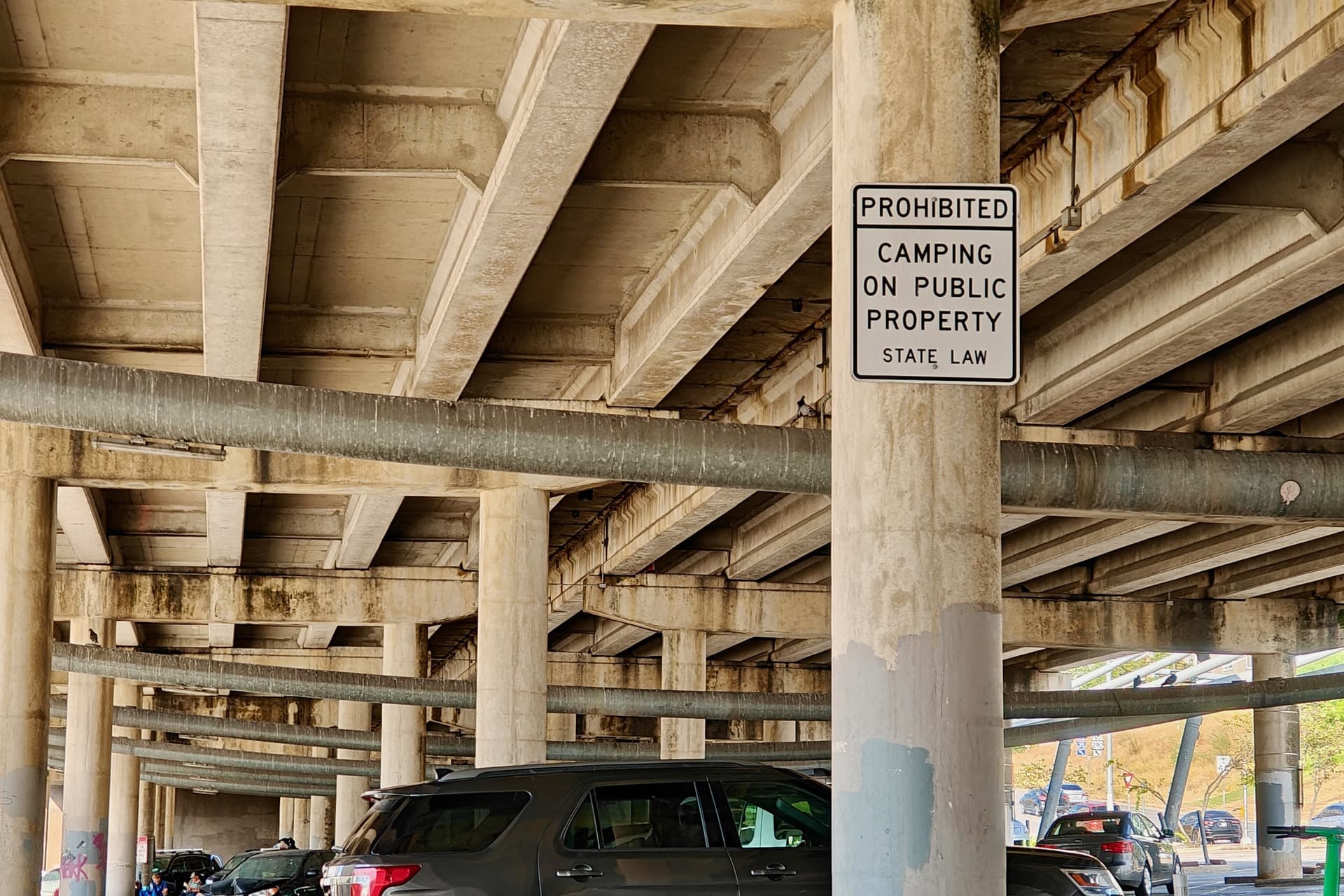
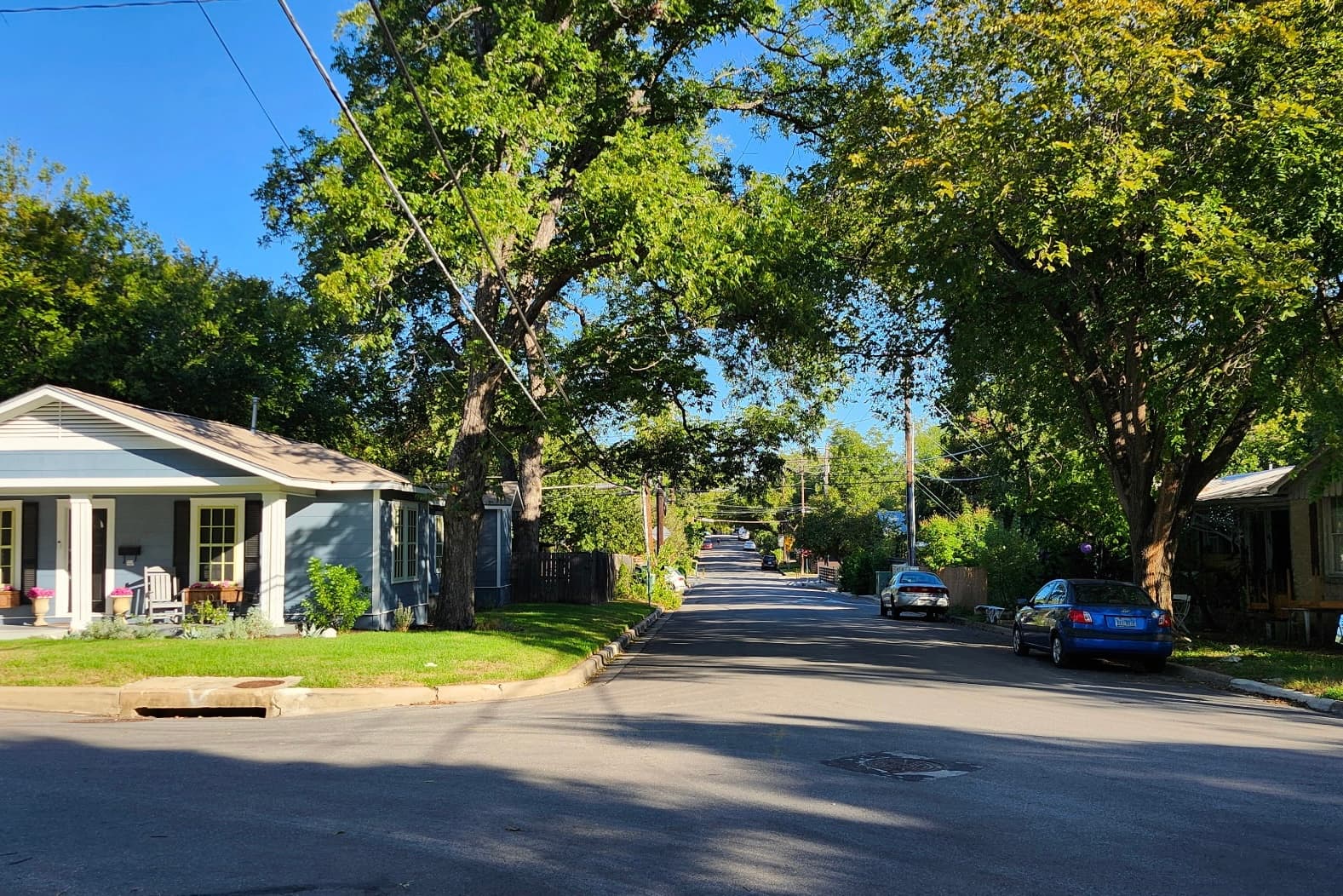
Austin recently started a new encampment management approach under both local and state bans on public camping. (Ben Thompson/Community Impact)
Austin is continuing its expanded outreach and enforcement of public encampments that ramped up this spring and has since cleared dozens of sites across the city.
The big picture
Public camping is illegal under both state law and the city's voter-approved Proposition B. However, officials have reported inconsistent responses to camping activity resulting in safety issues and extensive resident complaints.
Earlier this year, Austin Homeless Strategies and Operations announced it would be sending out more city crews on a regular basis to address encampments in public areas. That new Homeless Encampment Management, or HEM, program started in May and led to hundreds of site visits citywide in its first month.
Once encampments are identified under the HEM process, locations are prioritized for clearing. Anyone living in the camps are notified and offered connections to services like shelter. Sites are then cleaned, and HEM crews also conduct follow-up visits to ensure they're not reoccupied.
During a Sept. 2 briefing to City Council, Homeless Strategy Officer David Gray said the HEM program is one of several ways Austin's is growing its supportive service system.
"We really felt like this was a way for us to take costs that the city was already using—that was already tied up in staffing and salaries and other things—and try to put those costs in a more focused way into a process that’s better coordinated and hopefully produces better outcomes," he said.
A closer look
To date, AHSO has released only the results of the HEM initiative's first month from May to June. City crews visited over 100 unique encampment locations in that time, cleared more than 300 tons of trash and debris, and moved 35 people into shelter while connecting nine more with other services.
Those 44 people assisted represented half of all contacts made at encampments, with the other half declining any help. AHSO also reported repeat camping activity at 28% of sites that were originally addressed.
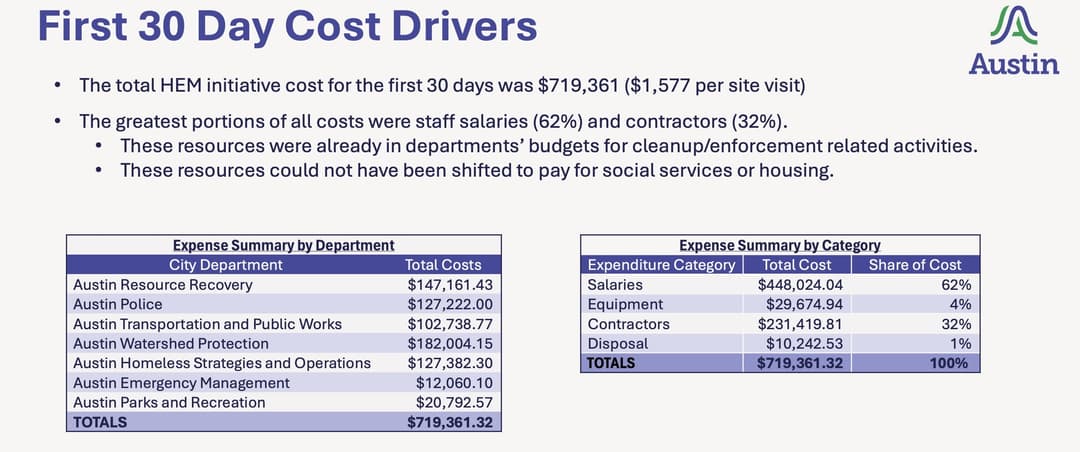
The first 30 days of HEM cost just over $719,000, the majority of which went to city employee and contractor pay. However, Gray noted the city was already incurring most of those costs due to ongoing camping enforcement and the program doesn't represent significant new spending.
The first month of Austin's new homeless encampment management program cost nearly $720,000. (Courtesy city of Austin)
"What we have done through [HEM] is basically work with the departments to say: Instead of spending these resources in a way that really wasn’t coordinated, did not allow us to sustain progress, did not give people on the street a clear and consistent expectation for what this process should look like; let’s take these dollars and put them in a process that is better coordinated, better organized and allows us to sustain progress as we provide social services and then eventually clear and close sites," Gray said.
HEM is also getting additional support in the coming year with new staff positions for outreach and public space management, under a council-approved budget amendment.
Also of note
While a more expansive public homeless response dashboard is in the works, AHSO launched a public mapping tool to track the results of HEM. The new Keep Clear Map is available online,and shows where encampments are being cleared and designated for continued site management.
In line with previous reporting on Austin's reinstated camping ban, Gray said more encampments are appearing on parkland and other properties farther from the city center. Additionally, he said updates like HEM prompted a decrease in the number of tents and other structures at places where people may be camping.
"You’ve especially seen that in downtown Austin specifically, where the number of individuals experiencing homelessness has hovered around 450-500 people but the number of tents and structures is down 80%, 85% since a few years ago," Gray said. "We expect some of those trend lines to now extend to the rest of the city.”
AHSO will provide more encampment management data on an ongoing basis starting this fall.
Some context
This spring, the substance use reduction nonprofit Texas Harm Reduction Alliance reported several negative impacts on the homeless population under HEM's increased encampment sweeps. A THRA survey of dozens of those affected by encampment clearings found most weren't notified about city operations, weren't offered assistance like shelter or supportive services, and had their personal belongings lost or destroyed in the process.
Gray said AHSO was aware of those reports, and met with THRA representatives earlier this year to discuss the findings and Austin's approach.
“I can’t sit here and say that we resolved all the issues that were brought to us; I think there were some things that they asked us to do that operationally we cannot do. But there are some things that they asked us to do that I think we really strive to do," he said.
For example, Gray said AHSO now publishes locations where clearing operations will take place and promotes information to be shared across the community in advance. He also said crews work to ensure peoples' property isn't discarded, while acknowledging challenges and safety issues with maintaining all belongings during site abatements.
AHSO is working with agencies like Austin Public Health to ensure people can retrieve personal documentation if lost, and also urged anyone with negative experiences to contact the city for help.
“We have certain resources at our disposal to help right a wrong, but we need to hear from people. In the few times that we’ve heard, we work really hard to make things right and we have," he said.
WilCo Elections to process 18,000 delayed voter registration records, officials say