Updated July 13 10:02 a.m.
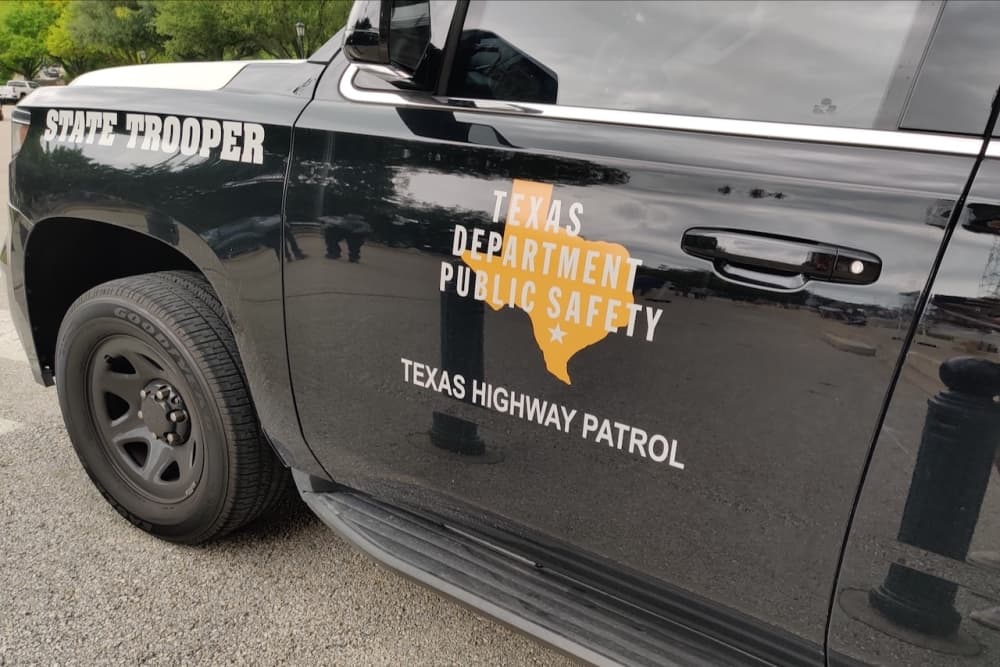
While Austin leaders said they'd ended the city's collaboration with the Texas Department of Public Safety on July 12, a response from the state law enforcement agency indicates there are no plans for its troopers to stop working in Austin at this time.
"DPS will continue patrol operations in [Austin] as part of its responsibility to protect and serve Texas," the agency tweeted after the city's announcement.
Gov. Greg Abbott backed up that comment soon after, citing the agency's statewide authority regardless of any local agreements.
"The mission of the Texas Dept. of Public Safety is to serve and protect," Abbott tweeted. "Their jurisdiction is every square inch of Texas."
The DPS did not immediately respond to a request for additional information about the scope of ongoing patrol work in Austin.
Published July 12 1:17 p.m.
Editor's note: This story has been updated to include additional comments about the partnership suspension.
Austin's partnership with the Texas Department of Public Safety is once again on hold after some city officials raised concerns about the state agency's approach and alignment with local values.
The big picture
City leaders announced the suspension of the DPS partnership in a July 12 statement. The pause comes just 10 days after state patrols in the city started back up; troopers in Austin were reassigned to the Texas-Mexico border in mid-May and only returned July 2.
“From the start of this partnership with DPS, I said I wanted Austinites to feel safe and be safe. Recent events demonstrate we need to suspend the partnership with DPS. The safety of our community is a primary function of city government, and we must keep trying to get it right,” Mayor Kirk Watson said in the statement. “This partnership was an innovative approach to address acute staffing shortages that were years in the making. However, any approach must be in sync with Austin values.”
The DPS did not immediately respond to a request for comment about the update. The city did not detail potential next steps for the partnership after announcing the pause.
In context
The program's suspension came soon after some council members—citing a July 11 Fox 7 news story reporting that state troopers drew their guns on a 10-year-old and his father outside their South Austin home—publicly called for an end to the DPS partnership.
"There is 0 justification for this. Imagine if the story had ended with a trigger happy DPS trooper. Had that been the case, we all would be talking about the death of a 10 year old at the hands of DPS this morning," District 9 Council Member Zo Qadri said in a July 12 tweet. "I can only speak for myself, but this partnership needs to end."
District 2 Council Member Vanessa Fuentes shared similar thoughts.
"This is completely unacceptable and does not align with our values as a community. It is high time to end the DPS partnership," Fuentes said in a tweet.
Separately this week, local media also reported that a DPS trooper had shot a suspect in the arm July 10 following a pursuit.
On council's message board, Watson said the decision to suspend followed "serious activity in the last few days."
District 4 Council Member Chito Vela said the city made the right call, especially given recent reports.
"Policing in Austin must be aligned with our community values. Unfortunately, the type of policing we have seen by DPS is not in line [with] Austin’s values," he said in a tweet.
Standing against the city's move, District 6 Council Member Mackenzie Kelly said she hopes to see further policing collaborations in Austin after DPS patrols had "undeniably" helped fight crime this year.
"The decision to suspend the partnership is a disheartening setback for the residents of Austin, who rely on our law enforcement agencies' swift and efficient response, especially now that crime rates are on the rise and we have an increasing concern over public safety," she said in a statement. "I respect the need for continuous evaluation of this partnership and believe that transparency is a fundamental principle that fosters trust between law enforcement and the community."
Austin Police Association President Thomas Villarreal called the July 12 decision "absolutely unconscionable" as the city's police force remains short hundreds of officers.
"The data presented to the city clearly and unequivocally showed that the presence of DPS made our city safer. This decision is just another in a long line of decisions that demonstrate to the hardworking men and women of the APD and the law-abiding citizens of Austin that public safety is not a priority in this city," Villarreal said in a statement.
The update also comes days after Austin's citizen Public Safety Commission formally asked for the partnership to end. Commissioners said it should be discontinued until council, Austin police and DPS laid out written policy guidelines for the program and "significant community engagement" took place.
The background
The DPS partnership was first announced in late March as the result of a deal struck between Watson and state leaders that included Lt. Gov. Dan Patrick and Gov. Greg Abbott. Officials said the move was made to concentrate on limiting violent crime and serious traffic incidents, and to supplement the short-staffed Austin Police Department.
“We don’t want DPS to police the city," Assistant City Manager Bruce Mills said during the Public Safety Commission's July 10 meeting. "You heard the numbers a while ago, we’re how many [officers] short? 350 or so, we’re really shorter than that. And we can’t effectively police the city as we are. We’re at a point in this city where we don’t have enough officers to police the city by ourselves.”
Almost since the beginning, the partnership attracted scrutiny and criticism from some council and community members—especially after early enforcement was heavily concentrated in neighborhoods with more nonwhite residents and disproportionately affected Black and Hispanic drivers. Those concerns eventually led public safety leaders to announce a shift in strategy in response to profiling concerns.
Since this spring, APD representatives have pointed to positive public safety outcomes as a result of the state collaboration. APD's data officer has briefed City Council multiple times about drops in police response time, violent incidents and traffic crashes attributed to the increased DPS presence. Some residents, business owners and other community representatives have also appeared before council to express their support for added trooper patrols in town.
The partnership was eventually put on hold in mid-May as Texas leaders shifted DPS resources to the border. The city later announced it would resume in early July, and patrols were underway until July 12 when interim City Manager Jesús Garza moved to suspend the work.
“Public safety is at the very core of what we do in city government, and this partnership was a practical approach as the Austin Police Department faces serious staffing challenges,” Garza said. “We have heard mayor and council’s concerns about recent events and agree that we must have absolute certainty that any solution we put in place maintains the trust and well-being of our community members and that all law enforcement officers working to keep our city safe are on the same page when it comes to policing practices.”