

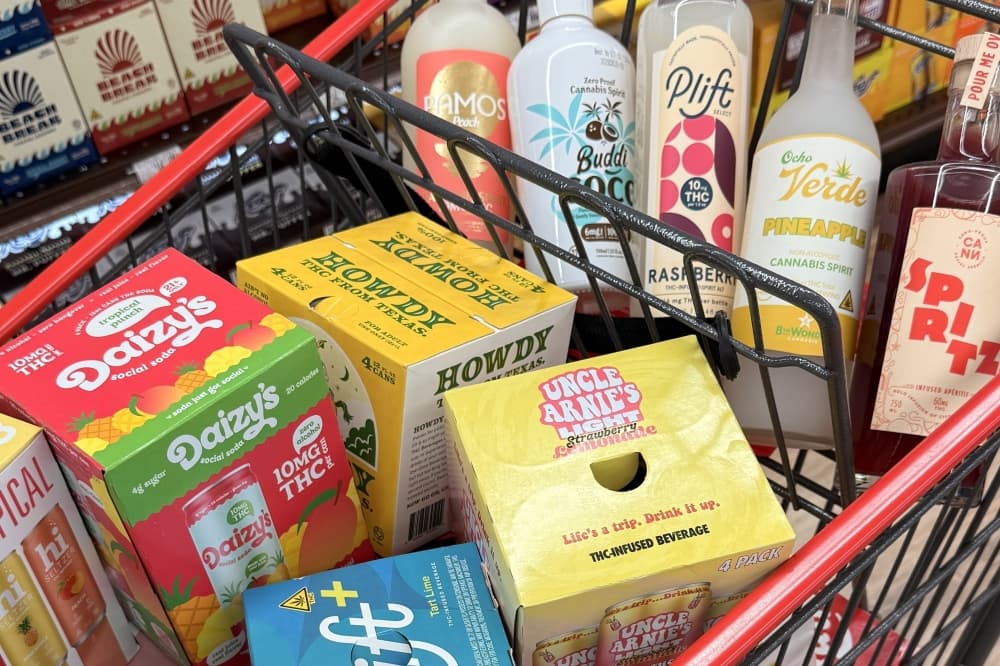
In an age of shifting social rituals around alcohol, Texas consumers are quietly redrawing the beverage map one sip at a time. Changing drinking preferences are hitting retail shelves across Central Texas, with THC- and CBD-infused drinks increasingly positioning themselves as alternatives to traditional alcohol.
A closer look
Shayda Torabi, the cofounder of RESTART CBD + THC—a hemp retailer based in Austin—said many consumers are drinking less alcohol while actively looking for an alternative with an effect, not just a mocktail—what she referred to as the “sober curious movement.”
“People don't just want an adaptogenic drink, they don't just want a fizzy knockoff cosmopolitan. They want that drink that they're subbing alcohol for to have some experience, to have some effect,” Torabi said. “I think that's where cannabis beverages have really nicely parlayed into this next generation of consumers.”

As more individuals reconsider their drinking habits and seek alcohol-free alternatives that still provide a social experience, retailers are expanding their selection of THC-infused products.
John Rydman, president and owner of Spec’s Wine, Spirits & Finer Foods, said his company has expanded its inventory of THC drinks in recent years due to a growing demand.
However, he noted that reports of declining alcohol consumption may be overstated, arguing that many consumers are not replacing alcohol with THC products but instead are “expanding to a broader horizon of drink.”
Rydman said that while the vast majority of Spec’s business is still alcohol, THC drinks make up a small but growing percentage of sales. He said he expects that growth to continue as people become more familiar with the products.
“We’ve been very careful with the THC products that we’ve brought in. The brands that we’ve brought in are the ones we think taste the best and that are the safest. We know ... they’re being manufactured correctly,” Rydman said.
Other commercial retailers like Target and Sprouts have also begun carrying THC beverages.
What you should know
Torabi explained that many consumable hemp products can range from 2 milligrams to 10 milligrams of THC, but some products contain dosages as high as 100 milligrams.
“Unfortunately, they're not all made equal,” she said
She also noted the difference between THC and CBD; Torabi likened the two to the difference between liquor and wine. THC is the primary psychoactive compound in cannabis and is responsible for the intoxicating effects associated with the plant.
For first-time users, Torabi recommends starting with a low dose, around 2.5 milligrams of THC, emphasizing that “less is more” when it comes to finding the right experience. She added that every person is different and reacts differently.
“We want them to understand what they're putting in their bodies,” she said.
Of note
The legal status of consumable hemp is complicated and subject to change, as previously reported by Community Impact.
THC drinks are classified as consumable hemp products under state law. Consumable hemp products are different from traditional cannabis, which remains illegal for recreational use in Texas.
Under current law, products are considered legal hemp if they contain no more than 0.3% Delta-9 THC by dry weight. Tighter restrictions on Texas’ consumable hemp industry took effect March 31, increasing packaging and labeling requirements, raising annual licensing fees for hemp businesses, and outlawing the sale of certain smokable hemp products.
A Travis County judge blocked portions of the new rules May 1, and THC drinks remain legal as long as they meet product safety requirements. However, the state has mandated a minimum age requirement of 21 and up.
Torabi said the industry would benefit from clearer regulations, including standardized testing requirements. She noted that while many businesses are legally able to sell hemp-derived products, that does not necessarily mean they fully understand the products they are offering or how to educate consumers about them.
“Consumers should be mindful. Just because you can get it, just because it's legal, [consumers] should do their due diligence to ensure that the brand and the product that they're ultimately consuming are from a trusted source,” Torabi said.
Texas’ hemp regulations could be preempted by an impending federal ban on intoxicating hemp products. That ban, which Congress approved late last year as part of a federal funding package, is set to take effect in November barring changes to the law, Community Impact previously reported.
Rydman also believes consumable hemp products should remain legal with “safeguards and guardrails” to ensure safety and quality.
“They are adult beverages and should be treated as such,” he said. “Prohibition did not work well. It just created a lot of illegal operations. ... We have to find a way to come up with something that makes sense.”
Things to consider
Additionally, because THC- and CBD-infused beverages are not subject to the same regulatory framework as alcohol and tobacco products, they currently do not carry a U.S. Surgeon General's warning label. Torabi urged consumers to exercise caution if they are pregnant or breastfeeding, taking medications, or planning to drive or swim.
She said her business encourages customers to consult their physicians with any concerns, noting that the medical community has become increasingly informed about hemp-derived products, making it easier for individuals to have open, informed conversations about their use.
She also highlighted a nurse-staffed cannabis hotline, Leaf411, that consumers can call if they experience adverse effects or have concerns after using a product.
Dr. Steven Powell, medical director of Austin-based CARMAhealth, said reducing alcohol consumption can benefit health, but cautioned against treating THC or other substances as direct replacements for alcohol, noting that avoiding drug use altogether is generally the healthiest option.