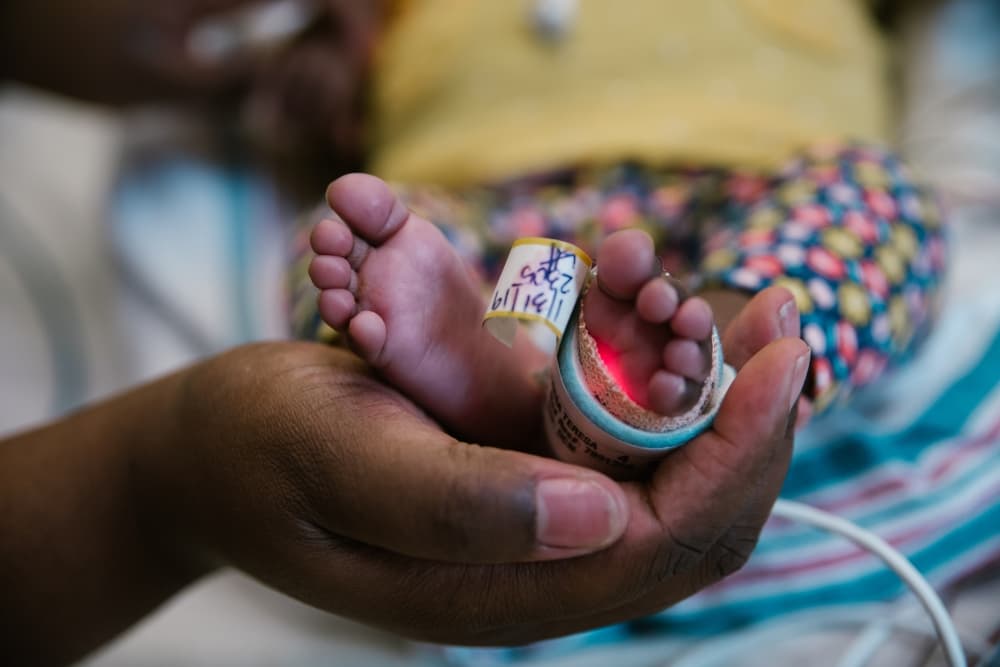
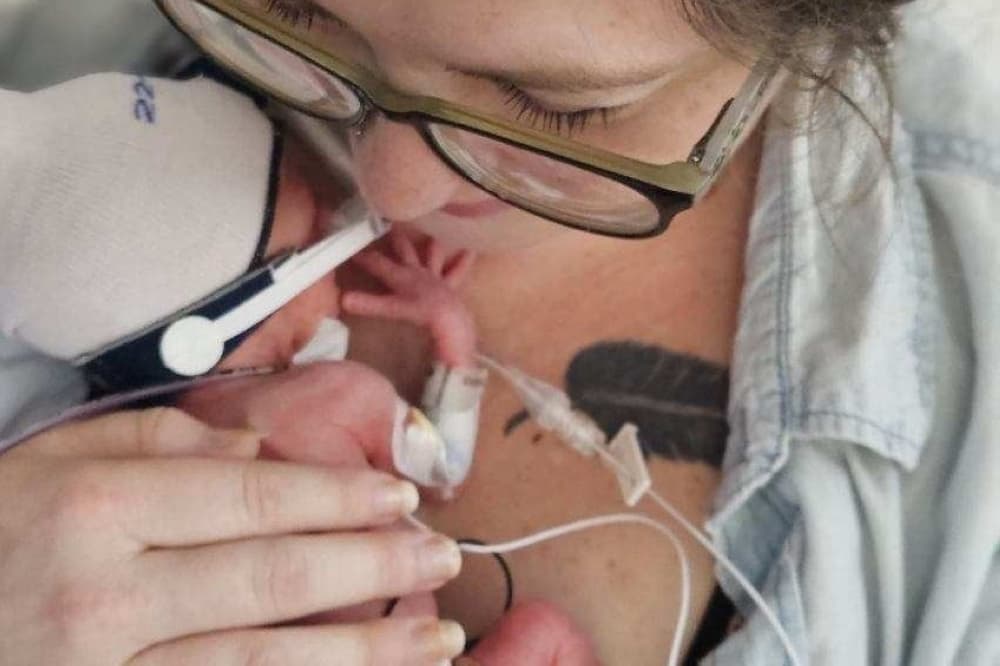
Hand to Hold helps around 3,000 NICU families in the Austin area each year. (Courtesy Hand to Hold)
Over the past decade, neonatal intensive care unit expansions across Central Texas have widened access to specialized care for families in Northwest Austin and Williamson County. As the region continues to grow, hospitals and nonprofits are expanding services for parents navigating a NICU stay.
By the numbers
NICU admissions have risen nationwide, and Texas is no exception. According to data from the Centers for Disease Control and Prevention, 9.7% of infants in Texas were admitted to a NICU in 2023, part of a larger upward trend between 2016 to 2023.
In terms of caring for these infants, the state has 224 total NICUs, according to data from the Texas Department of State Health Services. Of the state’s 24 Level IV NICUs—the highest level of neonatal care—Dell Children’s Medical Center of Central Texas and St. David’s Medical Center are the only two such facilities located in the Austin area.
Demand for maternal and newborn care has increased locally as well. Just one example, births at the Baylor Scott & White Round Rock hospital saw a 40% increase in need for this type of care, according to a 2025 news release from Baylor Scott & White Health.
Nonprofits that support families of children with complex medical conditions have also noticed the growth. According to Kristin Coulter, CEO of the Ronald McDonald House Central Texas, the organization has had a waitlist for over six years.
“Between neonatal, perinatal and fetal care services, [those] are [among] our top five diagnoses we see from families requesting or seeking the resources of [RMHC CTX] now,” Coulter said. “With more babies being born and more families moving into the Austin area, it sadly does result in, oftentimes, an increase on the NICU side, so that has been driving our waitlist significantly.”
The growing demand for NICU care reflects the broader national trend that extends beyond the Austin metro area. The Ronald McDonald House assisted families from over 21 states that traveled to receive fetal care services at one of its Central Texas partners, Coulter said.
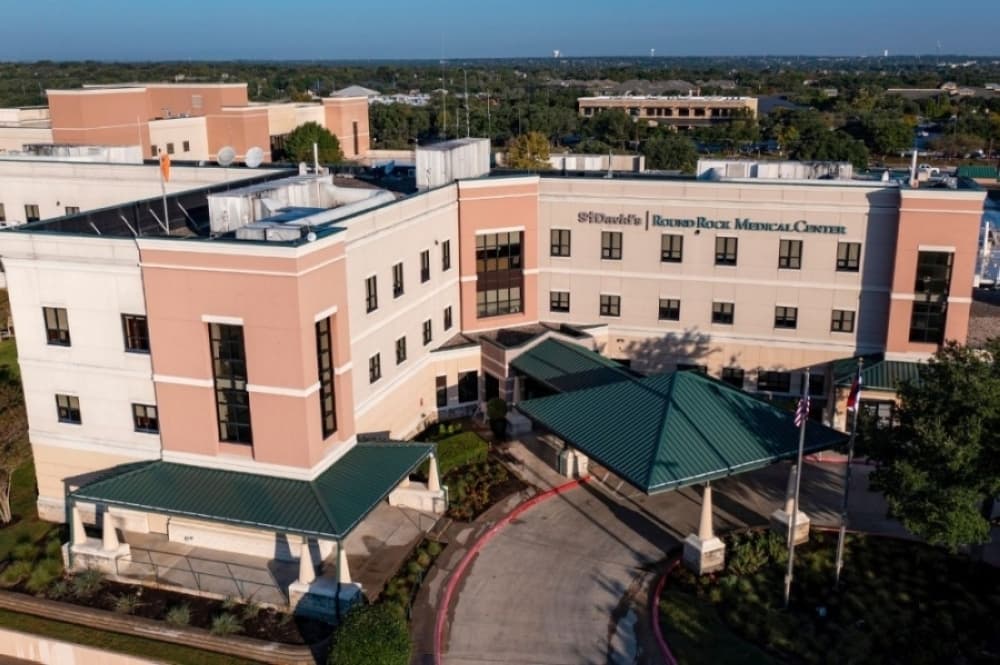
Additionally, with the opening of a Level III NICU at BS&W Round Rock in June 2025, families near the Austin area no longer need to travel to Temple for advanced care. The separation of a NICU stay can be “practically, emotionally, logistically very challenging for the families," said Sweatha Kasala, a neonatologist at BS&W.
Currently, BS&W's Round Rock NICU offers 11 Level III beds, with room for expansion if needed.
“Having the NICU at the place where they're born would ensure that the treatment is delivered in a timely fashion,” Kasala said. “When the mom is in the same hospital as the baby, that does ensure more skin to skin—which is called kangaroo care or skin to skin— [and] more milk production for the mom.”
Since 2025, the Round Rock hospital has also added a dedicated neonatal transport team for newborns delivered at neighboring hospitals that lack the advanced services required to treat the infants.
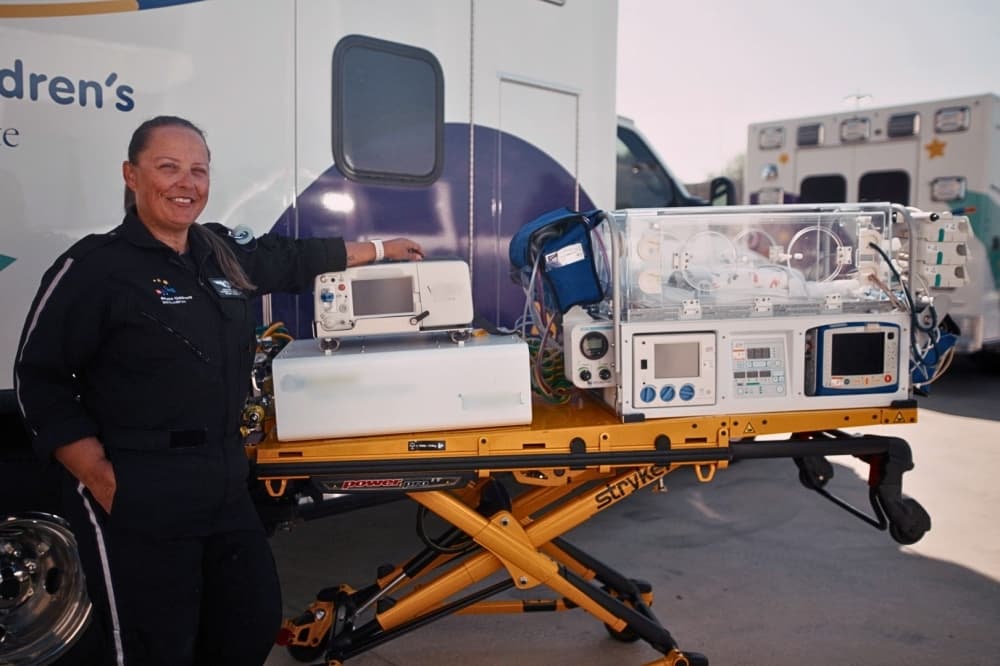
The newborns are transported in an ambulance with a specialized bed and equipment, including oxygen and a ventilator. The transport team can be ready within five minutes of a call coming in, Kasala said.
Baylor Scott & White's specialized NICU Transport Team safely transports critically ill newborns between facilities. (Courtesy Baylor Scott & White Health)
What’s new?
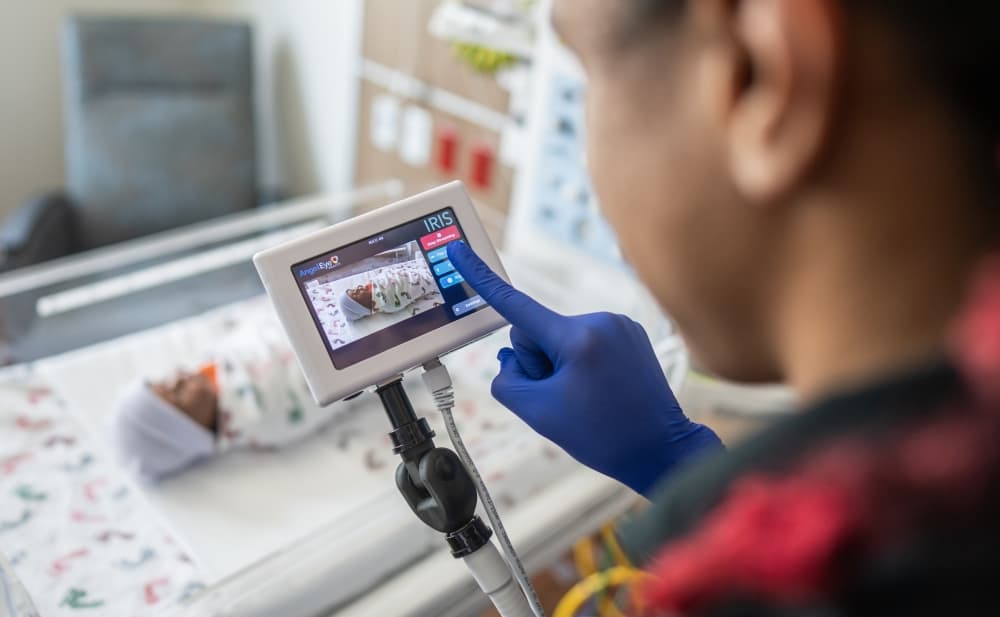
At BS&W's Round Rock location, NICU families can take advantage of new resources to remain connected with their newborns. One such addition has been the AngelEye Health tool, which allows families to securely see their newborn throughout the day.
Kasala said the the tool helps foster an emotional connection, which is important for "both the family as well as the baby's development.” For families that live far from the hospital, are balancing childcare responsibilities or must return to work, this tool can provide the opportunity to continue to bond with the infant from a distance, she said.
For families that remain at the facility during an extended stay, BS&W offers private family suites equipped with refrigerators to store breast milk as well as sleeper sofas. The hospital also features a “transition room,” where families typically stay for a night prior to discharge to simulate a home environment while still receiving support from staff.
“The first year is just the beginning,” Kasala said. “We will continue our investment in services, technology, staffing that will enhance further care. Our vision is to continue to build a comprehensive, connected system of neonatal services.”
The NICU AngelEye camera system at Baylor Scott & White Medical Center Round Rock allows parents and loved ones to securely see their babies in the NICU when they are unable to be at the bedside. (Courtesy Baylor Scott & White Health)
Put in perspective
Like many NICU parents, Katrina Moline commuted to Dell Children’s main campus—the only locally available at the time—to visit her newborn, even though she gave birth in Cedar Park.
Fast forward from her stint as a NICU mom in 2009, Moline now serves as executive director of Hand to Hold, an organization that supports NICU parents in Central Texas and beyond. The nonprofit provides mental health support for parents of babies in the NICU, offering bedside counseling, peer mentors, sibling support and more.
Annually, Hand to Hold supports 3,000 NICU families in Austin alone, while offering roughly 90,000 support sessions across all of its nationwide programs, Moline said.
The organization provides support at seven hospitals, including all of the Level III and IV NICUs in Austin, Texas Children’s main campus in Houston, and Texas Children’s location in The Woodlands.
Hand to Hold peer mentors have both the lived experience of being a NICU family member along with certification as a mental health care specialist, Moline said.
“Our secret sauce is that they have that peer status. They understand what it's like for these parents that are going through this really trying time, but that they also have the training to understand how to share their story, when to share their story, how to talk to somebody who's going through a really tough time [and] how to know when is a good time to approach a family,” she explained.
As the population continues to grow in Northwest Austin, organizations like Hand to Hold offer support for NICU families. (Courtesy Hand to Hold)
The organization equips its peer mentors with support and resources, including resiliency training, to help them provide care and support for NICU families. Hand to Hold employs 31 staff members, roughly half of which are in a support capacity.
One more thing
Since it first began providing support at St. David’s in 2015, Hand to Hold has expanded both its reach and programming. Beyond its contracts with local hospitals, Hand to Hold also offers virtual support groups. During the pandemic, the organization launched an app that allows NICU parents to share advice, access resources and connect with one another.
NICU families in Texas and Florida can access a free counseling program for eight to 12 sessions. Hand to Hold also offers weekly virtual support groups for specific communities, including Spanish-speaking families, military parents, families currently in the NICU, families that have left the NICU, parents expecting a NICU stay, families with medically complex children and bereaved families, Moline said.
“Being a NICU mom, or parent at all, is just so challenging,” Moline said. “I think a lot of people don't really understand until they're kind of in it or they know somebody really closely who's going through it. We say often it's a club that you don't know about, you don't want to be a part of. But once you're in it, you're grateful for it because you can support each other.”
“That is not a surprise because literally everything that you expect is being taken away from you,” Moline said. “You expect you're going to have a healthy baby. You expect that you're going to have the birth that you had planned. You expect that you're going to take your baby home with you after you have your baby, right? And all of these things that you had kind of planned for and dreamed about and imagined are suddenly not an option.”
The option to have virtual sessions can be beneficial for NICU parents, especially those who may feel anxious about leaving their child alone or who have a medically fragile child, Moline said.
“To be able to do counseling over Zoom with your baby right there could be the difference between you getting the help you need and not, so I do think it makes a big difference,” she said.
Williamson and Travis counties accounted for 64% of these Central Texas families.
RMHC CTX works with seven hospital partners: Dell Children’s Medical Center, Dell Children’s Medical Center North Campus, Texas Children's Hospital North Austin, St. David's North Austin Medical Center, BS&W Medical Center–College Station, St. Joseph Health College Station Hospital and St. Joseph Health Regional Hospital.
RMHC CTX operates two houses in the Austin area. The first—which is located on the Dell Children's Campus—has 30 rooms, while the second has nine rooms in Texas Children's North Austin.
The nonprofit also offers rooms within hospitals, typically near NICU units. Beyond renovating its Dell Children’s campus to add four new rooms, Coulter said the charity also plans to begin building a new four-story, 38-room tower neighboring the existing Ronald McDonald House on Dell’s main campus.
“We're maximizing every square foot of space that we have, and thankful to the donors and community supporters to helping us get to a point where we can actually break ground and hopefully alleviate that wait list so that we don't have to turn families away,” Coulter said.
Beyond housing, RMHC CTX also offers programs that provide parents with both physical and emotional support. Through the “Heart Cart Program,” the charity provides families with comforts like snacks, beverages, toiletries, toys, books and other items they might need during a hospital stay. RMHC CTX also features a counseling program that offers both individual and group support for NICU families. Additionally, RMHC CTX works in concert with JoyRx to provide music-based support for children.
“We're seeing an increased number of families knowing that they have the care right here,” Coulter said. “They don't need to travel to Houston, Dallas, San Antonio or other larger fetal care specialty hospitals.”