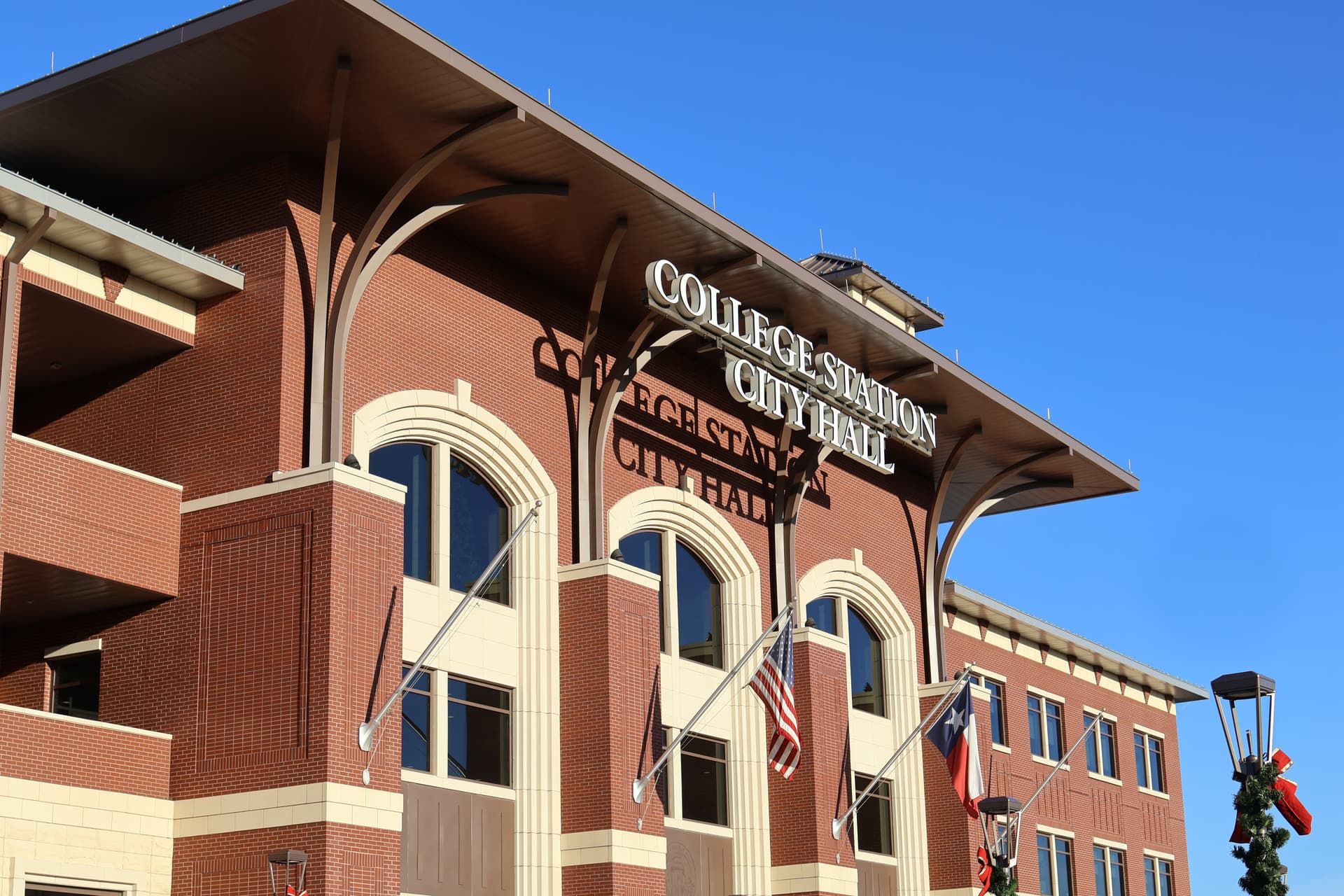
College Station City Council unanimously voted Aug. 13 to schedule a public hearing on a proposed property tax rate of $0.530254 per $100 valuation of property for fiscal year 2026-27. This rate has not been adopted.
The council is scheduled to hold the public hearing at 6 p.m. Aug. 27 at City Hall, when council members are expected to further consider the tax rate and the city’s proposed budget.
The gist
City Finance Director Mary Ellen Leonard said the final tax rate will be considered after the public hearing. Council could adopt a rate lower than the proposed 53.0254 cents at that time, but lowering the rate could require changes to the proposed budget.
The council’s vote for the hearing was unanimous, with council member Bob Yancy absent.
College Station’s 2025 adopted tax rate is $0.511872 per $100 valuation of property, according to agenda materials.
By the numbers
The city’s certified taxable values changed from the figures used during earlier budget discussions. Leonard said the city began the tax-rate calculation with adjusted prior-year certified taxable values of approximately $14.1 billion. That figure reflects adjustments following appraisal review and litigation.
This adjusted starting value represents a decrease of roughly $2 billion, or about 8%-9%, from the amount originally used in the city’s planning.
At the same time, new property added to the tax roll increased the city’s taxable value by about 3%. Changes in the value of existing properties resulted in an overall certified-value increase of about 1% for 2026, Leonard said.
The city’s no-new-revenue tax rate, which is the rate Leonard said would generate about the same amount of property tax revenue as the previous year, after required adjustments, is increasing by 1.64 cents.
The breakdown
Clarified during meeting discussion, the proposed rate does not necessarily mean every College Station property owner will see the same change in their tax bill. Property taxes are based on the taxable value of a property as well as the adopted tax rate. Changes in individual property values can affect a taxpayer’s bill even if the city adopts a lower or unchanged rate.
Council members spent much of the discussion clarifying how changes in property values, the no-new-revenue rate and the proposed tax rate interact.
Leonard also explained the city’s debt-service tax rate is tied to the principal and interest payments required on outstanding debt. Changes to capital projects discussed during the meeting would not affect this year’s tax rate, she said.
One more thing
Council members spoke on the city’s debt capacity and capital improvement plans during the tax-rate discussion.
City Manager Brian Woods noted how planned projects do not always happen on their original schedules. Leonard gave the example of water-well projects for which the city had previously budgeted about $90 million but ultimately issued about $37 million in debt, creating additional debt capacity.
Looking ahead
The proposed tax rate is part of the city’s broader FY 2026-27 budget process.
Leonard told council members lowering the tax rate below the amount proposed for the public hearing could require the city to identify reductions elsewhere in the budget to keep it structurally balanced.
The council will have an opportunity to further discuss the proposed tax rate and budget before adopting the final rate.
A public hearing is scheduled for Aug. 27 at City Hall.