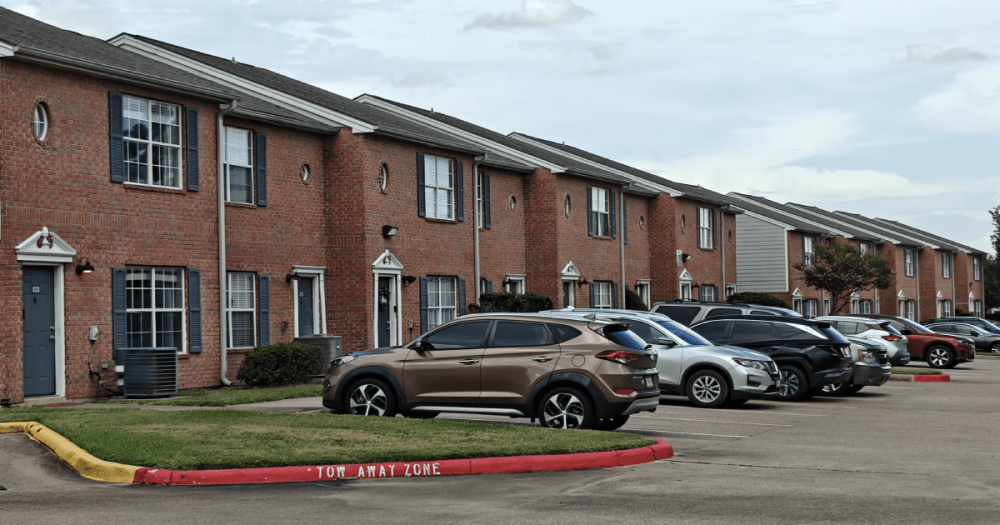
College Station City Council discussed July 9 starting a pilot program offering incentives for more affordable townhome developments and increased density throughout the city.
The overview
With the cost of single-family homes high due to inflation and limited supply, the city has been looking to increase the number of affordable townhomes available. Community Development Analyst David Brower said 8% of housing units in College Station are townhomes as of 2025, with the highest share being multifamily homes.
The city was presented with four ideas for incentivization, which include:
- Fee-based tools: Finding ways to reduce permit and building fees for townhomes, along with adjustments to impact, demolition and other fees that could impact project feasibility.
- Regulatory tools: Come up with incentives targeting the unified development ordinance, which was passed in 2003 to promote public safety and protect the character of projects, along with targeted rezoning efforts so other areas house townhomes.
- Economic development tools: Using the Texas Chapter 380 agreement, the city could offer grants, loans or tax rebates to attract builders and potential homeowners.
- Process incentives: The city would offer priority review for qualifying townhome projects.
It was recommended that the council analyze the fiscal impacts of fee waivers and credits, and create an economic viability study. Talks of a pilot program were also considered by Brower at the end of the presentation.
A closer look
Council member Melissa McIlhaney led the discussion after the presentation, herself an advocate for affordable homeownership. Describing it as a stepping stone to building equity and wealth, she said she believes the way to increase ownership in the city is to increase housing density.
“The actual dirt here in College Station is incredibly expensive and is only going to appreciate and become more expensive over time,” McIlhaney said.
Council member Bob Yancy said he was impressed by the city’s statistics on home vacancy being lower than in the United States as a whole, but questioned the process of focusing only on townhomes.
“I feel like we’re artificially constraining ourselves to one category,” he said. “I’d like to see us do more across the board except for student towers.”
Yancy and McIlhaney discussed incentivizing middle housing and how the turnaround time can be long but rewarding.
“We need to get the middle housing market to flourish because it’s redevelopment, and if we have incentives to build the product we want to see in middle housing, it may spur that to happen more quickly,” McIlhaney said.
McIlhaney also questioned why condominiums weren’t included in the presentation even though they are deeded property. Director of Development and Planning Services Anthony Armstrong explained that various Texas laws and regulations on condos prevent the city from having certain incentives.
“Condo plotting is done by the state, so there would be no mechanism for the city to identify whether it’s a condo association or a multifamily complex,” Armstrong said.
Armstrong then spoke about previous townhome projects with clear intentions for their development, stating that if the council defines the end-user goal for new developments, the city can bring it to the council and make it an item on an agenda.
“A lot of this would be in redevelopment areas, so it would be trying to incentivize someone to enter this space,” he said.
In April, the city’s longstanding “no more than four” shared housing ordinance was updated to remove family-based language.
The takeaway
Mayor John Nichols complimented the presentation, saying he believes housing density is the future for developments in the city.
“We’re not going to be annexing large acreages for suburban sprawl, and the Legislature is going to keep focusing on smaller and smaller lot sizes that the city has to provide,” Nichols said. “I think density is important in College Station, but I also think this is a way to encourage what we’ve invested two years of our collective lives in up here in middle housing and going through that whole process.”
The council did not take any action, but presentations on housing density and developments are expected at council meetings in the near future.