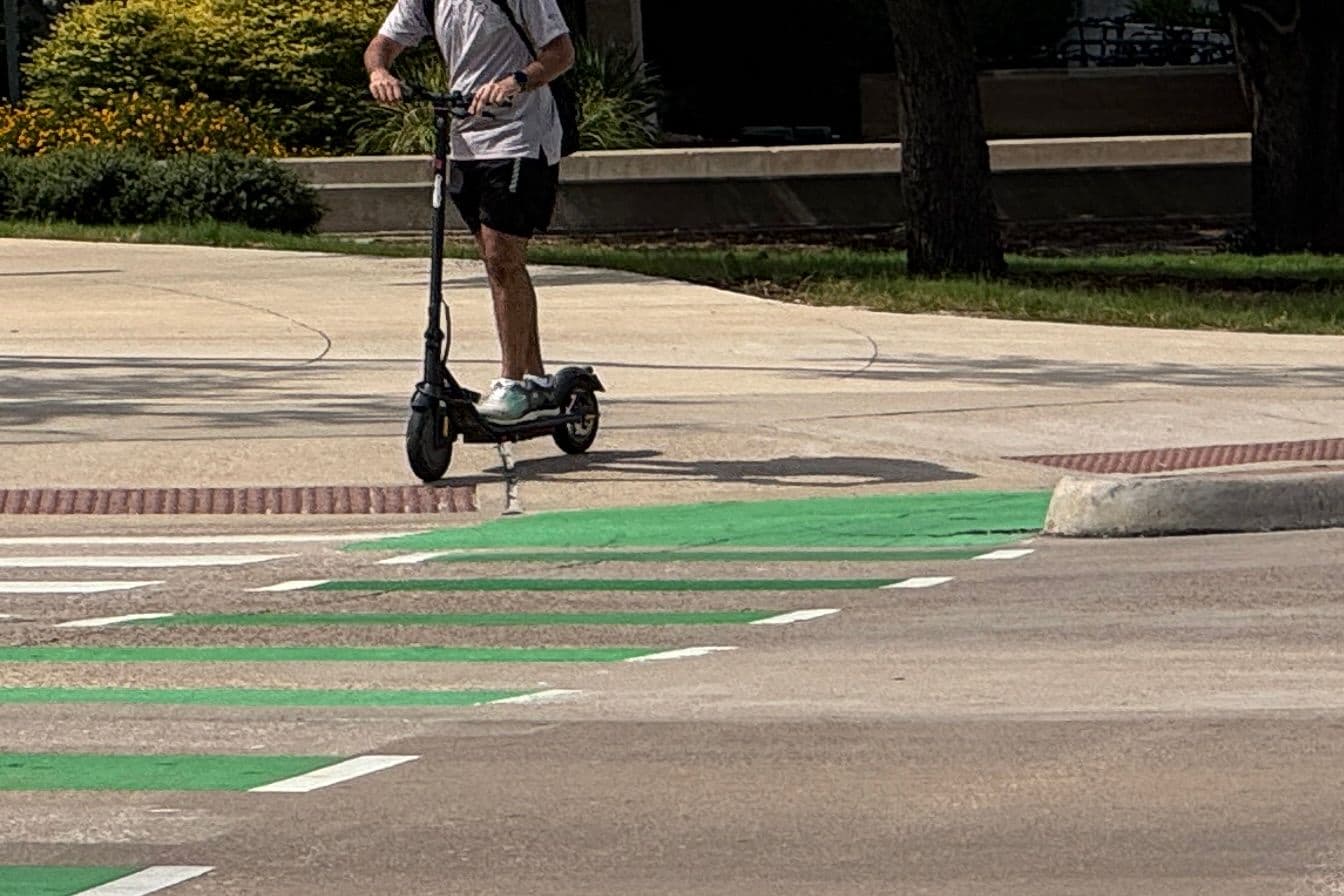
Texas A&M University System regents announced new rules and guidelines for on-campus micromobility vehicles, including no phone use and new training requirements. The update comes as regents continue their push to address student crashes on campus during their Nov. 12 meeting, prioritizing student and pedestrian safety.
The overview
As previously reported by Community Impact, both Texas A&M and the city of College Station have discussed rules and regulations related to micromobility. The university said 52 of the 346 crashes reported in 2025 involved micromobility vehicles. Chief Operating Officer and Senior Vice President of Operations Peter Lange said he saw an increase in ownership of micromobility vehicles among the student population.
Lange said the rise in use and ownership of electric scooters is where he feels the university should be most concerned.
“Scooter accidents are more serious than bicycle accidents,” Lange said.
The specifics
According to the presentation, the new rules will prohibit electric scooters and other electric micromobility vehicles on campus sidewalks. Along with a 20 miles per hour speed limit, students will have to follow these guidelines:
No use of hand-held devices while riding, or headphones, earbuds or any noise-cancelling devices
One rider per device, unless the device is specifically designed to carry more than one passenger
New training requirements, including electric micromobility training per semester for registered users and annual safe travel training for all students, faculty and staff covering all modes of transportation
Lange said students using noise-canceling headphones can reduce awareness and cause safety problems for students and drivers, but the university is working to update its sidewalks quickly.
“The devices are silent and everyone is walking around with earbuds,” Lange said. “We are working to adjust the infrastructure.”
Regent John Bellinger asked Lange about students who charge the devices in dormitories, citing concerns about potential fires.
“If we have a battery that’s UL-listed, we will allow it to charge indoors,” Lange said. “If it’s not, then it’s prohibited.”
Lange said the new guidelines will let students know which devices are approved.
Stay tuned
Lange said the implementation of the new rules will begin for the spring 2027 semester. The tracking and monitoring period was originally 24 months, but Regent Sam Torn requested the period be changed to 18 months so the board can see the changes in a shorter timeframe.