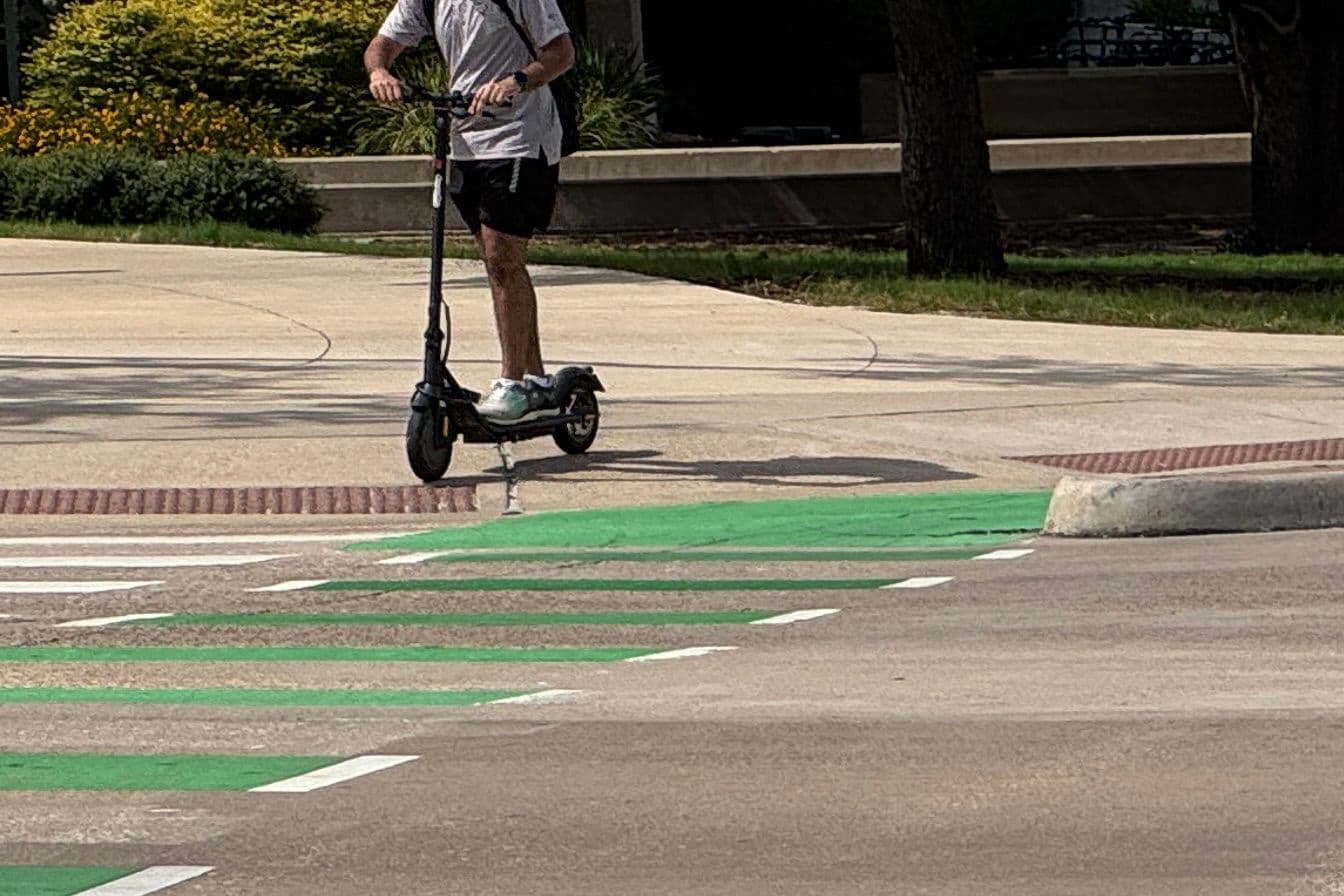
Texas A&M University System regents are warning that micromobility devices could be banned from campus if safety problems continue, as new data shows crashes involving scooters and other devices are increasing. (Karley Cross/Community Impact)
Texas A&M University System regents are warning that micromobility devices could be banned from campus if safety problems continue, as new data shows crashes involving scooters and other devices are increasing.
The issue was discussed Sept. 3 during the system’s quarterly Board of Regents meeting in College Station. Peter Lange, COO and senior vice president of operations, presented the system’s efforts to improve safety for scooter riders, bicyclists and pedestrians.
What’s happening?
Regent John Bellinger said the issue needs to be addressed quickly.
“If we don’t get it fixed a year from now, we’re going to ban them and you’re not going to have them at all,” he said.
Breaking it down
Lange said Texas A&M recorded 346 campus crashes in 2025. About 52% were related to inattention, while 15% involved micromobility devices.
Crashes involving micromobility devices increased 37% from 2024 to 2025, he said.
A February report from the College Station Fire Department revealed that auto-pedestrian incidents rose by 432% from 2020 to 2025.
Lange said crashes dropped by 3% in Bryan-College Station between 2024 and 2025, but auto-pedestrian crashes rose by 17%.
2024: 175
2025: 204
The university is seeing more students use personally owned scooters, e-bikes, electric skateboards and other devices, Lange reported. Shared scooter use has declined as personal devices have become more common.
What Texas A&M is doing
Lange outlined five areas of focus: separating travel modes, improving infrastructure, increasing education and awareness, strengthening enforcement, and updating rules and regulations.
The university has added separated paths in several areas of campus. One example is Penberthy Boulevard, where shared-use paths were added along the roadway between George Bush Drive and John Kimbrough Boulevard.
On a frequented area for Aggies, Texas A&M University System regents pointed to the widening of Penberthy Boulevard, adding streetlights and a multiuse pathway for safer traveling.Courtesy Texas A&M University System
Lange said before-and-after data shows micromobility devices are now using the shared paths instead of traveling in the roadway.
The university also launched new registration software for micromobility devices, allowing transportation officials, University Police and Residence Life staff to identify registered devices and communicate directly with their owners.
Put in perspective
Lange said the university cannot require riders to wear helmets at this time but is emphasizing helmet use, removing earbuds and paying attention through education campaigns.
University Police also issued 16% more moving violations involving micromobility devices in 2025 compared with 2024, according to Lange’s presentation.
Transportation officials can impound unregistered devices and tag vehicles that exceed campus restrictions. Lange said more than 100 unauthorized devices are typically tagged each year, often high-speed e-bikes or other devices that exceed campus limits.
Keep in mind
Lange said the university still has work to do, particularly with education and enforcement.