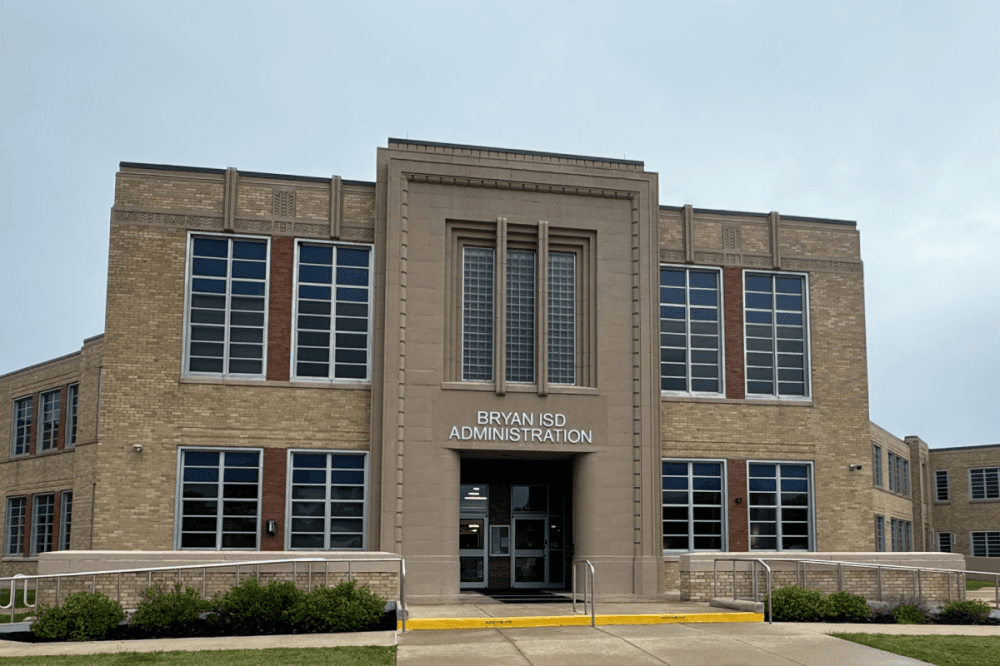
Bryan ISD officials say the district is on track to finish the current school year in stronger financial shape than expected, even as declining enrollment and uncertain state funding continue to shape planning for next year’s budget. (Karley Cross/Community Impact)
Bryan ISD says the district is on track to finish the current school year in stronger financial shape than expected, even as declining enrollment and uncertain state funding continue to shape planning for next year’s budget.
Chief Financial Officer Norma Friddle presented trustees with an overview of both the current budget and early projections for the 2026-27 fiscal year during a May 11 special board meeting.
How we got here
When Bryan ISD adopted its budget, Friddle projected a $6.7 million deficit. Updated financial estimates now show a stronger outlook:
Original projection: About -$6.7 million
After new state revenue: About -$3.1 million
Current estimate: About +$2 million
These updated numbers factor in additional state revenue, payroll accruals and non-payroll expenditures the district expects to spend at the end of the year.
Friddle cautioned the final result could still fall anywhere between a $2 million surplus and a $3.1 million deficit because two months remain in the fiscal year.
She said total revenues are expected to reach about $191 million, boosted largely by one-time state payments tied to property value audits. Friddle and Place 7 board member David Stennis noted those payments, which total several million dollars, are considered extraordinary and are not expected to repeat annually.
The district’s ending fund balance could reach roughly 2.7 months of operating expenses, an improvement over earlier projections.
Friddle and Place 5 board member David Stasny also reported positive movement in the employee health insurance fund, which shifted from a shortfall position last year to a gain during the first quarter of 2026.
“We made about a $600,000 gain,” Friddle said. “We’re definitely moving in the right direction.”
The breakdown
While the current year appears stronger than anticipated, Friddle emphasized that planning for 2026-27 is shaped primarily by declining average daily attendance, or ADA, which is the key factor determining state education funding.
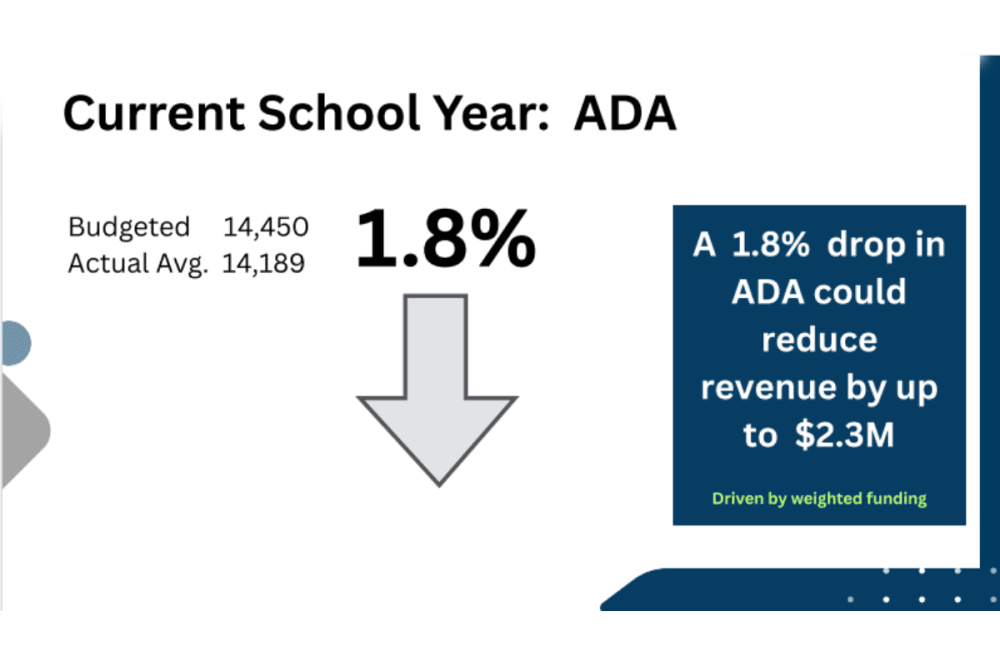
Using enrollment data from the current school year, Bryan ISD is building next year’s budget around an estimated ADA of about 14,189 students, reflecting a continued downward trend.
Bryan ISD is building next year’s budget around an estimated ADA of about 14,189 students. (Courtesy Bryan ISD)
School finance planning involves uncertainty. Budgets must be adopted before final property values are certified by appraisal districts and before the state confirms its funding calculations months later.
Based on preliminary assumptions, Friddle projected:
$182.6 million in anticipated revenue
$183 million in anticipated expenditures
A projected $419,000 deficit
Friddle told trustees that adopting a shortfall budget does not necessarily mean the district will finish the year in a shortfall, noting that savings can happen through staff attrition, operational adjustments and ongoing spending reviews.
Managing the impact
Friddle said the district expanded its budgeting process this year, meeting with campuses, departments, teachers, parents and student groups to identify priorities and review spending requests.
Superintendent Ginger Carrabine said the district conducted dozens of meetings and focus groups as part of what leaders described as a multiyear effort to increase transparency and collaboration in financial planning.
Friddle also listed ways the district has tightened operations while attempting to avoid layoffs, saying leaders have worked to manage costs while maintaining services. Some of those ways include:
Budget-to-actual monitoring: A monthly reporting schedule to better monitor budget patterns.
Nonpayroll vetting: Every department and campus budget was vetted through the finance committee to provide transparency and accountability for district purchases.
Leveraging attrition: When staff members resign, the district “reimagines” the position to redistribute duties among existing staff.
Energy conservation: The district will launch an energy-saving initiative to reduce utility costs.
Overrun controls: A policy to prevent budget overruns.
Stay tuned
The board also reviewed possible compensation considerations for next year, including employee stipends, a bus driver attendance incentive and whether to provide teachers with a traditional salary step increase tied to years of service.
No action was taken. Trustees are expected to revisit compensation options and consider adopting the 2026-27 budget in June.