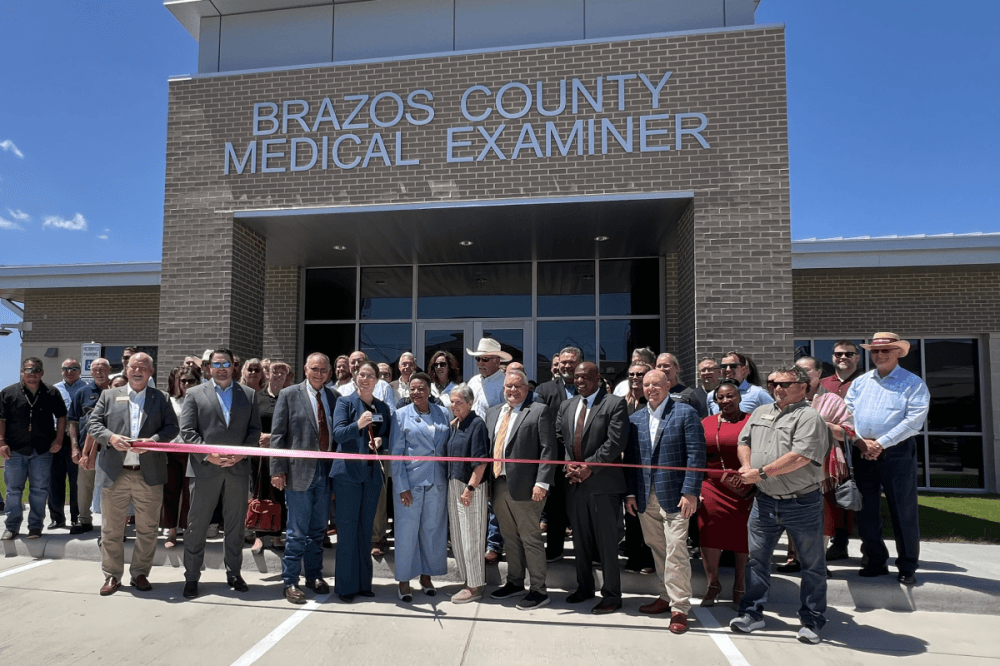
Brazos County is preparing to open the doors to its first medical examiner’s office, bringing death investigations and autopsies closer to home while reducing the county’s reliance on facilities outside the area.
The office held its first public tour Aug. 19 and will host one more before the facility begins its transition into an operation. The office is expected to begin taking cases for examinations in September, with Dr. Jennifer Dierksen serving as the county’s medical examiner.
The $35 million project is part of the county’s largest wave of public construction in nearly 20 years, as said by county officials.
The local impact
The new facility is expected to save the county money while keeping more death investigations close to home.
Dr. Jennifer Dierksen, Brazos County’s director of forensic services and medical examiner, said the county currently sends about 150 cases a year to Travis County for autopsies. An autopsy there costs about $4,600, with transportation adding roughly $1,200, she said.
Dierksen estimates the total cost of handling a case locally will be about $3,500 when salaries and other expenses are included.
For families, the office also means their loved ones will not have to be transported outside the county for an examination when a case falls under the medical examiner’s jurisdiction.
Dierksen said the office will also allow the county to better track trends in deaths, including potential drug overdoses and other public health concerns.
The office will initially have a small staff, including Dierksen, an operations administrator, two investigators and an administrative assistant. The county hopes to add more investigators as the office grows.
How it works
The facility includes:
- Three autopsy stations
- Examination and investigation areas
- CT scanner and X-ray equipment
- Cold storage and evidence storage
- Spaces for laboratory and administrative work
When a death falls under the medical examiner’s jurisdiction, investigators will respond to the scene, gather information about the circumstances surrounding the death and transport the body to the office when necessary.
At the facility, Dierksen and her staff can conduct an external examination, imaging and an autopsy when needed. Toxicology and some other testing will initially be handled by outside laboratories before gaining those resources locally.
Dierksen said most routine autopsies take only a few hours, and families generally can have their loved one released to a funeral home within 24 to 48 hours once the necessary paperwork is completed. Some cases can take longer if identification or additional testing is needed.
In the classroom
The facility includes a viewing platform where law enforcement, students and other authorized visitors can observe autopsies without entering the examination room.
Dierksen said the office is also intended to serve as a teaching space. She said she hopes to work with Texas A&M students interested in forensic pathology, death investigations and other forensic sciences.
What’s next?
The office is expected to begin taking cases in September, with Dierksen assuming full jurisdiction over death investigations in October, according to the current transition plan.
Residents will have one more opportunity to tour the facility Aug. 29, 10 a.m.-2 p.m. before it begins operating.