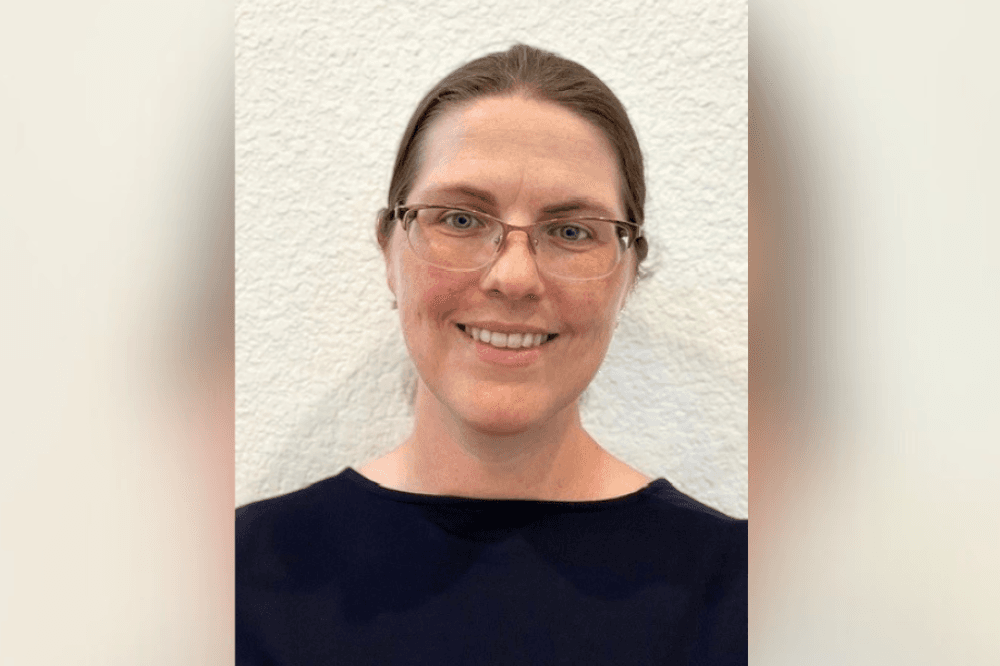
Dr. Jennifer Dierksen, director of forensic services for Brazos County, spoke with Community Impact about the county’s first medical examiner’s office, currently under construction. The office is expected to open this summer, with Dierksen anticipated to be appointed the county’s first medical examiner.
Dierksen is a graduate of Texas A&M University and received her doctorate of medicine from the Texas A&M College of Medicine. She most recently worked in the Travis County Medical Examiner’s Office from late 2018 to February, when she began as Brazos County’s director of forensic services.
This interview has been edited for length and clarity.
What is the director of forensic services tasked with in the county?
Right now, as the director, I am in the process of going through job applications, writing protocols and procedures for the office, meeting people in the community that will be affected by the medical examiner’s office, and just in general, getting ready to start the office. ... Besides offering a good medical examiner’s service in terms of autopsies for our county, I’m also hoping to provide forensic education and other opportunities for people in the area.
As the medical examiner, how will your duties change from director?
Deaths occurring in Brazos County would be under my jurisdiction for review [as medical examiner]. According to Texas Code of Criminal Procedure 49.25, there are certain types of death that belong to the medical examiner purview, things like: homicide, suicide, accidents—including motor vehicle, falls, overdoses—as well as any deaths that are described as sudden or unexpected or even unwitnessed. Most of the time, many of the cases that were unwitnessed or unexpected will end up being natural causes of death in terms of manner, but for that to be determined, an autopsy is sometimes the best thing that needs to be done.
What need do you see for a medical examiner’s office in Brazos County?
It’s providing a much-needed service; we’re short-handed around the country. Right now, most of the counties of the United States don’t have a medical examiner; they may be overseen by a justice of the peace or a coroner-type system. So there’s maybe 600 medical examiners out there, but to provide adequate medicolegal investigation into death and providing autopsies, we need at least twice as many medical examiners in the country.
By providing proper medicolegal investigation to a county, it is beneficial to both the legal system and to public health, and providing a service to the county. We’ll have a better understanding of cases that otherwise wouldn’t have been autopsied that now we have a better idea of what people are dying of. ... Sometimes, just knowing what’s going on in the community—it’s beneficial to public health. Same with our deaths being properly investigated. ... Just providing good medical legal services is beneficial to the public at large, so that deaths are being investigated and not just assumed it’s something else.
What made you interested in pursuing forensic science?
One requirement for us to sit for our board examinations in forensic pathology is that we are required to do autopsies. ... I had a lot of interesting mystery cases; they were truly natural deaths that the medical examiner’s office in Houston had declined to oversee, but sometimes [patients] just died too quickly to be properly diagnosed with what was going on with them. ... I get to continuously learn about the human body and not just focus on one organ system.
What does it mean to you to be chosen to lead this new department?
It’s a huge honor and also a huge responsibility. ... Being back here in Aggieland, it’s coming back home. ... What we’re building is going to be of great benefit to the county and hopefully soon to other surrounding counties in terms of providing a service and education for the people in this area. By the time I retire, I think it’s going to be something I’m going to be very, very proud of.