West University Place is informing residents about CenterPoint Energy’s tree management and vegetation practices, all while greenlighting assessments that will identify how much tree overgrowth exists citywide and the proper way to resolve it.
In a nutshell
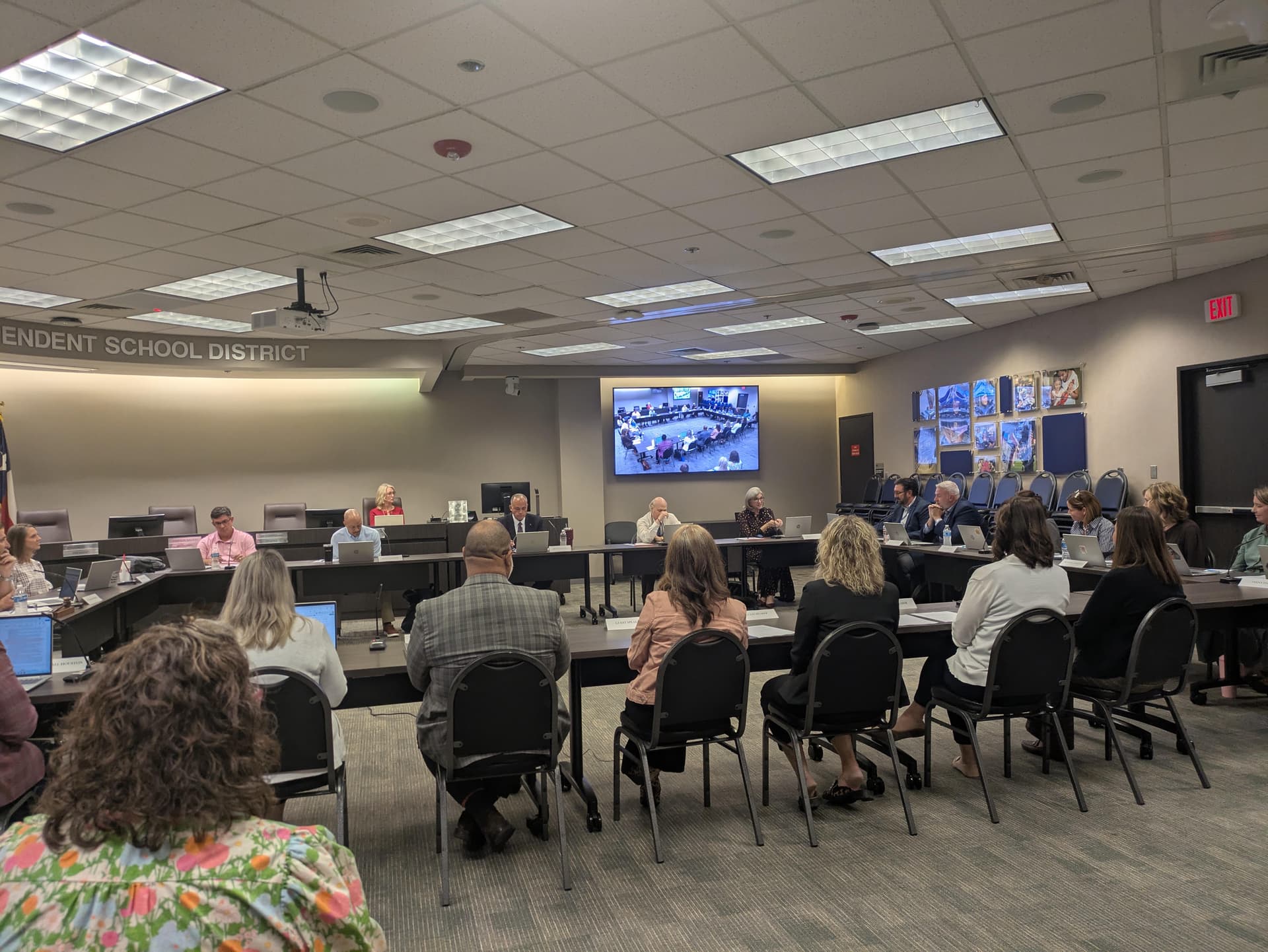
Joshua McGinty, service area manager for CenterPoint, broke down the utility company’s operations related to cutting down problematic vegetation in a Nov. 9 presentation.
Per company guidelines, he explained that a “service drop” is defined as a line running from a utility pole to a weatherhead atop a resident’s home. Upon request, CenterPoint may trim vegetation around a service drop if it presents the potential to damage the electric line.
In all cases, CenterPoint evaluates the condition of highlighted sites to determine whether utility-vegetation work is necessary. Homeowners can contact company officials over the phone to request an inspection or tree trimming work, in addition to visiting the company website for answers to general tree management inquiries.
What the experts say
Following the presentation, City Council questioned the public utility company on two fronts. First, on CenterPoint’s methodologies for proactive tree monitoring and trimming in the absence of resident reporting. Second, on how CenterPoint balances company trimming standards with standards fit for the trees to ensure their continued health over time.
McGinty said that CenterPoint utilizes light detection and ranging technology, or LiDAR, to analyze heavy vegetation areas. Prior to conducting any work, inspectors are charged with visiting the analyzed sites to verify the accuracy of the mapped land surface.
Crew members are trained to directionally prune overgrown tree limbs, which is in line with industry standards and is intended to “train” trees to grow away from power lines, officials said. Over time, this leads to less tree trimming being required in the future and trees having ample time to recover from stress, minimizing effects on health.
Officials assured City Council that while CenterPoint’s approach to tree trimming may look different from others', its treatments are rooted in "reliable and safe maintenance practices."
How it works
Council member Kalie Rainsberger inquired at one point if tree management jobs are completed in the order they are received by crews designated to certain areas. Officials explained that maintenance requests are handled on a case-by-case basis depending on their urgency and risks for outages.
McGinty added that job prioritization is also based on:
With regard to residents’ concerns about how they will be notified of upcoming tree trimming happening in their area, McGinty confirmed that homeowners will be notified with doorhangers 7-10 days in advance of a crew’s arrival at a site. This is in addition to a diagram showcasing the work they can expect to be done.
He urged residents with any present or future concerns related to tree management in the community to contact the city or CenterPoint directly via the correct communications.
Residents may visit CenterPoint’s virtual Action Center for its outage tracker or to report an outage, sign up for power service, view the community progress tracker as part of Greater Houston’s Reliability Initiative and locate other useful information. When reporting hazards, they will have the option to upload their contact information, exact location and up to three pictures of the identified hazard.
Reports are routinely dispatched to the appropriate operations personnel to address the hazard, as the Action Center is continuously monitored, McGinty said.
In case you missed it
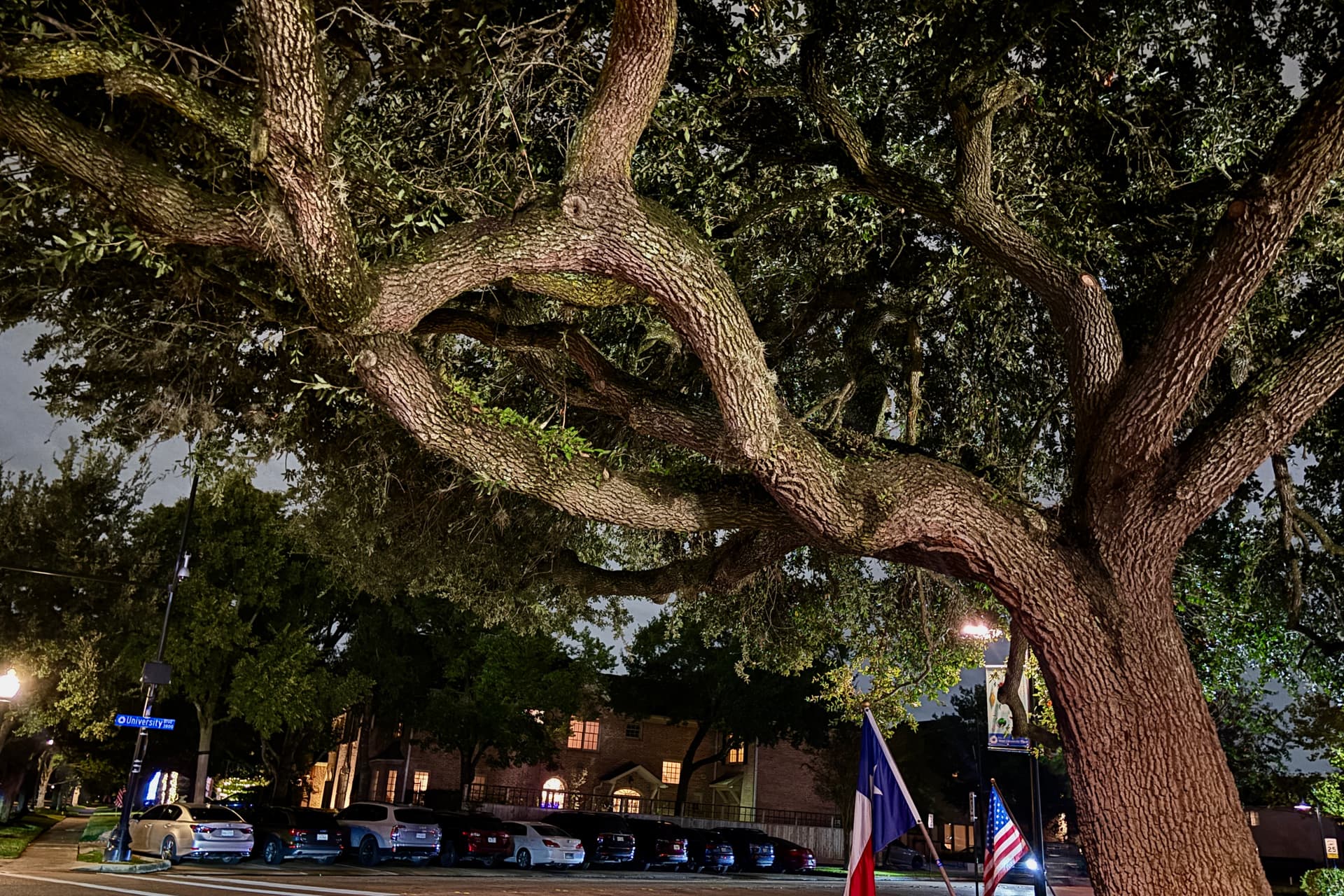
West U officials also discussed at length the possibility of creating a one-time tree trimming program. This program would address trees whose branches surround streetlights, affecting the illumination of streets and sidewalks.
The conversation of tree trimming first arose at the Oct. 26 City Council meeting when CenterPoint representatives provided an update on West U’s ongoing Streetlight Conversion Project.
Mayor Pro Tem John Barnes suggested that the city look into mitigating tree overhang to avoid light blockage in various spots throughout the community. Those sentiments remained unchanged at the Nov. 9 session.
“The key thing is, the branches are literally surrounding the light and forbidding the lighting of the sidewalks the way the area was designed and intended,” Barnes said. “My proposal is simply to… go around, do inventory and find trees where you have this kind of situation going on.”
No action was taken on the item.
More details
The city’s fire code mandates that any tree branches hanging lower than an identified streetlight bulb and extending over the street curb are in violation of the code, City Manager Dave Beach said.
Similar to Barnes’s stance on the matter, Mayor Susan Sample suggested that before agreeing to any tree cutting work, the city should first assess how many streetlights and sidewalks are currently affected by overgrowth. After this information is gathered, staff can return with more developed program options for how said trees can be addressed, bearing in mind that West U is a “tree city.”
“I wouldn’t mind designing a program that makes sense,” Sample emphasized to others on the dais. “Not to go hack trees, but go assess what’s out there.”
Prior to closing the session, West U officials directed city staff to solicit proposals from various arborist companies to address trees in the City Right-of-Way. These proposals will be brought back to council for future cost consideration with an aim to resolve potential public safety issues.