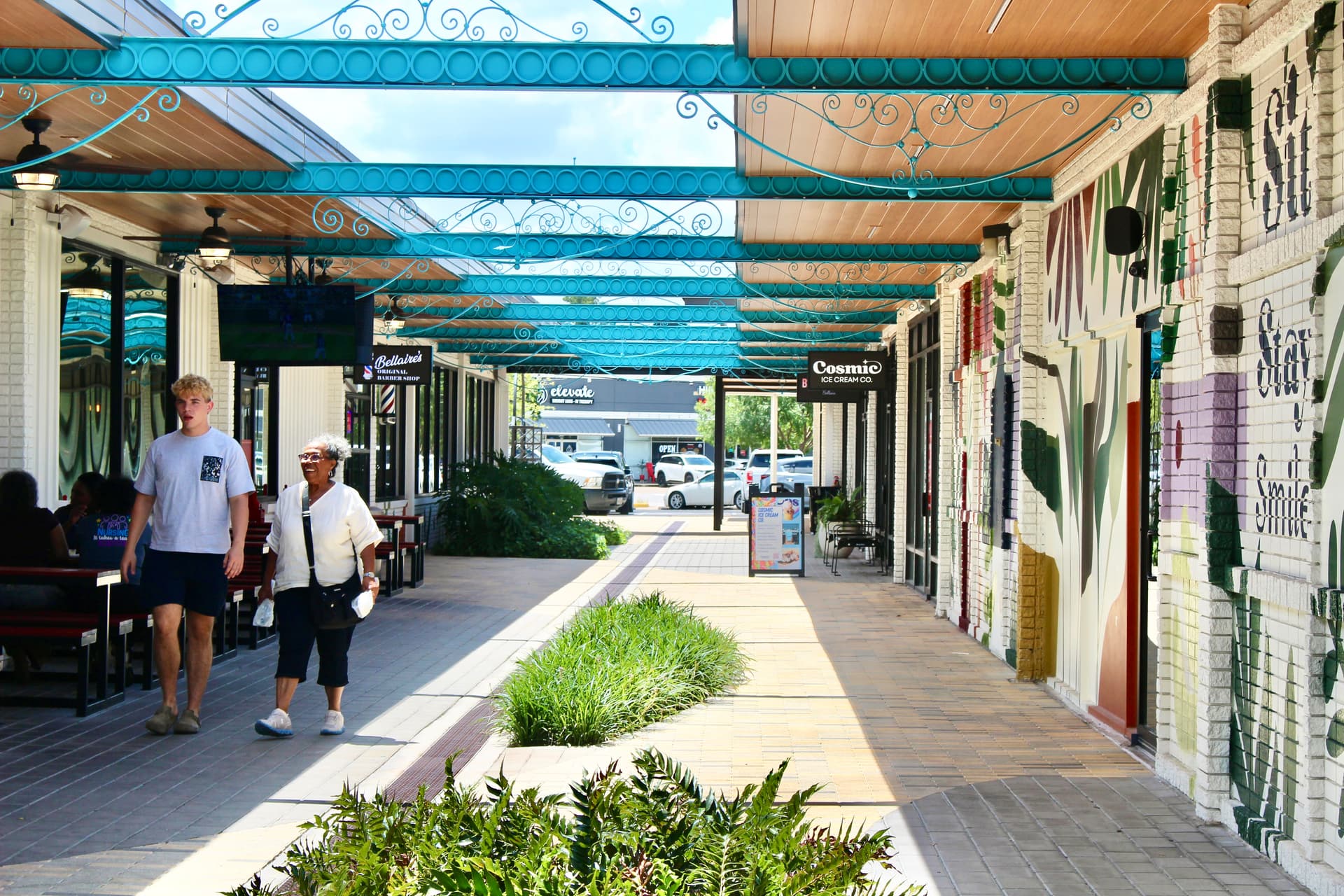
Bellaire residents walk around the Triangle Shopping Center, a mixed-use development that offers restaurants, shopping and leisure. (Emily Lara/Community Impact)
Bellaire officials are preparing to take another step toward improving the city’s commercial development zones after $100,000 was added to the proposed fiscal year 2026-27 budget to hire a consultant for economic development.
The goal, city officials said, is to create more attractive settings for businesses and residents while improving the functionality and appearance of existing commercial areas throughout Bellaire, as well as to attract new high-quality commercial businesses.
The big picture
Mayor Gus Pappas emphasized the effort is not about expanding Bellaire’s commercial footprint, but about enhancing and “making better use” of the areas the city already has.
“Bellaire has a real opportunity to enhance its commercial areas,” Pappas said, “which will serve to benefit its residents, not only in terms of increased opportunities to shop locally, but our hope is that an enhanced commercial sector will organically increase the city’s sales tax revenue.”
Director of Development Services Travis Tanner said any changes will be confined to existing commercial zones and not affect residential areas.
Areas that are the most likely to be chosen include sections of Bissonnet Street, such as the Bellaire Triangle Shopping Center and the Bellaire Makers District, formerly the Urban Village-Downtown District.
Bellaire's retail establishments are gathered within three areas along Bissonnet Street.Sources: City of Bellaire, HR&A Advisors/Community Impact
Zooming in
City officials have been discussing the best ways to implement improvements to the city's commercial zones for several years. However, the conversation has ramped up in recent months after consultants HR&A Advisors shared a commercial strategy report in June highlighting three main priorities that the city could take to improve commercial real estate in Bellaire.
Those priorities include easing parking regulations, facilitating land assembly, which involves combining neighboring pieces of real estate into one larger property, and creating one or more special districts to fund public improvements.
Tanner said the Planning and Zoning Commission has already begun to work on easing parking regulations by adding flexibility for off-site and shared parking in commercial areas.
On the other hand, Tanner said land assembly could include repurposing public rights of way that aren’t in use and packaging plots of land together, as the majority of commercial properties in the city are small and fragmented.
“Instead of having large tracts that are owned by one landowner or developer, we have a lot of small tracts that are owned by various individuals,” Tanner said. “That is a difficulty in development.”
The report shows that less than 7% of Bellaire’s land is zoned for commercial use, as well as other statistics such as:
23: Number of owners with more than one parcel
42%: Percentage of properties where built improvements are worth less than the land value
1972: Average year built for properties in downtown
The options
HR&A Advisors also highlighted different strategies the city could take based on its timeline, financial costs and impact. One of the options indicated as “high impact” in the report involved creating a special purpose district.
A special purpose district, according to the Texas Comptroller of Public Accounts, is an independent unit of local government created by a state law to provide one specific service. These special districts operate separately from cities.
Most districts operate within a defined, legally set boundary or zone. However, each district differs in how they collect money and operates.
Tanner said the city expects to use the economic consultant to help study, over the next fiscal year, which district would best fit Bellaire’s needs.
The three most common types of special-purpose districts in Texas include a Tax Increment Reinvestment Zone, Public Improvement District and Municipal Management District.Sources: Pape-Dawson, Quiddity Engineering/Community Impact
Who would benefit?
“[A special district] would help the city achieve its goals outlined in the comprehensive plan of having the highest and best use of our commercial areas.
—Travis Tanner, Director of Development Services
“Increased-quality commercial development will do nothing but increase the lifestyle and sense of community we already feel.”
—Gus Pappas, Mayor
Stay tuned
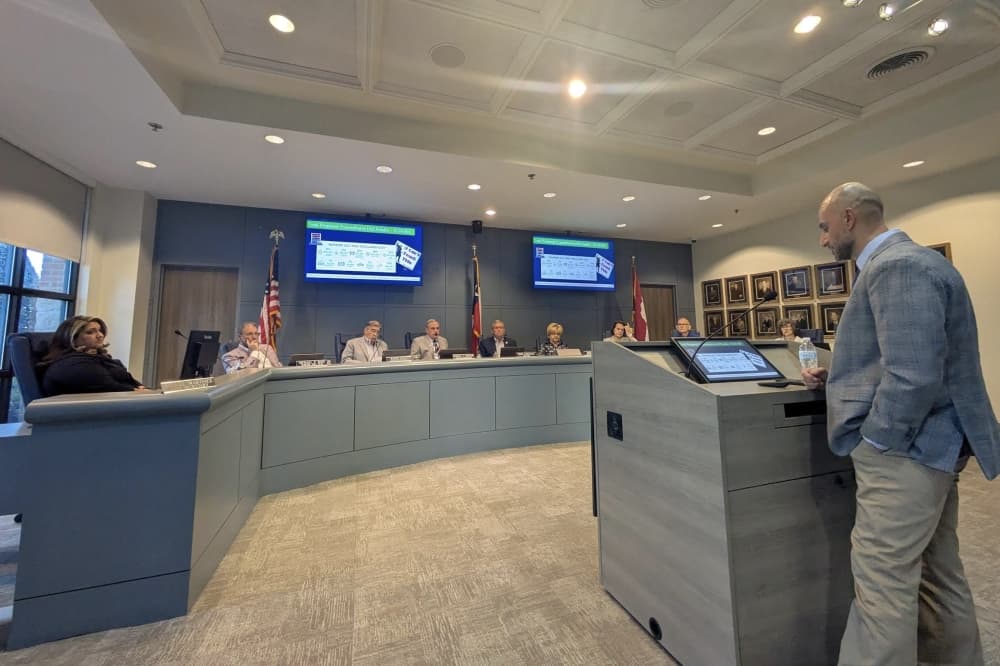
City Council is expected to vote on the proposed budget that includes the cost for the economic consultant during the Sept. 21 meeting. If passed, Tanner said he expects community engagement to be a big part of the process.
“Everything we’ve ever done since I’ve been here has had more community engagement than other cities,” he said. “It’s more proactive here about trying to reach out to people for feedback about what they want.”
Pappas echoed his sentiment, noting that City Council will be available to hear public comments, questions and concerns on the topic.
“Council is willing to look at new and innovative ideas,” Pappas said. “But as I said before, is it in the best interests of the residents and as for a voice, our residents know that we are there twice a month, with one of the first things on the agenda being hearing from them.”