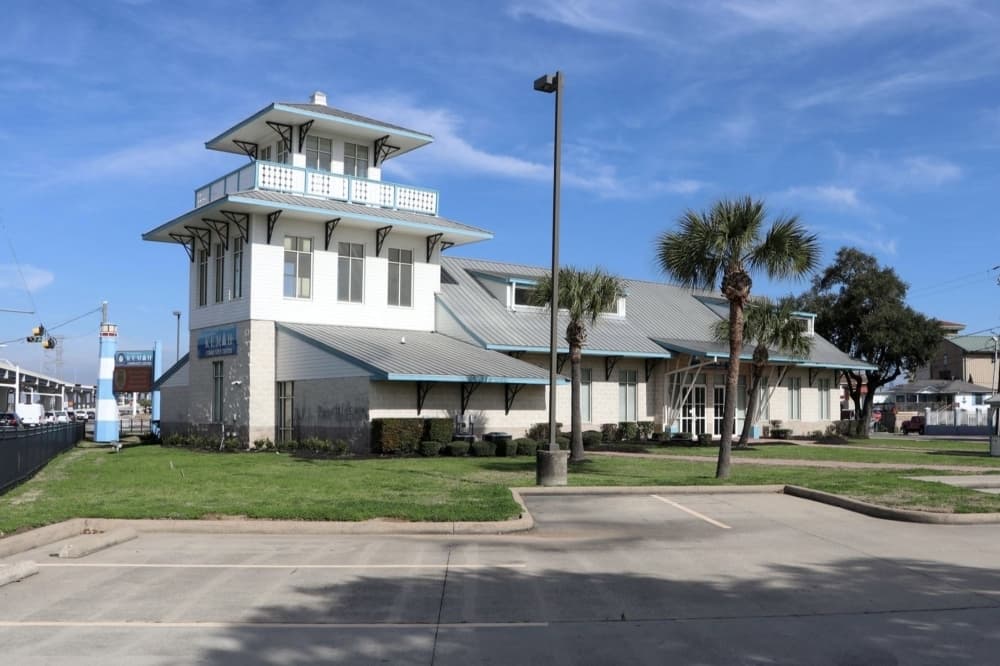
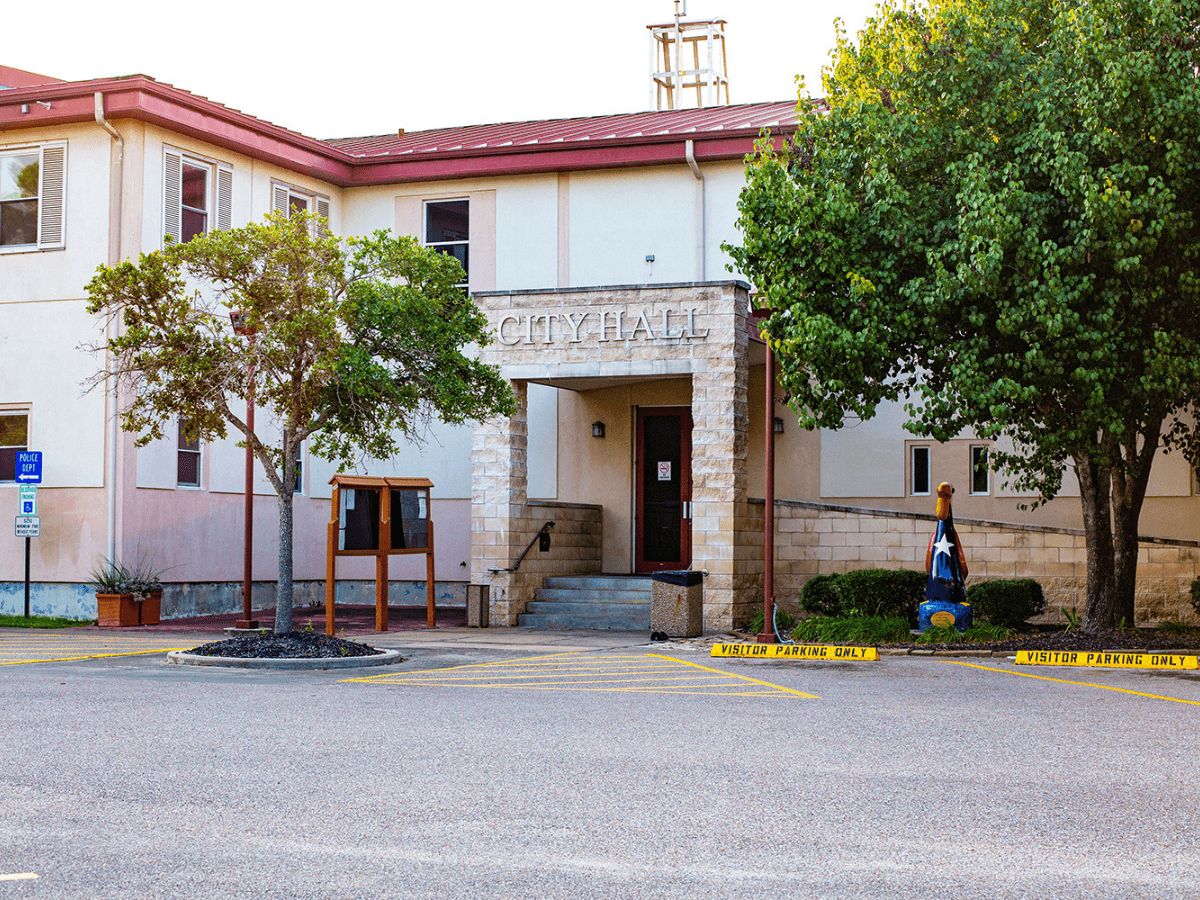
Kemah City Council discussed the possibility of a 90,000-to-120,000-square-foot mixed-use development along Hwy. 146 at its April 8 meeting, which sparked a debate among council members and the wider community about Kemah’s identity as a tourist destination or “bedroom community.”
What happened
During a special meeting held April 8, City Council heard a presentation from Houston-based Collaborate Architects, who were seeking to build the development, which would be anchored by a sports and event center, which supporters said they hoped would both make Kemah more attractive to tourists while offering a social gathering place for locals.
The sports center would hold eight basketball courts, which could be converted to 16 volleyball courts or 24 pickleball courts, according to a deck from Collaborate Architects. The complex would also feature a fitness center, an indoor walking track and dedicated spaces for after-school and community programming.
Later, Phase 2 of the development would also include a hotel with 115 beds, a conference center and 200,000 square feet of retail and hospitality space, according to the deck.
The cost
This development is structured as a public-private partnership where the state-funded rebate specifically covers the sports complex and event center, which would be covered by a 6.25% sales tax rebate.
By utilizing Texas Tax Code 351.1021, the city can collect this rebate from all businesses within an expanded 2,500-foot radius rather than the standard 1,000 feet, Collaborate Architects principal Chris Kay said at the meeting. Kay said with this model, the city would capture $7.1 million annually.
Conversely, the hotel, dining and retail venues would be funded development partners.
The debate
The proposed project sparked a debate at the meeting, with proponents of the development arguing it would bolster the city’s economy and draw tourists, while those who were against the development said it would irreparably alter Kemah’s quiet character.
"You have about $70-plus million a year that's going to the state right now that you're not [getting] benefit of,” City Administrator Cesar Garcia said at the meeting. “Are we going to forgo these funds ... or do you want to have an asset or an economic driver that could do that while also providing a quality of life?"
Council member Doug Meisinger said he strongly opposed the project and felt if the development were put on the ballot, voters would not support it.
“Every city has a personality, [it] sort of has an identity,” Meisinger said at the meeting. “I don’t think this blends with our identity whatsoever. ... Kemah is teetering on the verge of ‘it’s a nice place to visit, but you wouldn’t want to live there.’”
Kay said the development, especially the sports complex, would be an economic boom for the community and that tournaments hosted at the sports complex could attract 4,000-5,000 people a weekend.
"You're losing about 30 to 35% of revenue opportunities from tourism and hotel stays to our other surrounding communities. ... Your kids [go] to tournaments in other communities,” said Saul Valentin, another principal with Collaborate Architects, at the meeting. “All that would stay here."
Another point of view
Kemah resident Jacqueline Wieland said she felt residents could either play a role in “shaping” how that parcel of land is developed or be at the mercy of any type of future development that could go in there.
"The land's going to get developed, and it's whether it's something that we all can benefit from, or is it going to be another apartment or a dollar store, or a gas station that would not be as exciting to me,” Wieland said after the meeting.
The timeline
The project is currently in its early planning stage, but after feasibility studies have been conducted and if the city approves the project, the construction is expected to take two to three years, Garcia said.