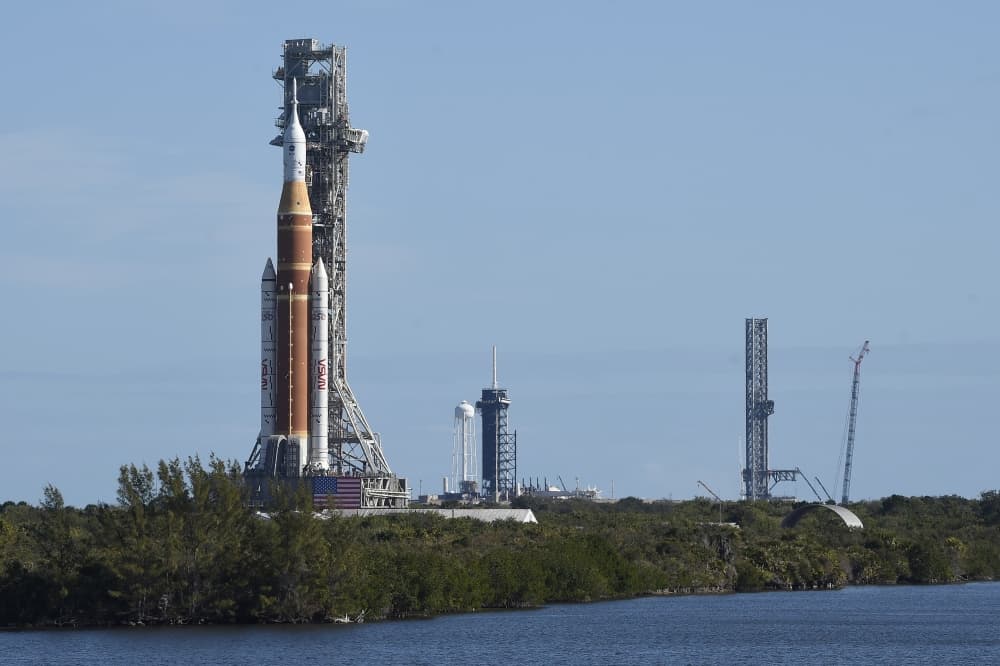
Four astronauts boarded the Orion spacecraft on April 1 and lifted off that evening from NASA’s Kennedy Space Center in Florida as part of Artemis 2, NASA’s first manned lunar mission since Apollo 17 in 1972.
What you need to know
Artemis 2 is sending NASA astronauts Reid Wiseman, Victor Glover and Christina Koch and Canadian Space Agency astronaut Jeremy Hansen on a 10-day mission to orbit the Earth and moon, according to NASA’s website.
While the astronauts won’t land on the moon’s surface, they will be the first people to leave low-Earth orbit since the Apollo 17 moon mission in 1972.
The mission will have the astronauts orbit the moon to validate life‑support systems, deep‑space navigation and manual piloting techniques essential for future landings, according to an April 1 news release from Texas A&M University.
Artemis 2 intends to take its crew farther from Earth than any previous manned mission, potentially surpassing the 248,655-mile record set by Apollo 13, according to NASA’s website.
The four astronauts will be able to view the moon from a higher altitude, about 4,000-6,000 miles above the moon's surface, than the Apollo missions, which flew at an altitude of about 70 miles above the moon’s surface, according to NASA’s website.
As a result, the astronauts will see the entire disk of the moon, including areas near the north and south poles. At closest approach, the moon will appear to the Artemis 2 crew to be about the size of a basketball held at arm’s length, according to previous reporting by Community Impact.
Quote of note
“Building on the uncrewed Artemis I mission, which sent Orion 1.4 million miles beyond the moon and back, Artemis II will begin with two Earth orbits including a high‑Earth orbit before the crew embarks on a trajectory that will take them thousands of miles beyond the lunar far side—the farthest any humans will have traveled from Earth," Texas A&M professor Dr. Bonnie Dunbar, a former NASA astronaut who has flown five shuttle missions, said in the release.