On an early morning in March, Galveston police responded to a call involving a woman experiencing a mental health crisis who had armed herself with a knife and barricaded herself in the restroom at her mother’s apartment. The response team intervened, got the woman to cooperate and later connected her with mental health services, all through a new mental health emergency response program the city of Galveston launched in March.
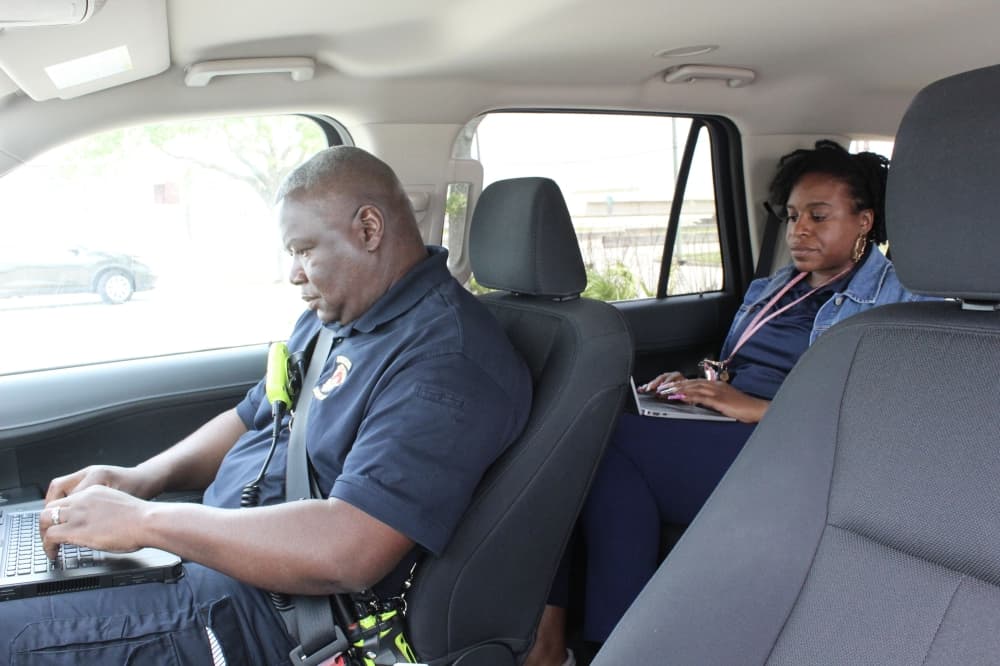
Compassionate Open Access to Services and Treatment teams comprise a clinician from the Gulf Coast Center, which partnered with the city to launch the program; a paramedic; and a Galveston police officer trained to respond to mental health emergencies.
When the COAST team is dispatched, another police unit is usually present; however, the COAST team is specifically trained and equipped to respond to individuals experiencing mental health crises in a way police cannot. According to Galveston Police Department Sgt. Jovan Harris, police officers must undergo 16 hours of mental health training, but many argue the amount of training and tools police have is not sufficient for dealing with such challenging situations.
“I was talking with [police] Chief [Doug] Balli, and he said, ‘You know, Felicia, when my officers arrive on the scene, you know what’s in our tool belt—handcuffs and a gun—and we really do need some help,’” Gulf Coast Center CEO Felicia Jeffreys said. “We definitely responded to that call, and now we're able to make sure that they're medically cleared, that the scene is safe, and that we can really just get in there and take care of the hearts and minds of the individuals that we encounter.”
The COAST teams are deployed on 12-hour shifts from 7 a.m.-7 p.m. Mondays through Saturdays and 9 a.m.-5 p.m. Sundays from the Gulf Coast Center, during which they provide immediate mental health assistance on-site and connect patients with ongoing care.
In this three-person team, the police officer exits the car first to ensure the scene is secure before the paramedic evaluates the person.
Paramedics are crucial because people experiencing psychotic episodes often have a chemical imbalance of low or high blood sugar and need insulin, Harris said.
Finally, the clinician meets with the person to learn about their needs; provide them with appropriate resources, such as counseling, shelter, medication and housing; or offer immediate counseling in life-threatening situations. In the case of the woman who barricaded herself in the restroom, the clinician counseled the woman through a phone slid under the door while she waited in the car.
COAST has saved the Galveston Police Department and the Galveston County Sheriff's Department a considerable amount of time because before the launch, these departments were responsible for transporting people to hospitals in Houston, a process that can take hours, Harris said.
“Prior to this, the police would pick them up, and there was no discussion. Either it would be straight to the hospital or straight to jail,” said Penny Miller, COAST multidisciplinary response team care navigator. “The officers couldn’t talk to them for an hour. They are needed out on the streets.”
Pearland and Friendswood police department officials confirmed they do not have a comparable program to COAST for responding to mental health protocols. Galveston County Sheriff's Office officials confirmed it deploys mental health deputies and police officers who have received training in responding to mental health calls.
Before COAST, the Galveston police department contacted the sheriff’s office’s established mental health division; however, this was a time-intensive process because the department had to filter through the sheriff’s office for transport, emergency detention orders and paperwork, Harris said. For the extent of Harris’ 19-year career, that’s the way it’s been, she said.
Extended-observation unit
While COAST has effectively responded to acute mental health crises, Jeffreys said some people who interact with COAST need continuing care and cannot be safely let back into the community.
The county transports people to St. Joseph Medical Center
in Houston in the current system, but the process can take hours away from officers’ shifts.
Gulf Coast Center and the county plan to build a 48-hour holding center, or extended-observation unit, to provide ongoing care. The facility will accommodate 10 people at a time, allowing them access to nursing; psychiatry; counseling; crisis counseling; and referrals to physicians, housing or substance use disorder treatment.
According to Jeffreys, the center would primarily serve Galveston County but could serve other counties for a fee.
According to Galveston County Commissioner Stephen Holmes, the county dedicated $4 million in American Rescue Plan Act funds, funds from the federal government, to build the unit. Holmes said the county had approached state officials about funding for the center but won't know if it will get the funds until this legislative session ends.