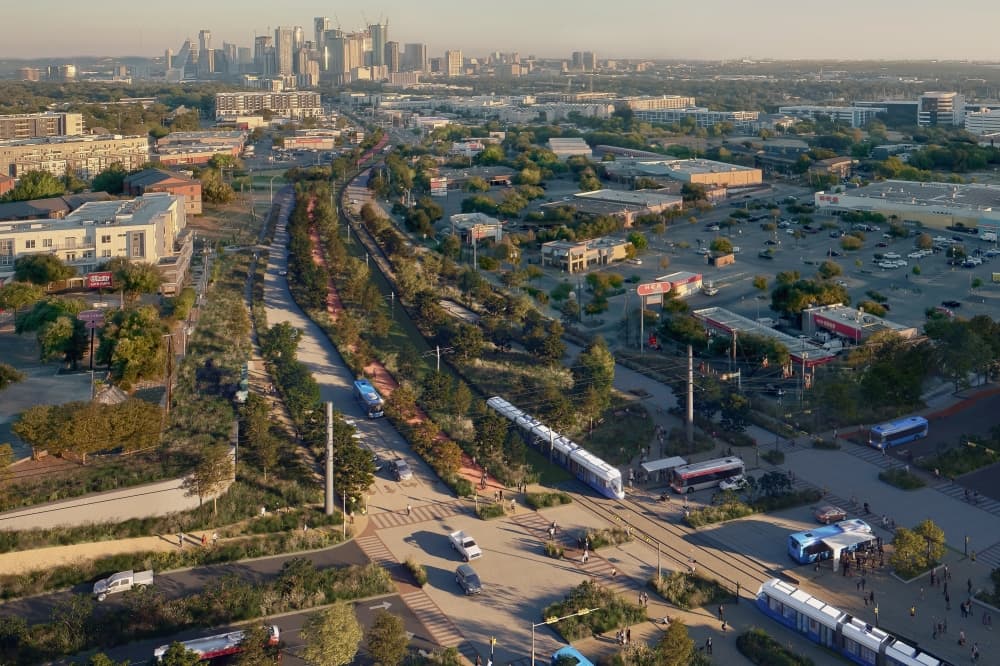
Austin's proposed light rail system reached a key milestone in its federal review process. (Artist conceptual visualization courtesy Austin Transit Partnership)
Austin's light rail project cleared a key federal review in January, marking a "major milestone" in the multibillion-dollar transit system's ongoing development.
What happened
The nearly 10-mile Austin Light Rail is one piece of the Project Connect transit program rolling out following voter approval in 2020. The rail network is overseen by the Austin Transit Partnership, or ATP—the entity created to implement the system—as well as Austin and Capital Metro.
Roughly half of the light rail's $7.1 billion price tag will be covered through federal grants that require an extensive Federal Transit Administration review and approval, processes that remain underway. Billions of dollars more will be provided through a city tax increase authorized in the 2020 election; revenues directly support Project Connect, as well as bonds and federal infrastructure loans.
As one step in the federal funding process, Austin Light Rail entered the FTA's National Environmental Policy Act, or NEPA, review about two years ago. The federal agency has now issued its record of decision for the transit system's Final Environmental Impact Statement, or FEIS, advancing planning for the light rail program and moving it closer to securing needed federal grants.
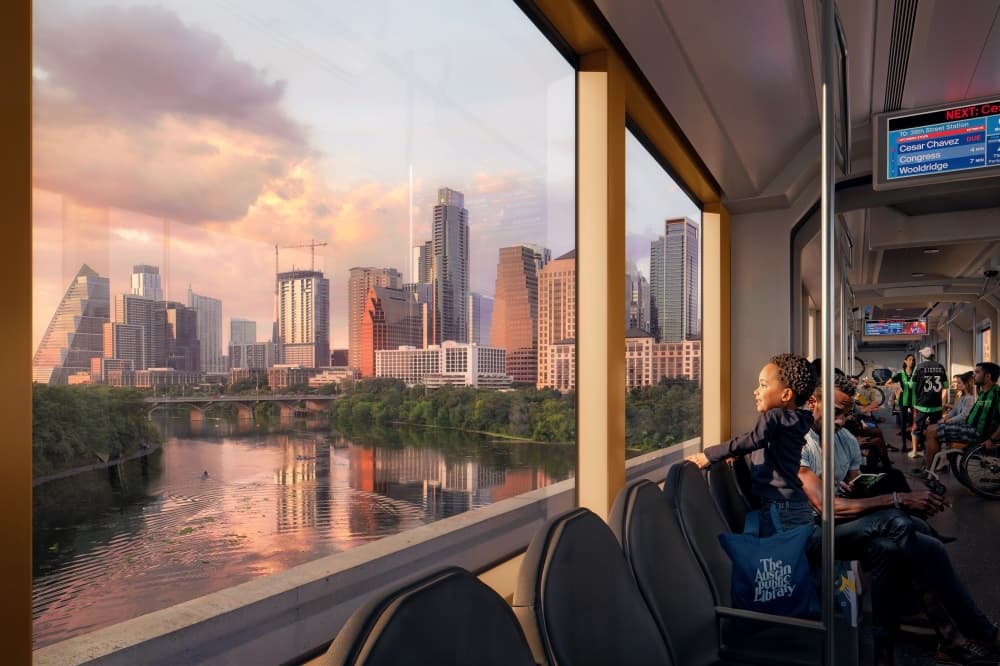
The Austin Light Rail system includes a bridge across Lady Bird Lake. (Artist conceptual visualization courtesy Austin Transit Partnership)
The FTA's decision means required materials like environmental analysis, community engagement and other technical planning have all been officially accepted. The ATP said the "major milestone" demonstrates the agency's strong federal partnership as well as project readiness and headway toward funding.
"Completing the Final Environmental Impact Statement and earning the FTA’s Record of Decision in under two years is a major achievement for Austin Transit Partnership and the community we serve,” ATP CEO Greg Canally said in a statement. “We’re grateful for the FTA’s partnership and guidance throughout this process and proud of the work our team has done to deliver a thorough environmental review on an accelerated timeline. This has established a best practice that can be replicated for other mega projects."
Austin's rail became the first major transit initiative to finish its FEIS within a federal guideline of two years, according to the ATP, while others have taken up to a decade or more for the same process.
Zooming in
The NEPA update comes soon after Austin Light Rail earned one of the highest grades among major infrastructure projects the FTA is now evaluating for funding nationwide. Mayor Kirk Watson said the January milestone is a "big, important step" toward building out a safe and reliable transit system that'll add jobs and boost the local economy.
“It's easy to get lost in the language and mumbo-jumbo of Federal Codes and regulations with shorthand wording like ‘New Starts,’ ‘Record of Decision,’ and ‘NEPA.’ But there's a pretty clear bottom line: Austin Transit Partnership has the Austin Light Rail program right on track toward construction, and it's doing it with an impressive, streamlined efficiency," he said.
The transit system that's now moving forward is a reduced version of an initial outline presented to city voters in 2020, and must still clear other hurdles before any rail line is laid out.
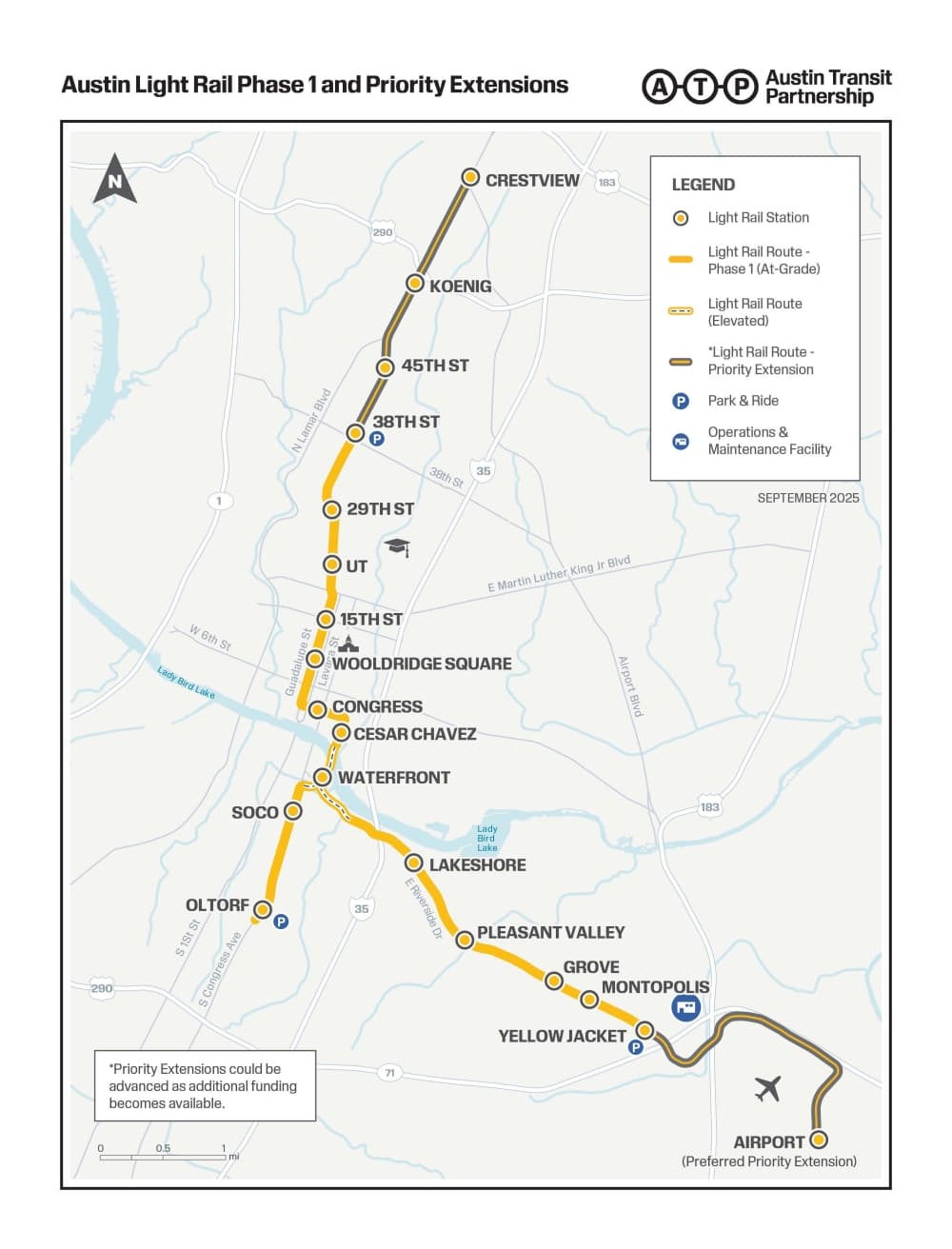
The current 9.8-mile, 15-station network was approved in 2023, after rising costs led transit planners to significantly scale down the original Project Connect blueprint. That change removed miles of track, several stations and features like a downtown tunnels and a direct airport airport—an extension that remains a priority for future rail phases.
The first phase of Austin's light rail project will extend north to 38th Street, south down Congress Avenue, and east along Riverside Drive. Future extensions east to the airport and north to the Crestview neighborhood are planned. (Courtesy Austin Transit Partnership)
Some other features were added during the recent environmental assessment phase, like a new downtown station near Wooldridge Square and an elevated station in the South Central Waterfront. A rail bridge across Lady Bird Lake with pedestrian and cyclist access will also be developed.
That changes in scope, as well as Project Connect's tax-backed financing structure, have prompted legal and legislative challenges in the years since. State bills that could've hamstrung the program didn't advance through the Capitol last year, while litigation over the rail plan remains in progress.
What's next
The Texas Supreme Court will hear arguments over the rail project's financing mid-February. Those proceedings are taking place after the ATP moved to validate its funding plan in court, plans that've been closely scrutinized and opposed by Attorney General Ken Paxton.
Locally, Austin Light Rail will soon reach another key juncture with the planned selection of a major construction contract for the project. The transit agency previously announced three finalists for that roughly $3 billion award through a bidding process last year. The ATP is also actively soliciting for light rail cars, with proposals due in March.
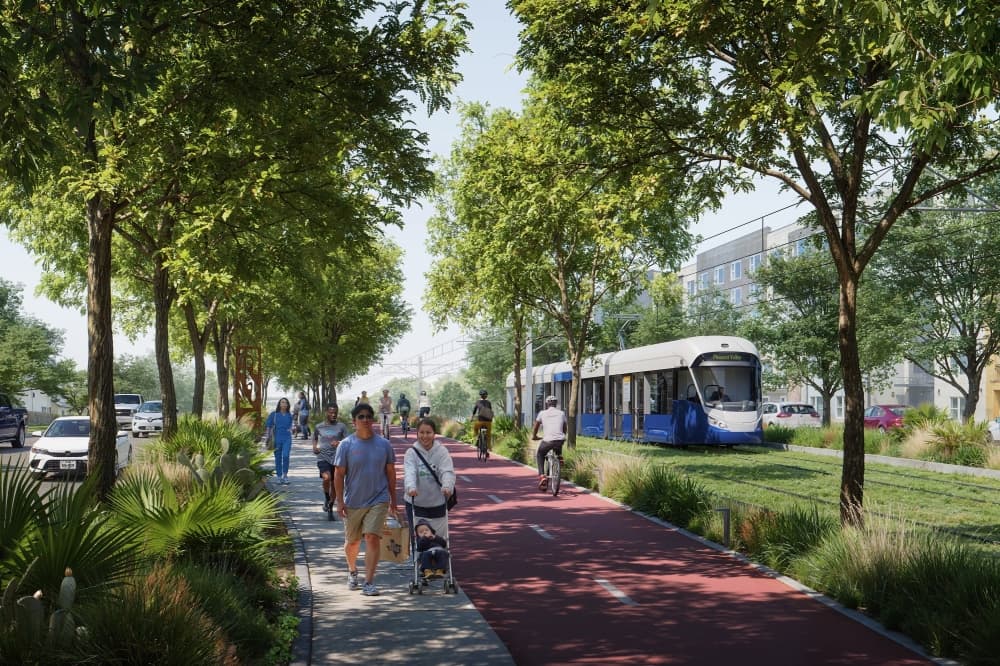
The Project Connect rail network is advancing toward development after completing lengthy federal reviews. (Artist conceptual visualization courtesy Austin Transit Partnership)
Pedestrian improvements, road reconstruction: 6 Austin area transportation project updates