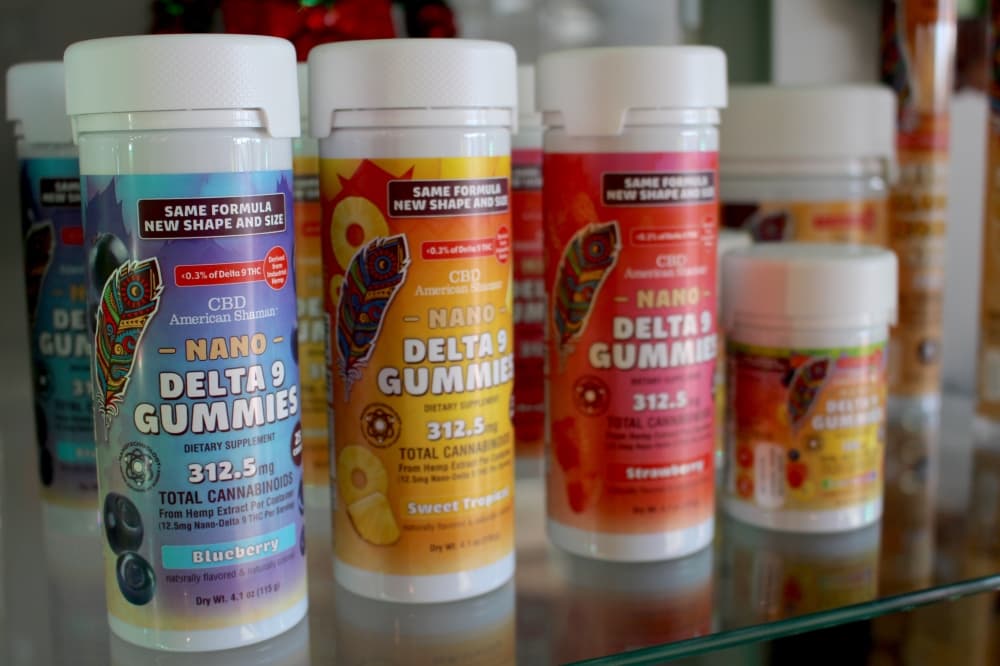
Supporters of the proposal said the increased fees would improve oversight of thousands of Texas businesses that sell hemp-derived THC products and help the state enforce tighter regulations, while some local hemp retailers said the changes would put them out of business.
At a glance
In late December, the Texas Department of State Health Services published a slate of proposed rules regulating consumable hemp products in the Texas Register, the public record for state agency rulemaking. The proposals include:
- A prohibition on sales to customers under 21 years old
- Stricter THC testing and labeling requirements
- Guidelines for product recalls
- Tens of thousands of dollars in annual licensing fees
During a Jan. 9 public hearing in Austin, the owners of several small hemp businesses said they expected to close their doors if the increased fees take effect.
“These proposed fees don't regulate small businesses, they eliminate them,” Estella Castro, the owner of Austinite Cannabis Co., said. “After six years of me operating legally, creating jobs and contributing to the Texas economy, this proposal would force me to close, despite doing everything right. I respectfully ask you to reconsider the fee increase and consider the impact on small, Texas-owned businesses.”
The state health department estimated that the increased fees would generate about $202 million annually in new state revenue, which would be used to help enforce the heightened regulations on the hemp industry. Costs to the agency would increase by about $69,000 this year and $5,600 in future years, the rules proposal states.
State health officials acknowledged that the proposed fees would have an “adverse economic effect” on small hemp businesses, although the proposal states that “alternative methods ... would not be consistent with ensuring the health and safety of adults and minors who have been targeted consumers of [consumable hemp products].”
If the DSHS adopts the proposed rules, they could take effect as soon as late January, after a public comment period ends Jan. 25. Texans can submit written comments on the proposal by emailing [email protected] or by sending mail to the Rules Coordination Office, P.O. Box 13247, Mail Code 4102, Austin, Texas 78711-3247.
How we got here
The rules were proposed in response to a September executive order by Gov. Greg Abbott, who called for age restrictions on THC sales, tighter guardrails for the multibillion-dollar industry and enhanced law enforcement monitoring of THC businesses.
Abbott issued the order after state lawmakers spent more than half of 2025 debating whether to increase regulations on consumable THC products or ban them altogether. Lawmakers voted to ban all hemp-derived THC products in May, but Abbott later vetoed the legislation. After lawmakers did not strike a deal during special legislative sessions this summer, the governor directed state agencies to draft new regulations.
The Texas Alcoholic Beverage Commission, which regulates the state’s alcohol industry, is scheduled to consider adopting its own set of consumable hemp rules during a Jan. 20 meeting. Both agencies adopted emergency rules prohibiting intoxicating THC products from being sold to minors this fall, and those rules are currently in effect while the state health department considers more comprehensive restrictions.
While state agencies move forward with hemp regulations, retailers also face an impending federal ban, which is set to take effect in November, Community Impact previously reported.
Zooming in
State health officials did not publicly discuss the proposed rules during the Jan. 9 hearing or ask questions of those testifying. Dozens of hemp business owners and Texans who use hemp-derived THC products told officials that they supported age restrictions and stricter packaging guidelines, but were concerned about the substantial increase in licensing fees and new testing requirements.
The DSHS proposal would adjust how consumable hemp products are tested for THC content. Some hemp industry advocates said this would effectively ban products containing the natural hemp flower, which is more potent than some synthetic THC compounds.
“Removing regulated access to hemp flower will not eliminate consumer demand,” Heather Fazio, director of the Texas Cannabis Policy Center, said in written comments submitted to the state agency. “Instead, it will push consumers into unregulated markets where there are no testing standards, no age verification, no recall mechanisms, and no systems for tracking adverse effects. That outcome runs counter to the public-health objectives these rules are meant to advance.”
Fazio said she was also concerned that changing the testing requirements would run counter to existing Texas law and the intent of the state legislature.
“Rulemaking alone should not be used to redefine controlled substances in a way that effectively bans products that have been lawful under existing law,” she wrote.
Scott Stubbs owns Sublingwell Cannabinoids and Euphorics, which has three locations in southeast Texas. He said the majority of products he and similar hemp retailers sell contain the hemp flower.
“My greatest concern about the proposed rules is that 80% of what all shops sell, including ours, is the natural hemp flower, and the [proposed] THC rule would definitively just wipe that out,” Stubbs said during the Jan. 9 hearing. “And then with the fees being $20,000 [for] each shop, I don't know how, honestly, we would be able to stay open.”
Stubbs said “a large veteran population” depends on the products he sells and that certain consumable hemp products allowed under the DSHS proposal, such as some lower-potency synthetic products, do not work for some of his customers.
William Gambino, a 26-year-old Army veteran, told DSHS officials that edible hemp-derived THC products help him manage the insomnia that he developed while serving in the military. Edibles are more affordable and easier to access than prescription sleep medications, he said.
“The exorbitant fees will shut down the small business I rely on, leaving only the large out-of-state corporations,” Gambino said Jan. 9. “Losing access to [THC] products would mean that I would not be able to maintain a reasonable sleep schedule and get to work on time.”
The other side
Some Texans said Jan. 9 that increasing licensing fees for hemp retailers and manufacturers would help state agencies enforce safety regulations and protect children from THC products.
“Cannabis advocates say that this is a billion-dollar industry, so it's fair and appropriate for the people who profit from selling a billion dollars of intoxicating and harmful products to pay fees that help cover the costs associated with the regulation and societal burden of the product's harms,” said Betsy Jones, the policy and strategy director with Texans for Safe and Drug-Free Youth. “In addition to the licensing fees, we must follow evidence-based deterrence theory to include swift, certain and severe penalties for rule violations, including unregulated products, kid-friendly products, sales to minors and unlicensed facilities.”
Aubree Adams, director of Citizens for a Safe and Healthy Texas, submitted a letter asking the DSHS to go further than its current proposal by raising the minimum age to purchase THC products to 25, banning online THC sales, launching public education campaigns and creating state-funded treatment options for disorders related to cannabis use.
“The issue before the state is the normalization and promotion of retail THC, driven by chemical manipulation, misleading information and deceptive, predatory marketing,” Adams said during the Jan. 9 public hearing. “Texas lacks a comprehensive THC mitigation strategy and law enforcement is not equipped, so the costs are being borne by the families and the taxpayers.”
State health officials can adjust the proposed hemp rules based on public comments, which are accepted through Jan. 25. As of press time, it was unclear whether the rules, if adopted by the DSHS, would take effect immediately or be phased in.