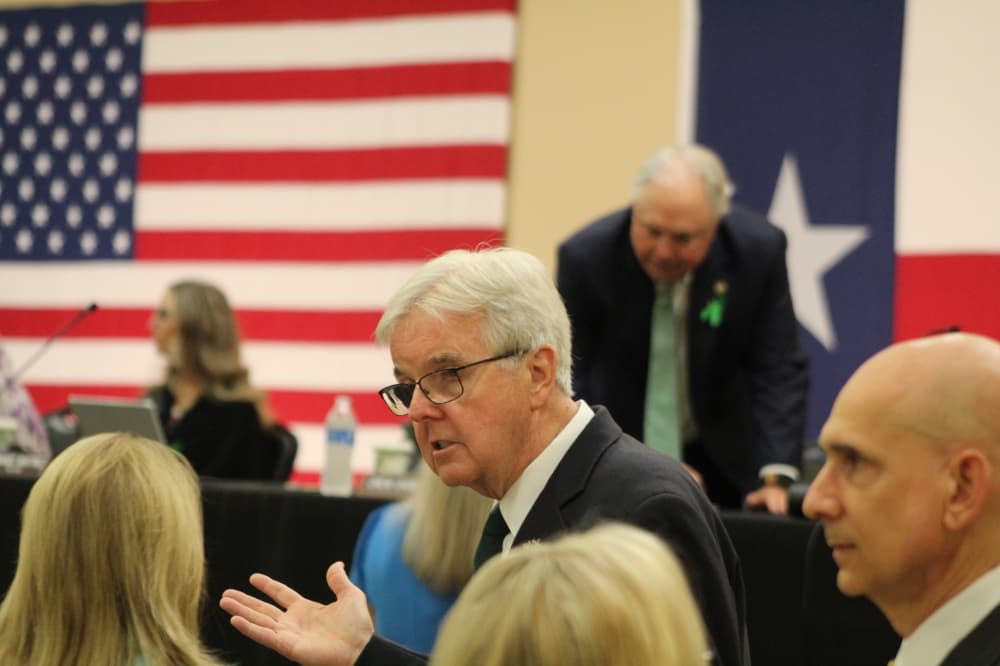
Lt. Gov. Dan Patrick, who leads the Texas Senate, speaks with Texans ahead of a July 31 public hearing in Kerrville. (Hannah Norton/Community Impact)
Lt. Gov. Dan Patrick unveiled a plan Dec. 9 to further raise property tax exemptions for Texas homeowners and lower the age at which Texans qualify for additional tax relief during the 2027 state legislative session.
Patrick, who leads the Texas Senate, called his proposal “a revolutionary way to not only reduce property taxes more, but to speed it up for a lot of homeowners.”
Raise the property tax exemption on a Texas homeowner’s main residence, known as a homestead exemption, by $40,000
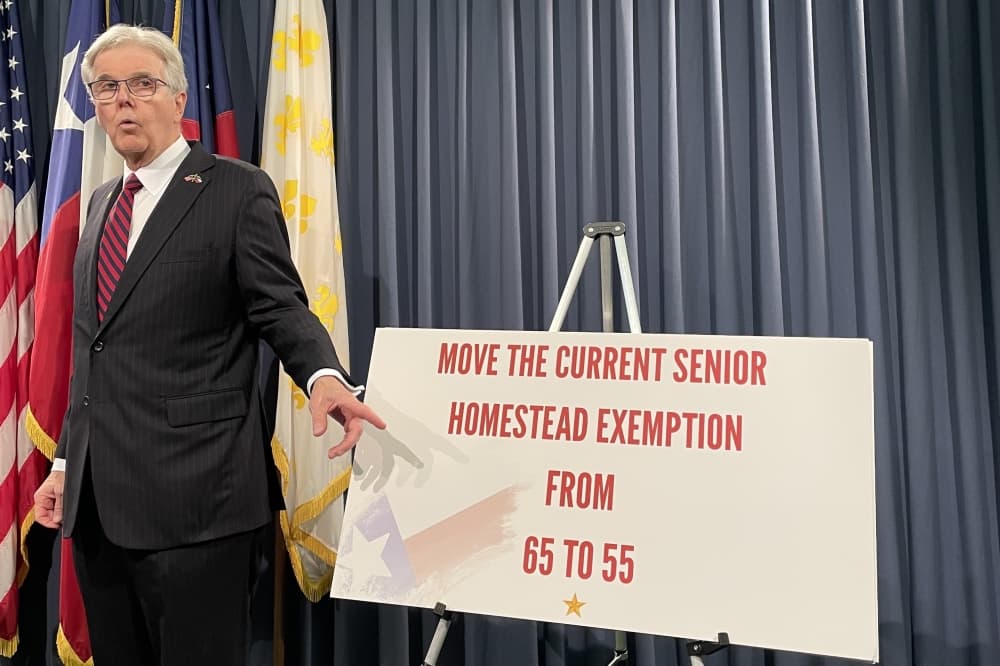
Allow homeowners who are at least 55 years old to qualify for a larger exemption reserved for seniors and people with disabilities
Pass legislation to drive down property taxes charged by local governments
To make his goals a reality, Patrick will need the support of a majority of Texas lawmakers during their next legislative session, which is scheduled for 2027. Changes to the homestead exemption are enshrined in the state constitution, meaning passage requires a higher bar: support from at least two-thirds of lawmakers during the session and a majority of Texas voters in a subsequent election.
This November, two state propositions raising Texas’ homestead exemptions passed with support from over 75% of voters. This brought the homestead exemption on school property taxes to $140,000 for all homeowners and $200,000 for homeowners who are at least 65 years old or have a disability.
Under Patrick's proposal, younger homeowners would see a $180,000 exemption, while Texans age 55 and older would shave $240,000 off the value that can be taxed by local school districts. Homeowners who are at least 55 years old would see about $900-$1,000 in annual savings under the plan, Patrick said, although this estimate does not account for potential tax rate increases by local governments.
“We are on a path now to eliminate school property taxes for every homeowner in Texas in the next few years, no matter their age,” Patrick told reporters Dec. 9. “I believe in the next few sessions, we're going to be able to eliminate school property taxes with homestead exemptions.”
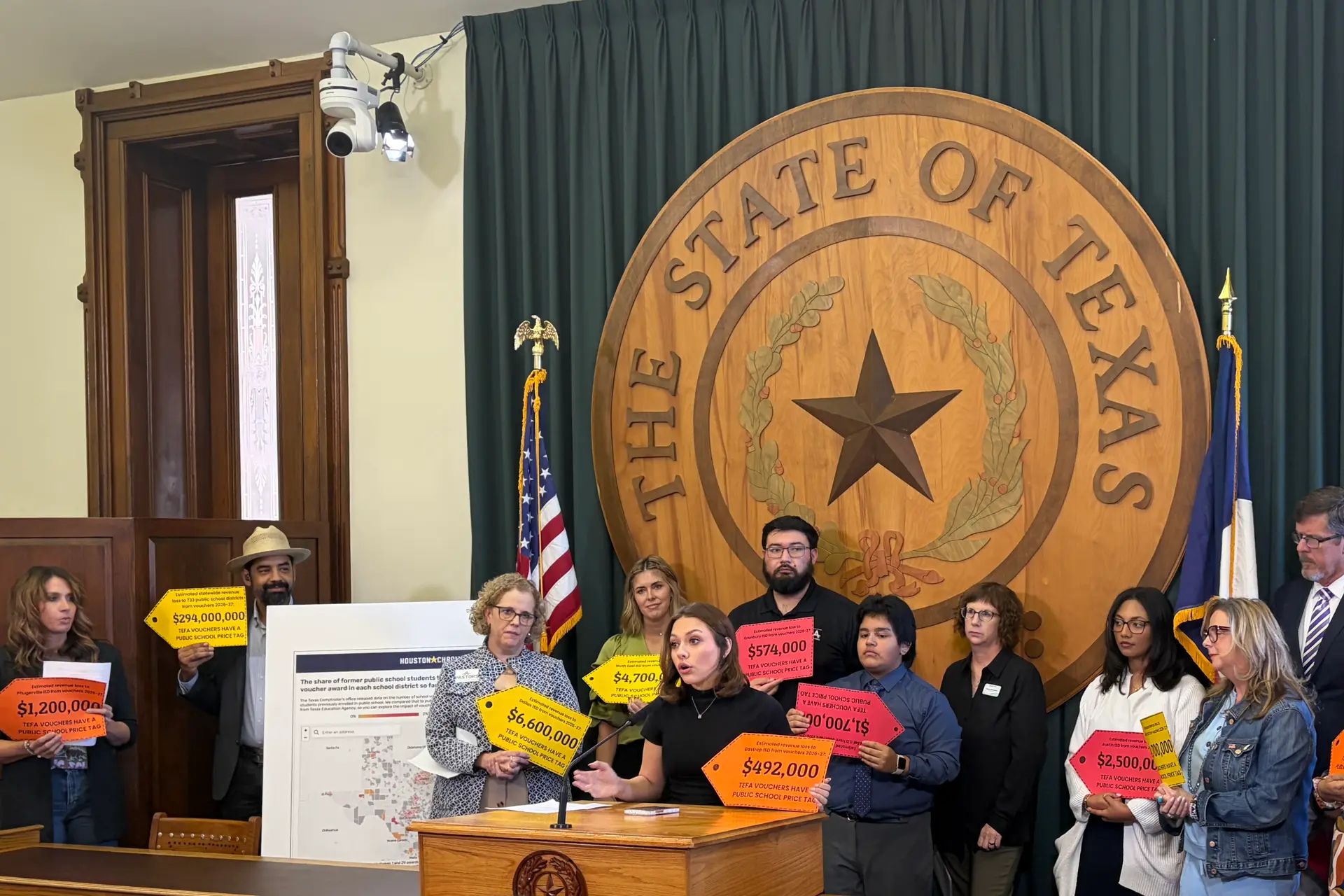
Lt. Gov. Dan Patrick unveiled his 2027 property tax cut plan during a Dec. 9 news conference at the Texas Capitol. (Hannah Norton/Community Impact)
More details
Patrick’s plan differs from tax relief measures proposed by Gov. Greg Abbott, who unveiled a six-pronged plan when announcing his re-election campaign one month earlier. The governor’s plan includes curbing how much appraised property values can increase annually and asking voters to amend the Texas Constitution to abolish school property taxes.
Some conservative groups have also pushed for an end to all property taxes during recent legislative sessions, although the idea has not gained widespread support among state lawmakers, Community Impact previously reported.
Patrick said Dec. 9 that raising the homestead exemption was the only “realistic” way to zero out school property taxes for some or all homeowners in upcoming legislative sessions. He added that lawmakers would need to raise the state sales tax rate from 6.25% to about 15% to cover the cost of eliminating school property taxes, or about 25% to eliminate local property taxes altogether.
“I don't think the people of Texas are going to want to spend 25 cents [in sales tax] on everything they buy,” Patrick said. “It would definitely impact our businesses.”
Texas is spending $51 billion on property tax relief in fiscal years 2026 and 2027, and some lawmakers have recently expressed concerns about raising tax exemptions in future legislative sessions, previous Community Impact reporting shows.
“We're kind of maxed out at what we can do for property tax reform, from a budget perspective,” said Sen. Charles Perry, a Lubbock Republican and member of the Texas Senate Finance Committee, during a Nov. 20 event hosted by the Texas Taxpayers and Research Association.
Patrick told reporters that his tax relief plan was “kept a secret” until the Dec. 9 news conference and that he had not discussed it with the governor or most legislators. He declined to comment directly on Abbott's tax cut plan.
Also of note
Patrick and Abbott have each pushed to tighten limits on the property taxes charged by cities, counties and other local taxing entities. Abbott proposed requiring local voter approval for all tax hikes and tying local government spending to inflation and population growth.
When asked about his plan Dec. 9, Patrick referred reporters to legislation passed earlier this year and did not propose or endorse a specific policy change.
“We have to build schools, we have to give police officers a raise, we have to build infrastructure—but the message to our local governments is, ‘You need to be responsible with how you spend the money, to be very careful about it,’” Patrick said Dec. 9. “We want to keep the property taxes on the city and county side as low as we can.”
One recent state law directed taxing entities to list “this is a tax increase” at the top of property-tax related propositions on the Nov. 4 ballot, which was not previously required. Voters in Community Impact’s coverage areas approved just over half of tax measures on the ballot this November, which some experts attributed to that law.
The Texas Legislature is scheduled to reconvene in January 2027, about two months after the November 2026 election. Abbott and Patrick’s seats will be on the ballot, alongside about half of the Texas Senate and the full Texas House. Who Texans select to represent them could impact the direction of future property tax policies.