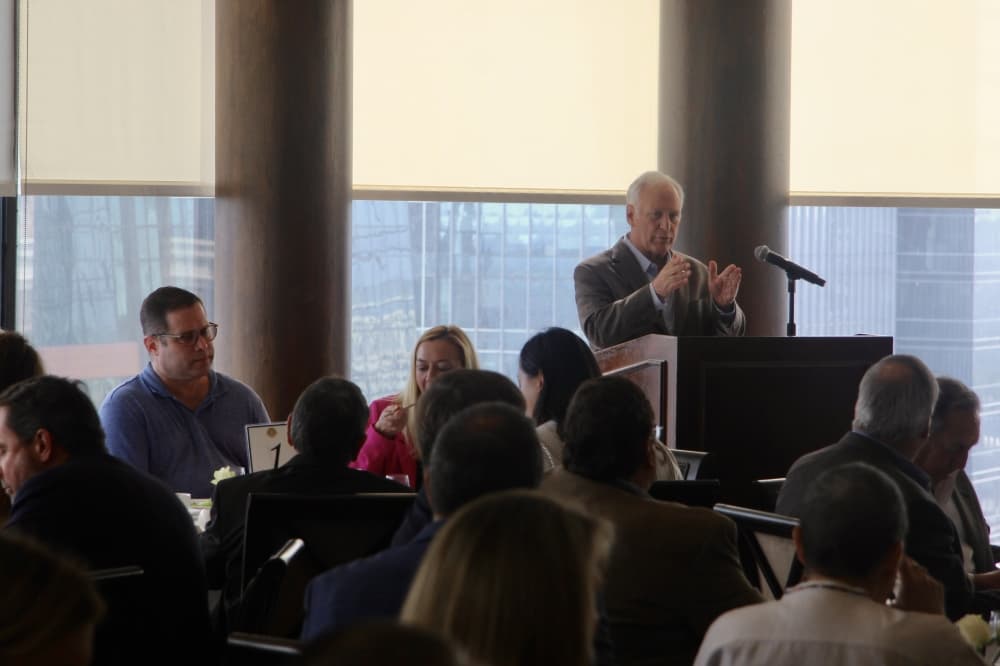
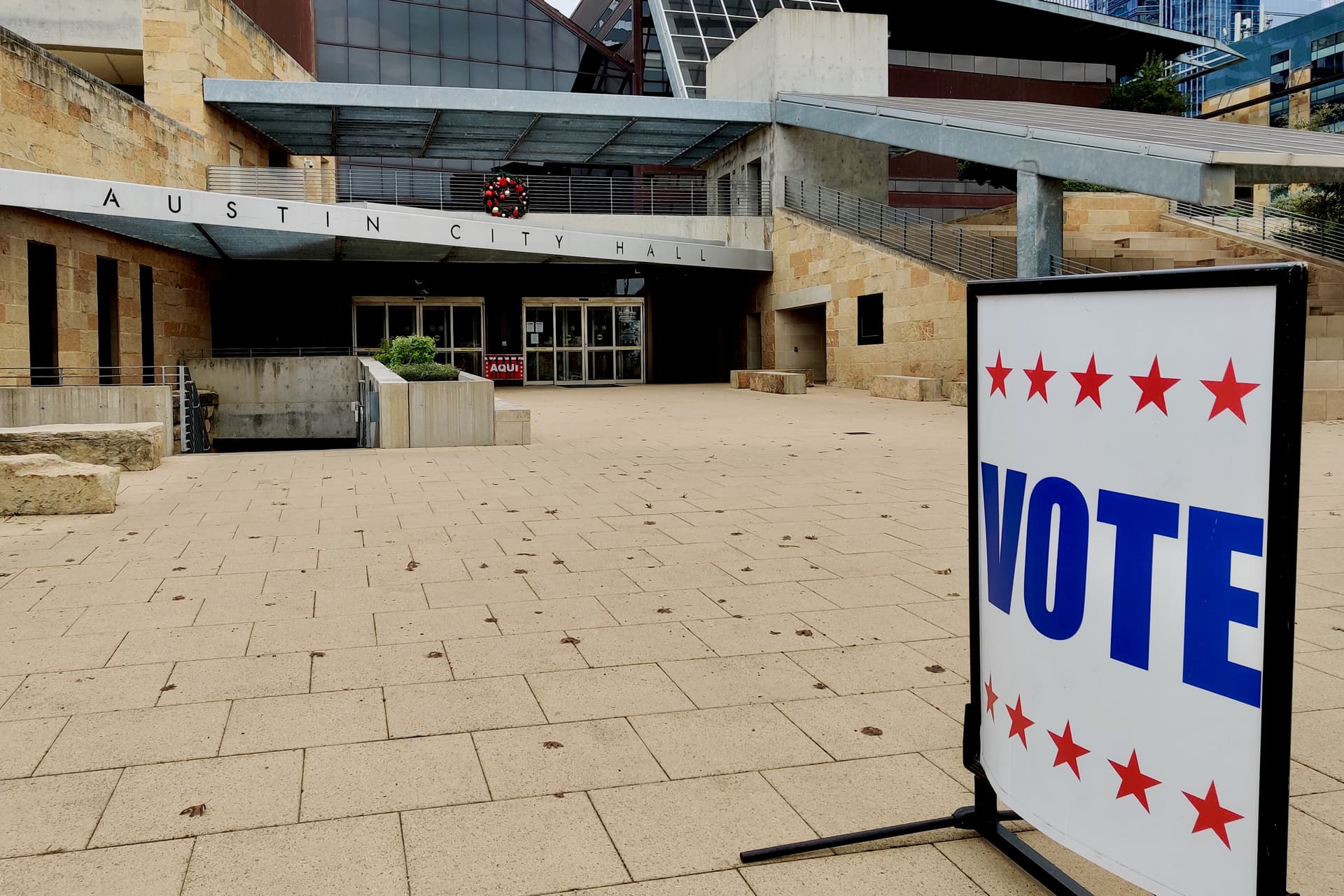
Mayor Kirk Watson outlined several of his stated accomplishments since returning to office, as well as his hopes for Austin's future, during a Jan. 6 state of the city speech downtown.
Looking ahead to his final three years in office, Watson framed his approach around balancing short-term needs with longer-range plans to build on civic improvements and avoid potential pitfalls down the road.
"Austin is... a remarkably successful city. Most of our greatest challenges are a result of success," he said. "The truth of the matter is we’re not really managing decay. But I will tell you, we can. We can find ourselves managing decay within a 5-year or a 10-year or a 15-year period if our short-term focus becomes all we focus on, and we don’t carry out a long-term vision."
How we got here
Watson reflected on the start of his first term this decade and his campaign goals of stabilizing City Hall and putting affordability first.
A push for stability advanced in part due to Winter Storm Mara in early 2023, and related government leadership changes. He also credited streamlined development regulations and broad zoning reforms for making Austin a "national model" in land-use discussions.
Other updates he highlighted from the last few years included advancing Austin-Bergstrom International Airport's expansion and the "phenomenal economic development coup" of expanding Southwest Airlines' local presence, and securing deals with the city's three main public safety labor associations.
Austin's agreements with groups representing emergency medical services, fire and police personnel improved political relationships and will help stabilize those departments for years, Watson said. However, he also noted significant hiring gains, a major hope from the latest police labor debate, haven't yet materialized.
"The contract has made a difference, but it’s not made as big a difference as I was hoping it would, and some of us believed that it would be," he said.
The outlook
After 2025's challenging budgeting cycle, including a failed tax rate election and the adoption of a slimmed city spending plan, Watson said Austin's financial outlook with widening deficit projections is now his top fear for the coming years.
The current situation was brought on by declining local tax revenues, state spending constraints, and the expiration of federal pandemic relief dollars officials recently relied on for various program funding, he said. With all of Austin's property tax and a majority of sales tax revenues flowing into public safety, Watson said limited tax dollars are a concern for those and other city services.
"It should worry you if you like parks. It should worry you if you like to see the medians maintained and the grass not at eye level. It should worry you if you believe in libraries. But importantly, it should worry you if you believe in police, fire, EMS," he said. "Because how do you grow the budget when you need to grow those things over time as well, if you don’t have any additional revenue?"
In the near term, Watson said city finances could benefit from internal efficiency improvements. One, spending reforms for City Council offices, is set to be adopted early this year. And wider performance reviews also likely lie ahead, building on mounting calls for citywide audits.
Council will consider a plan to launch that type of review by the end of February, Watson said. If approved, the move would represent an alternative to a charter amendment backed by the political group Save Austin Now that could go to a public vote this spring.
"I am just not afraid of bringing in outside folks to look at and to do reviews and audits," Watson said. "I’m determined to make sure that we are providing effective and efficient services with continued improvement, and that we do that in a way that gets us the best cost-benefit for what we’re doing, and that we’re doing it in a way that’s open and transparent. It has to be independent, and that’s a key part of this.”
Outside City Hall, Watson said securing economic development initiatives will be essential for growth and financial soundness. Bringing new businesses to town can help grow the tax base, and he said Austin is also lucky to have conditions like available land making it suitable for expansions.
"I don't think we've had the level of focus that we should have on economic development, and we need to have a focus on it," he said. "The Southwest Airlines [deal] is a good example, but we need to be prepared to show the world that we're open for business."
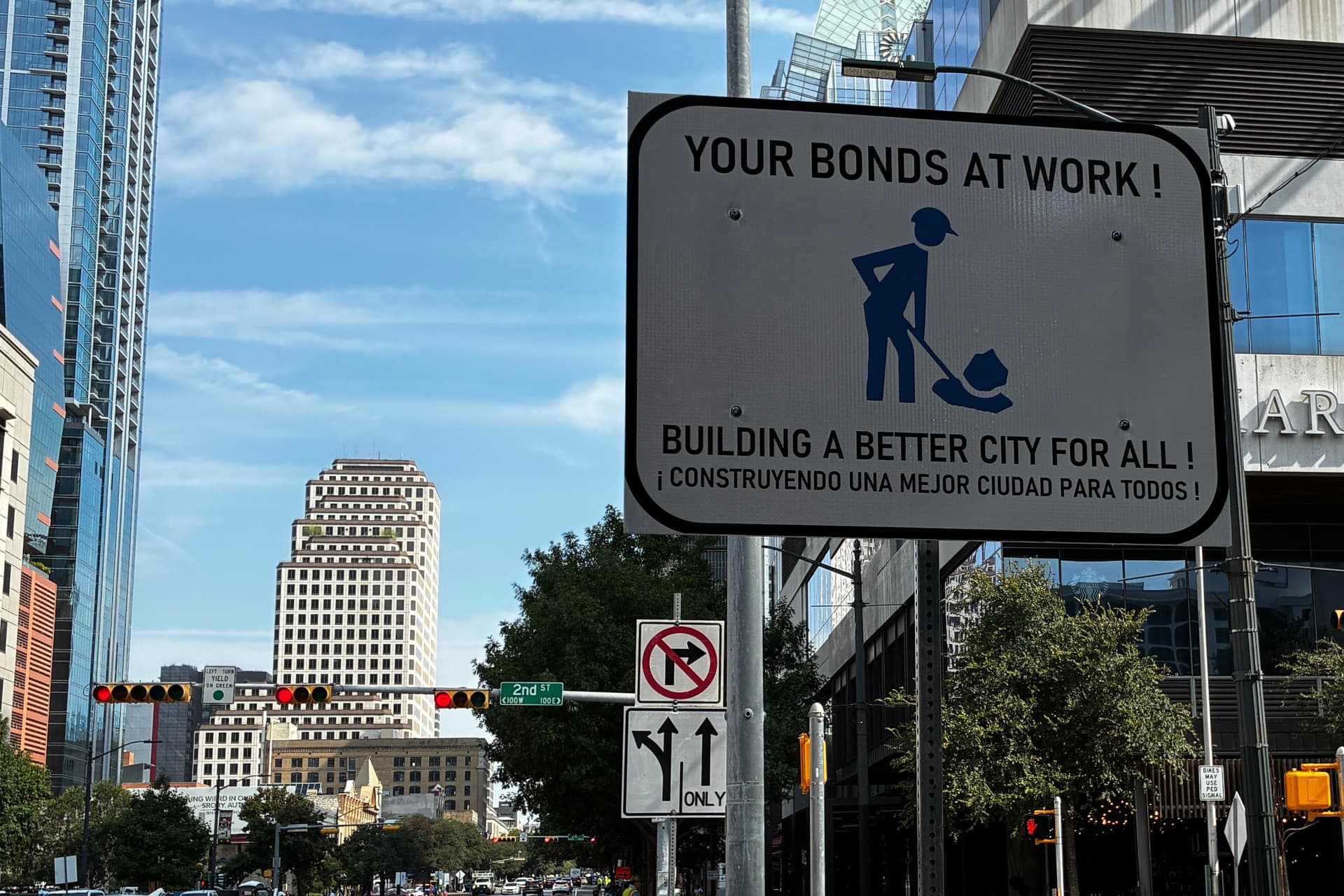
One other area of focus is Austin's history of bond elections and debt obligations, following the most recent election in 2022 and with hundreds of millions of previously-authorized bond dollars still unspent.
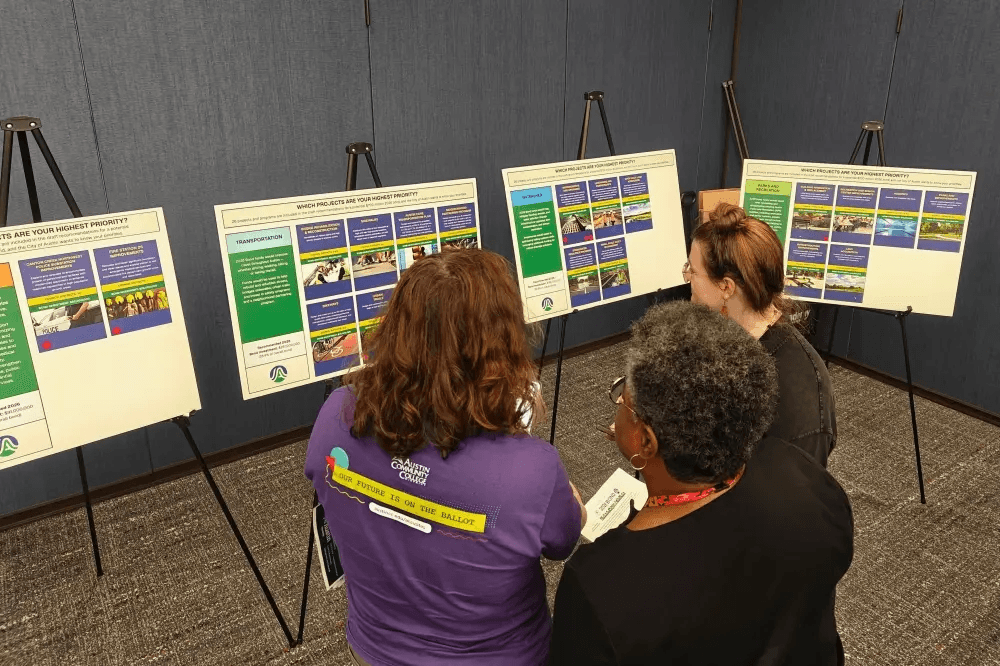
Some council members wanted to consider another comprehensive bond package as soon as 2024 to fund mobility, public safety, climate, cultural and housing projects. Watson had sided with calls to hold off until at least this year, and although its development is now underway he said officials should now "seriously look at" pushing off another bond vote beyond 2026.
“Just because you have an election date doesn’t mean you need to have an election," he said. "I’ve got to tell you, we’re now in the process of 2026. And where do we go with that bond advisory task force and the bond election? ... The truth of the matter is, that’s what this year ought to be about, is we ought to be thinking about whether we’re going to actually do that."
More details
Another aim for the future is better positioning Austin on the world stage, Watson said, a process that hasn't always drawn the most local interest. To meet that goal, he said he intends to "double down" on global relationships, economic development initiatives, and accessibility like nonstop and international flights out of an expanded ABIA.
“We tend to remind ourselves and reminisce about the days of the village, and we lose sight of the fact that the rest of the world sees us in a completely different light than we sometimes see ourselves," Watson said. "We have to mature into being that international city."
Austin is also experiencing growing pains, with billions of dollars in major infrastructure projects now affecting traffic, travel and major events. While acknowledging negative short-term construction impacts, he said the projects are necessary for the city's future—and drawing companies and talent to both relocate and remain in the area.
He also said developing Project Connect's new light rail system is needed to keep Austin competitive with other cities that already have mass transit.
“There aren't very many really great cities that you point to and they don't have rail systems, particularly if you're behind on the roadways," he said. "If you catch as much grief as we catch making improvements on Interstate 35, think about what happens if you decided you wanted to widen or double-deck Lamar [Boulevard], right? It’s just not going to happen. So you’re going to have to figure out how it is you’re going to get people from one place to another. And businesses do ask about that.”