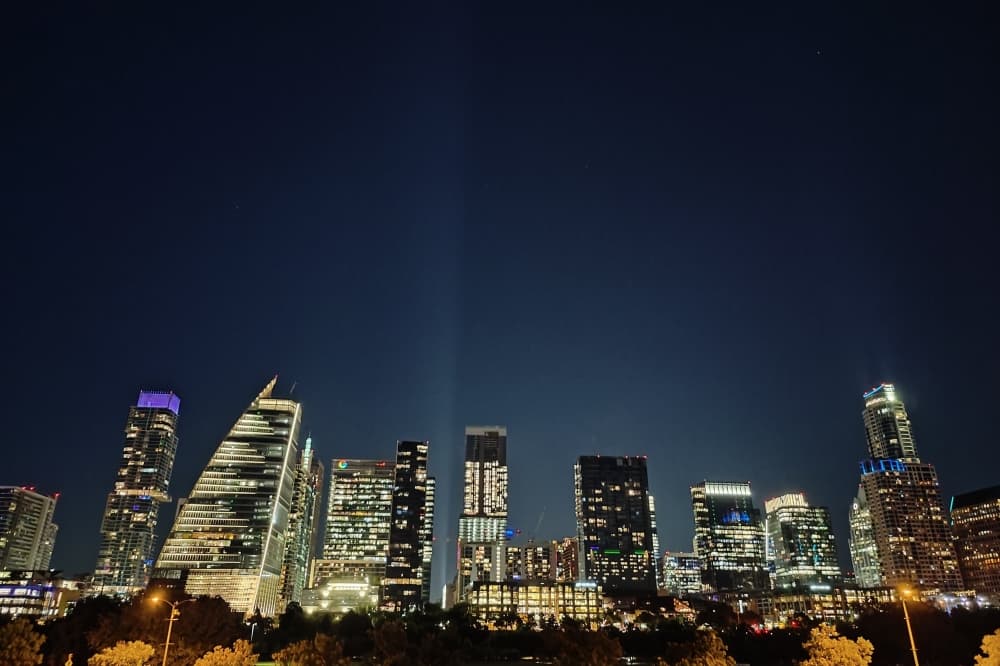
A new civic plan for downtown and other pieces of Austin's core will be developed through 2026. (Ben Thompson/Community Impact)
A new plan for the future of Austin's core is coming together, and residents will be able to provide several rounds of input on their desires for the downtown area throughout 2026.
The big picture
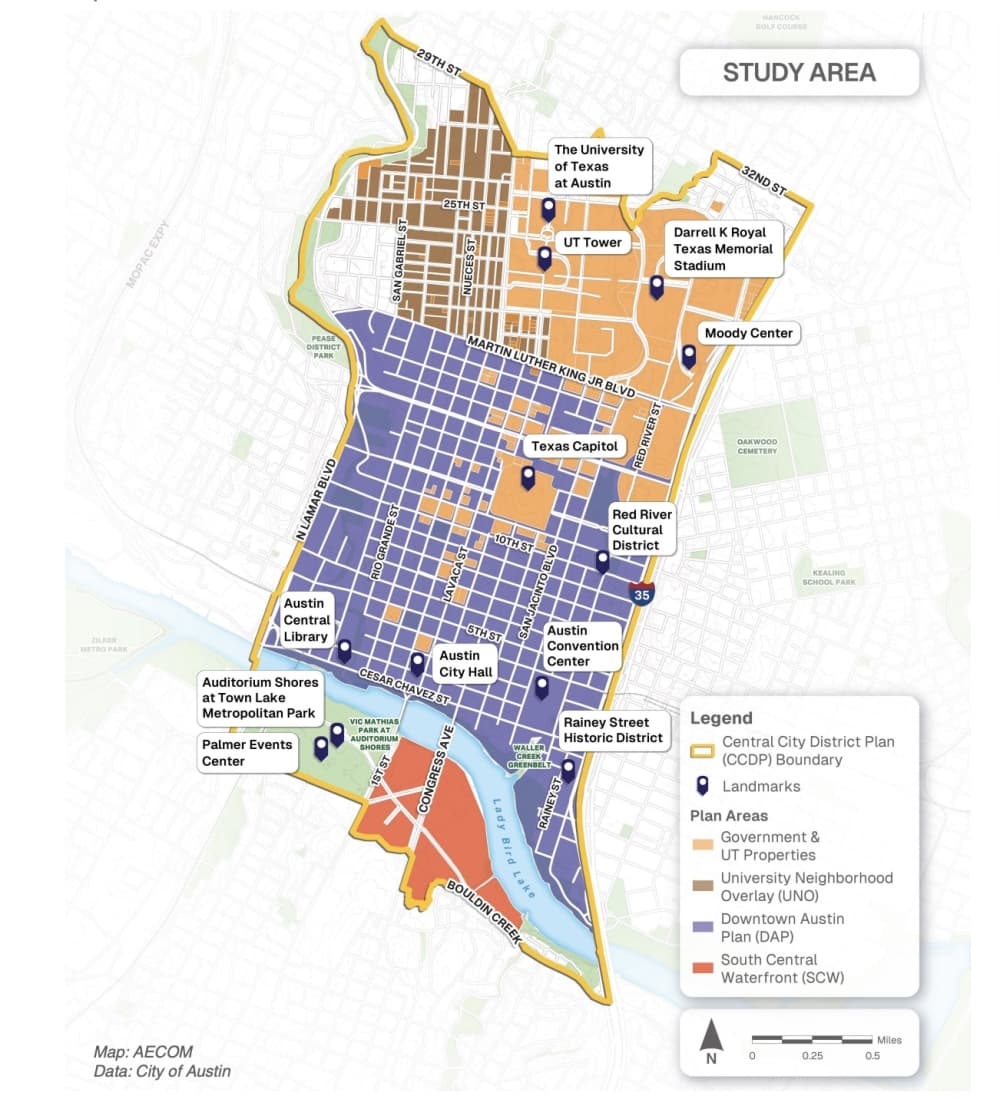
Last summer, City Council called to update the more than decade-old Downtown Austin Plan to reflect current conditions and goals for the area. Since then, the planning effort expanded to include the West Campus area north of downtown and the South Central Waterfront district across Lady Bird Lake.
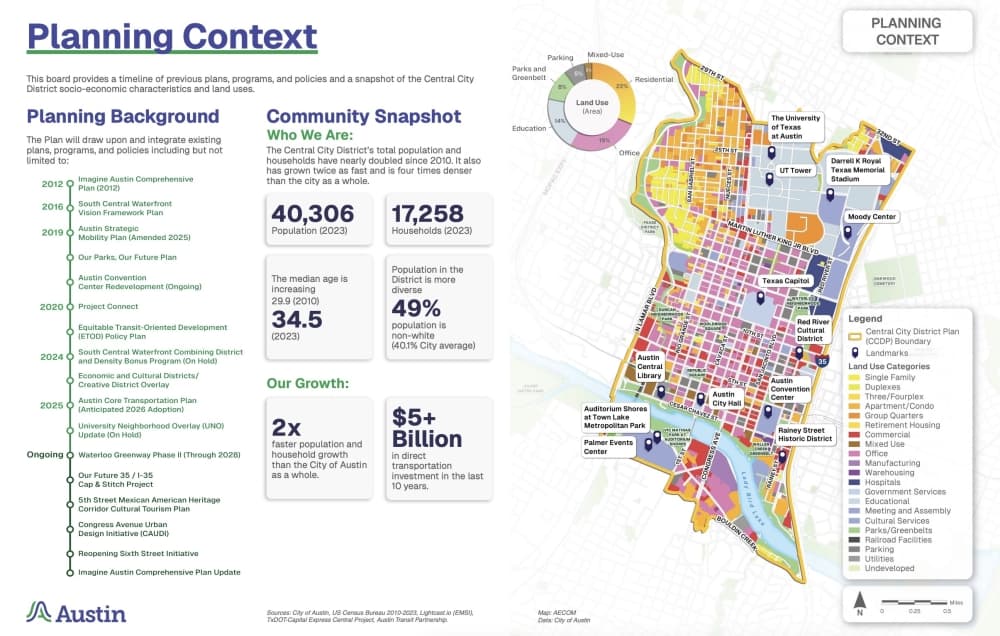
A new decade-long plan for Central Austin evolved this year to include the traditional downtown area, as well as the South Central Waterfront and West Campus. (Courtesy city of Austin)
The city will continue to gathering input on what's now called the Central City District Plan before its planned adoption next December. Council member Zo Qadri, who represents the area, said the initiative represents a key opportunity to shape Austin's growth and codify local goals for the years ahead.
"These areas sit at the heart of our city, and the planning decisions we make today will determine how accessible, connected, and welcoming they are for decades to come," he said in a statement.
More information and feedback opportunities for the Central City plan are available online.
The approach
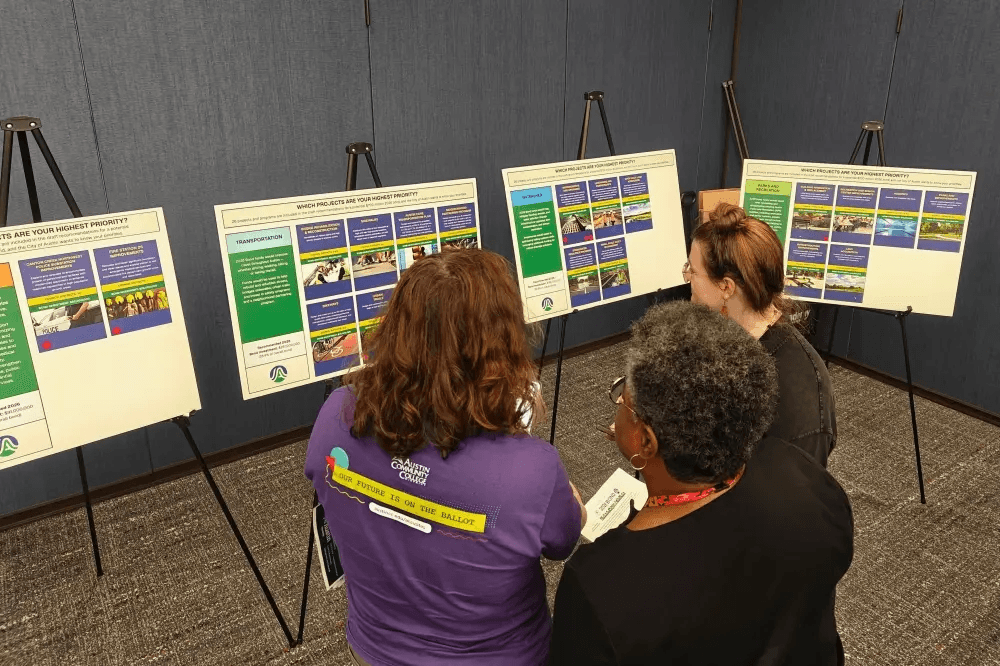
The city gathered preliminary feedback on the plans in November and December through a survey and two open houses. In early 2026, the city will host further public engagement opportunities focusing on the Central City's three components—the traditional downtown, University Neighborhood Overlay area and South Central Waterfront—leading into the plan's finalization and approval late in the year.
As the process continues, the city will produce:
New reporting on current conditions throughout Central Austin
A needs and gaps analysis covering future improvements to infrastructure, cultural assets, social services, housing and economic development
Mapping community goals for the types of future development envisioned around the area
A list of near-term civic projects that could be completed around downtown
A final vision plan outlining goals for future growth will also be established, as well as a detailed implementation plan covering how aspects of the initiative could be prioritized and funded.
"I am committed to a planning process that centers residents, small businesses, and community partners so that the spaces we design feel vibrant, inclusive, and truly representative of the people they serve," Qadri said. "Thoughtful planning is essential to supporting affordability, improving transportation options, and maintaining the character that makes Austin unique.”
The Central City District Plan builds on years of other planning efforts around downtown. (Courtesy city of Austin)