



“In order to continue to grow, airlines have to plan well in advance. It takes a long time to build facilities, it takes a long time to expand an airport," said Bob Jordan, president, CEO and vice chair of Southwest's board. "This is all about being where the business is. And that business is in Austin, and that business is in Texas.”
The big picture
Southwest's relocation of its command center and establishment of a new pilot and flight attendant base at the airport is expected to bring 2,000 new jobs to ABIA by mid-2027, plus thousands more related jobs throughout the community. The crew base will open in March with about 335 pilots and 650 flight attendants.
Southwest's growing footprint also ties into the city's ongoing expansion of ABIA, including the development of a second terminal where the airline could lease up to 18 new gates added through that project. Airport CEO Ghizlane Badawi said the project sets up Southwest as the "anchor tenant" of ABIA's future Concourse B.
Jordan said the airline's Austin initiative will triple its local workforce while improving air service reliability and options, with new flights out of ABIA.
“We’re planning well in advance to grow from 130 to 150 to 180 to 200 to 220 [daily] flights," he said. "We love Austin.”
Zooming in
Southwest's five-year economic development deal with Austin, supported by city tax revenue and economic development funds, also calls for the airline to provide public benefits. The agreement sets up a new child care assistance fund paid through the incentives, as well as training and internship opportunities for area students and workers, including a partnership with the Austin Infrastructure Academy.
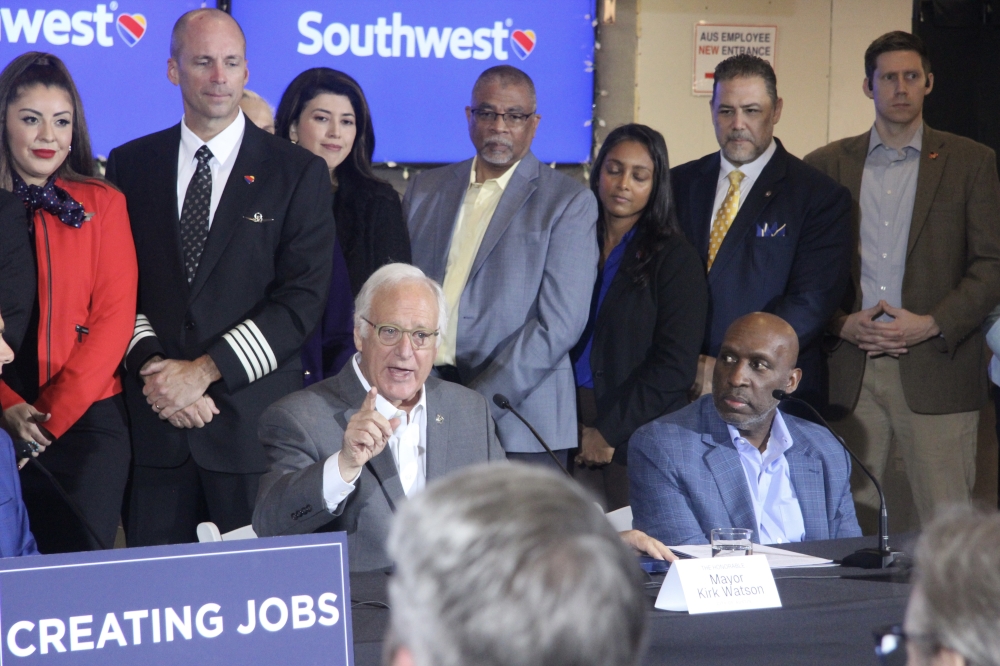
Mayor Kirk Watson said the agreement ties into city goals for affordability and local job creation, in addition to airport improvements.
“More Southwest Airlines staffing, more gate activity, more air traffic availability, more reliability, more options for those that fly in and out of Austin, more jobs for Austinites, more child care, more training and more internships. So much more. And it’s because Southwest understands Austin," he said.
"There are no upfront subsidies, no tax abatements, and no automatic payouts. All incentives are capped and tied to job creation and community benefits, ensuring the deal remains fiscally responsible and protective of taxpayer dollars," a city statement reads.
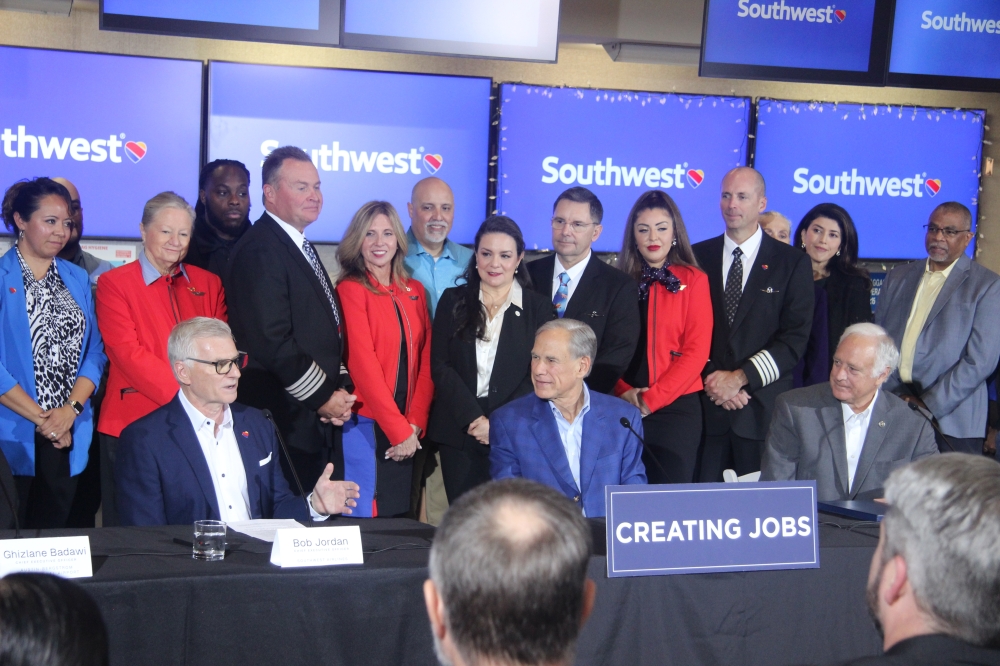
Gov. Greg Abbott said Southwest's expansion bolsters Texas' status as a top location for job creation and economic development. Additionally, he said the state will contribute to Austin's expansion project with a $14 million economic development grant, including a $375,000 bonus for veteran hiring.
“With the Texas Enterprise Fund, these are funds that are provided by the state legislature for the state to invest strategically for projects that we know are going to be adding more high-paying jobs in the state," Abbott said. "This is one of the best projects I’ve seen with such high-paying jobs, especially the commitments to our veterans.”
Quotes of note
“This economic partnership made this decision easy. And those decisions are always difficult because capital is scarce. So state and local, you made this one an easy one for us. But Austin has always been at the top of the list," Jordan said.
"Our partners ... and this agreement will change the economic trajectory for so many people in our community through one of the single largest employee job expansion efforts this city has seen in recent years. We’re putting Austinites into Austin jobs," Watson said.
"For Austin, this strategic expansion will not only create jobs in our area and improve the flying experience for customers traveling out of AUS, it will make Austin’s entire economic ecosystem more competitive, helping us attract new businesses to the area and bolstering our already-thriving tourism and convention industries," City Manager T.C. Broadnax said.