

The big picture
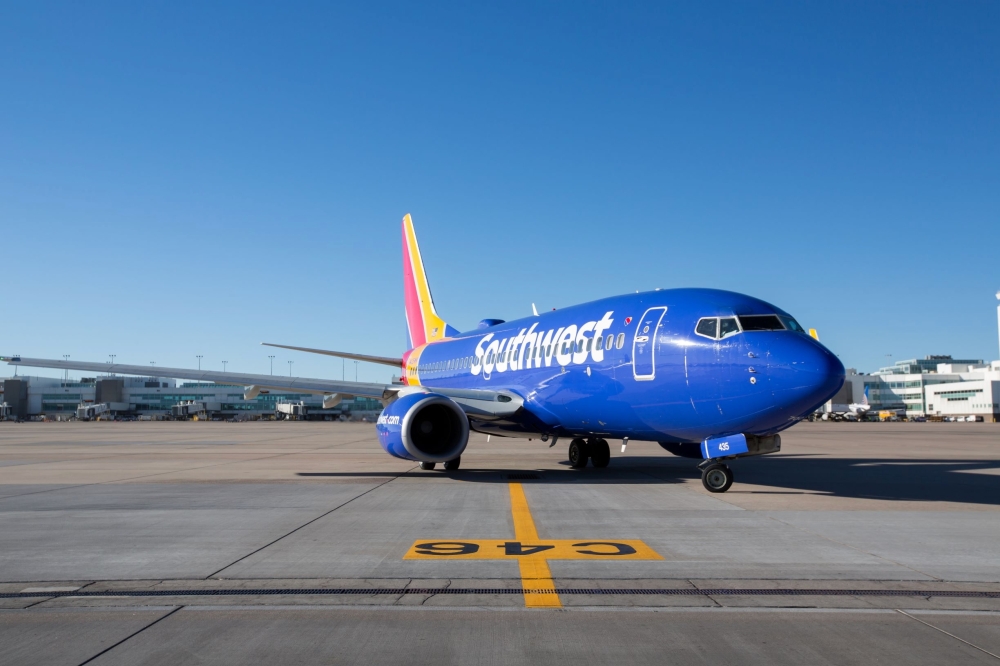
City Council voted to advance an economic development agreement with Southwest Dec. 11 as the airline explores multiple potential locations—and incentives—for its expansion. Its Austin project would serve travelers through more staffing, and gate and aircraft availability to improve reliability and reduce disruptions, city staff reported.
The framework would see Austin pay an estimated $5.5 million to Southwest for roughly 2,000 new local hires over a five-year term, while the city would benefit with nearly $12 million in new tax revenue. The airline would also take on a $7.5 million infrastructure development at the city-owned airport.
Southwest CEO Bob Jordan, Gov. Greg Abbott, Mayor Kirk Watson, City Manager T.C. Broadnax and ABIA CEO Ghizlane Badawi are scheduled to make an economic development announcement at the airport Dec. 12.
"Southwest appreciates the leadership of Mayor Kirk Watson and the Austin City Council and we look forward to working with them as we make Austin and Central Texas an even bigger part of Southwest’s future,” Southwest spokesperson Lynn Lunsford said in an email.
Stacy Schmitt, senior vice president of communications and external affairs with the regional economic development partnership Opportunity Austin, credited Southwest for its longtime role as an “exceptional” partner at the airport and the deal’s potential to support local economic momentum.
"Approving this agreement will send a valuable signal that the city of Austin wants to compete and win transformational economic development projects like this one," she told council members Dec. 11.
Austin projects an additional 5,100 indirect new jobs could be created across related industries through Southwest's expansion, generating more than $800 million in local gross domestic product, nearly $750 million in local earnings and $19.8 million in total annual tax revenue.The city's estimated share would include:
- $6.86 million from hotel occupancy taxes
- $3.8 million from property taxes
- $1.19 million from sales taxes
As Southwest grows, it's seeking to "expand facilities and operations infrastructure" to support new flights and jobs, according to city materials. The airline, already the largest at ABIA, has targeted the airport as a "potential viable location" out of multiple options.
The city incentive provided under Texas' Chapter 380 program would offer "significant community benefits" in line with the airport expansion project, city staff reported.
"This program is intended to help provide new employment opportunities for Austin residents, solidify neighborhood employment centers and activity corridors, and yield numerous community benefits aside from traditional increases to the City’s tax base," staff wrote in a council document.
Council's December vote exempted the Southwest package from aspects of Austin's Business Expansion Program as revised by city officials in recent years. The changes are facilitated by a provision for case-by-case incentive review of "high-impact" projects.
"If it is determined that the non-conforming project is attractive, justifiable, and can provide significant community value given current market conditions, and does not fit within the structure of a current program outline, special consideration may be made to create a program to support such a project depending on feasibility and City financial bandwidth," the program outline states.
Zooming in
Southwest's thousands of new hires at ABIA are expected to be paid an average $180,000. Jobs would come with various benefits and most would be unionized.
The city's initial $2,750 per-job incentive payments would be made for every employee who's an Austin resident. The framework calls for Southwest to donate 10% of its hiring awards to a new city child care assistance fund, resulting in final payments of $2,475 per resident job. Those would be made the year after each eligible hire, according to the city.
Other local workforce development benefits would include:
- Southwest's participation in local K-12 and university career fairs
- Partnership with the Austin Infrastructure Academy on aviation career education and training
- Expanded internship programs through the city and Workforce Solutions
"For all Austinites, we’re also getting more direct flights and better reliability from Southwest. That means easier trips to visit families and better connections for our local businesses," she said. "This proposal really delivers for our working families from good-paying jobs to local hiring to child care support and better service.”
One more thing
The city's pursuit of the Southwest initiative comes as the multipart airport expansion progresses, and is projected to bring billions of dollars in benefits.
Various improvement projects are underway and local officials marked the completion of one piece of the expansion, a new International Arrivals corridor, this spring. Most recently, they also cut the ribbon on a new baggage handling system to serve the airport's record levels of travel.
Those updates come as ABIA secured federal support for its long-range expansion. The Federal Aviation Administration announced a $108 million commitment for new taxiways and other infrastructure Dec. 8.
“Safe, modern infrastructure is essential to keeping our aviation system the safest and most efficient in the world. This investment at Austin–Bergstrom International Airport (AUS) will reduce delays and increase capacity as the airport continues to grow," FAA Administrator Bryan Bedford said in a statement.