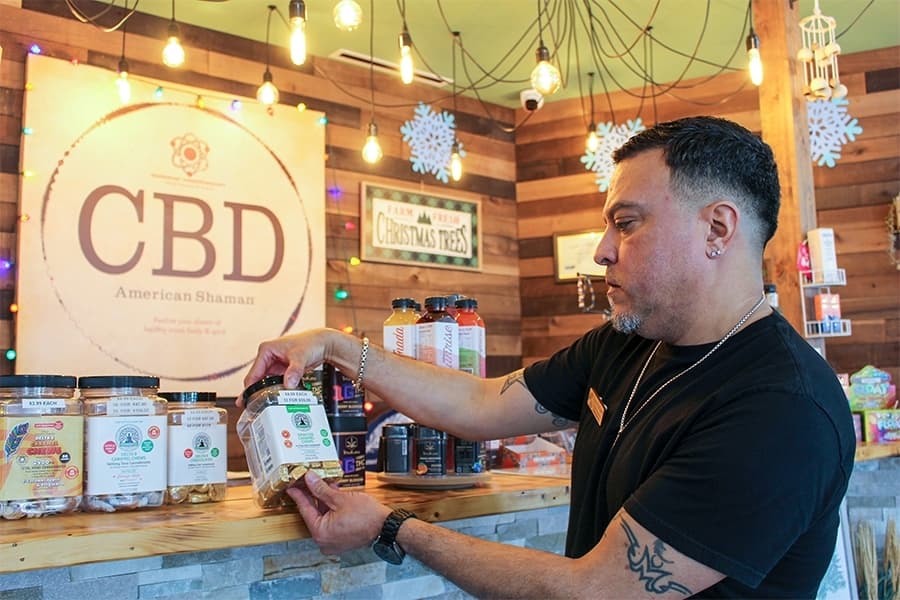
A set of permanent regulations for thousands of Texas businesses selling consumable hemp products took effect Jan. 21, after the Texas Alcoholic Beverage Commission adopted them one day earlier.
The big picture
The latest hemp rules, approved unanimously by the five-member commission during a Jan. 20 meeting, do not bring significant changes to the roughly 60,000 Texas businesses under TABC oversight. They replace similar emergency rules adopted Sept. 23, prohibiting Texas alcohol retailers from selling intoxicating hemp-derived THC products to minors.
The permanent rules require that:
- Texas retailers with TABC licenses do not sell, offer to sell, serve or deliver hemp-derived THC products to customers under 21 years old
- TABC license holders verify that a customer has “an apparently valid, unexpired proof of identification” before selling them THC products
The final rules retracted a “one strike” provision, which previously required that an alcohol retailer would immediately lose their license for selling consumable hemp products to a minor or failing to check a customer’s ID. The permanent rules allow the agency to suspend a business’s license for initial offenses and revoke a license after multiple violations.
About 60,000 Texas businesses hold TABC licenses and are impacted by the regulations. Those businesses include bars, restaurants, liquor stores, grocery stores and some convenience stores.
“The key you heard today ... is the effect of THC on younger folks' development—much like alcohol, the same reasons we regulate alcohol for those 21 years old [and up],” TABC chair Robert Eckels told reporters after the Jan. 20 meeting. “You see not only developmental problems but a level of maturity needed to use these products, [which] can be very harmful to the kids and the community.”
Other THC retailers that do not sell alcohol, such as smoke shops and some online businesses, are regulated by the Texas Department of State Health Services.
What they’re saying
On Jan. 20 and during previous commission meetings, some Texans urged the TABC to consider broader restrictions on the state’s multibillion-dollar hemp industry. Their suggestions included raising the minimum age to purchase THC products to 25, requiring ID verification at store entrances and prohibiting online THC sales.
“Too many people my age—I'm 23—are finding out the hard way that THC affects brain development through age 25 and increases risks to mental health and addiction,” Isabelle Richter told commissioners Jan. 20. “Labels should make that clear. Please get this right for Texas.”
The TABC has limited jurisdiction over the consumable hemp industry and can only require age limits and ID checks, agency leaders said Jan. 20. State health officials are currently considering more comprehensive regulations in addition to the existing age restriction, including:
- Stricter THC testing and labeling requirements
- Guidelines for product recalls
- Tens of thousands of dollars in annual licensing fees
“The Department of State Health Services’ rules are going to be much more robust,” TABC general counsel James Person said Jan. 20. “They actually cover the products themselves: the [THC] content, the testing and whatnot. So I think a lot of the comments we received would probably be better addressed to the Department of State Health Services.”
The DSHS, which issues hemp licenses, is accepting public input on its proposed rules through Jan. 25, Community Impact previously reported. As of press time, the agency had not announced when it would consider adopting the proposal.
Person said the two agencies had entered into a memorandum of understanding, giving the TABC the primary authority to enforce regulations and conduct audits of Texas businesses that sell or manufacture consumable hemp products, similar to its existing operations in the alcoholic beverage sector. The agencies are working on an official contract to finalize the terms of the memorandum, Person told reporters.
“As we heard today, a lot of these products are continuing to be a challenge and significant when it comes to public health,” Eckels said during the Jan. 20 meeting. “[As] we look at the impact of these regulations and our partnership with the Department of State Health Services, we will have opportunities to amend these regulations; provide better protection and further protection for the children; or make it easier for our permit holders and license holders to comply with these laws.”
How we got here
The two agencies have been working on consumable hemp regulations since at least September, when Gov. Greg Abbott issued an executive order calling for age restrictions on product sales, tighter guardrails on the industry and enhanced law enforcement monitoring of hemp businesses.
Abbott issued the order after state lawmakers spent more than half of 2025 debating whether to increase regulations on consumable THC products or ban them altogether. Lawmakers voted to ban all hemp-derived THC products in May, but Abbott later vetoed the legislation. After lawmakers did not strike a deal during special legislative sessions over the summer, the governor directed state agencies to draft new regulations.
Looking ahead
Abbott’s executive order also directs the TABC, the DSHS and the Texas A&M University AgriLife Extension Service to look into implementing “a comprehensive regulatory model” similar to what state Rep. Briscoe Cain, R-Deer Park, proposed during a special legislative session over the summer. Cain’s proposal would have created a state council to develop rules for THC products and businesses, including some of the measures requested by the governor.
According to the TABC, the three agencies are studying hemp regulations similar to those in Cain’s legislation and will present their findings to the governor before Texas’ 90th legislative session, which begins in January 2027.
Eckels said he expects that Texas lawmakers will take another look at THC regulations in 2027.
“I fully expect that you'll see the legislature address the issue in the next session—this is a stopgap measure until they get something in place,” he told reporters Jan. 20. “If they don't pass something, I'm sure we'll continue with some kind of regulatory work.”
However, legislative action may be preceded by an impending federal ban on intoxicating hemp products. That ban, which the U.S. Congress approved late last year as part of a federal funding package, is set to take effect in November, Community Impact previously reported.