Austin’s attempt to keep in place a local ordinance limiting low-level marijuana enforcement has likely ended more than three years after city voters adopted it.
What happened
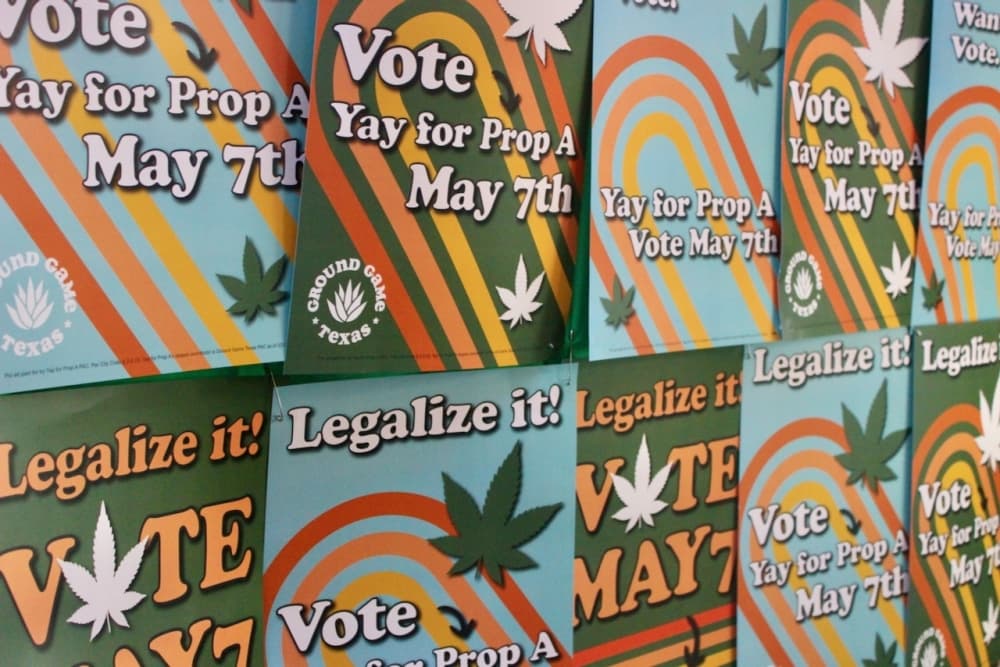
Residents passed the “Austin Freedom Act,” or Proposition A, in May 2022. The two-part ballot measure prevented local enforcement of some drug-related misdemeanors including marijuana possession, and also banned Austin police from executing “no-knock” search warrants.
Attorney General Ken Paxton sued several cities including Austin over similar marijuana enforcement policies last year, claiming they conflicted with Texas drug laws. While Austin’s ordinance was initially upheld in district court, an appeals court sided with the state’s request for an injunction to block it earlier this year.
The city then petitioned the Texas Supreme Court to review its case. The court denied that request Dec. 19, maintaining the earlier appellate court outcome. The city didn’t respond to a request for comment about the case as of press time Dec. 19.
The approach
The Austin Freedom Act landed on the city's May 2022 ballot following a public petition campaign. That process allows residents to petition the government to enact policy if enough registered voters sign on in support. Government officials may then either adopt the measure outright or call an election to decide the issue, but can’t reject or modify the proposed initiative.
Despite some support on the City Council dais, officials declined to pass the act themselves and instead left it to a public vote. Proposition A then won more than 85% support, and council members certified the election results, putting the ordinance into effect.
Attorneys for Austin contended that while marijuana remains illegal in Texas, council members didn’t have discretion over whether to enact the voter-backed ordinance through the election canvass. They also said the recent court decision “undermines the power of initiative" for residents.
“Per the court of appeals, city councilmembers must decide whether an initiated ordinance is preempted before deciding whether it passed, and only if it is not preempted can it perform the ministerial duty of canvassing the election returns to determine whether voters approved it. That is topsy-turvy,” they wrote. “Questions of the validity of a law are decided after a law passes, not before.”
State attorneys argued the marijuana measure was clearly preempted under Texas law, and that the relevant election and policy procedures are separate.
"You can canvass the votes but you can refuse to adopt the ordinance if it violates the constitution so clearly as it did here," Assistant Solicitor General Cory Scanlon argued in court this year.
Some context
The outcome in Austin’s case followed a similar result in San Marcos. Voters there also passed a marijuana enforcement ordinance that was challenged by the state, and the city made similar arguments alongside Austin in court earlier this year. And like Austin, the Supreme Court also declined to further consider San Marcos’ case in September.
Austin and San Marcos' approaches differed from actions taken in cities like Bastrop and Lockhart, whose officials declined to enact voter-approved marijuana measures after recent elections. Texas attorneys said those city councils each acted correctly in denying a “blatantly illegal measure.”