Editor's note: this story was updated to reflect comments from Michael Weston.
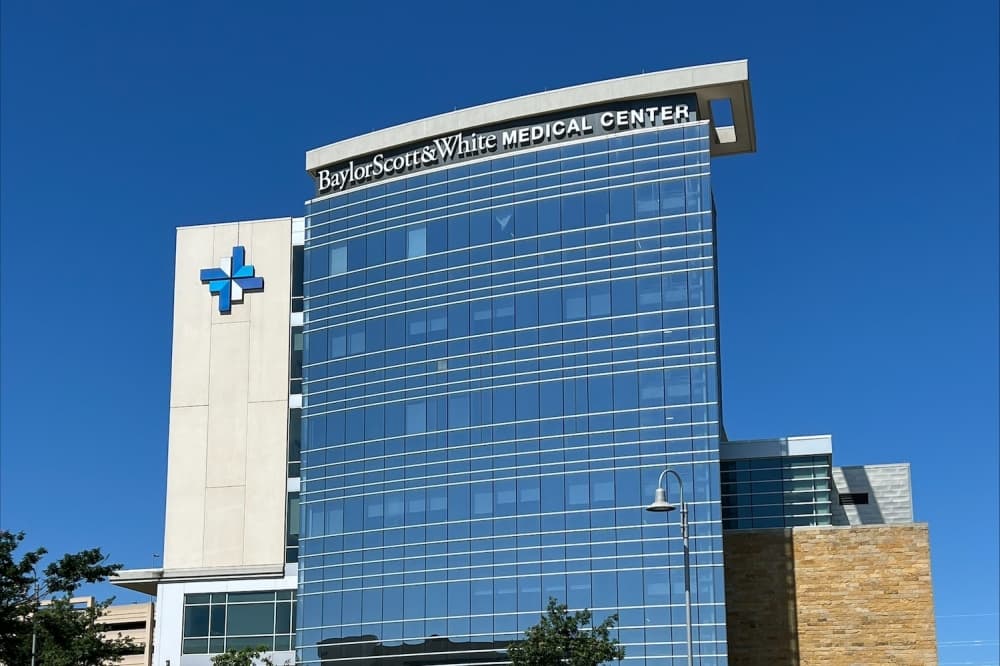
Baylor Scott & White's care navigator program spans a variety of care areas and connects patients with a dedicated nurse to provide pre- and post-operative support, including help with appointments and prescriptions, access to educational resources and patient advocacy.
Lauren Monaghan, a spine surgery care navigator at BS&W's Lakeway campus and nurse for over 20 years, shared how she supports spinal patients through care coordination and continuity of support.
Michael Weston, director of neuroscience at BS&W Lakeway, also highlighted what makes the Lakeway campus—known for its neurology department treating spinal conditions, epilepsy and more—stand out from other systems.
What does your role as a BS&W care navigator look like?
Monaghan: I call the spine surgery patients one week before surgery and go over specific education before surgery. I confirm their caregiver plan, because that is one thing that when I first came on a lot of patients did not have. ... Then we go over ways to prevent infection; we go over ways to prevent falls; we go over ways to prevent pneumonia. Those are the three most common things that do bring patients back to the hospital after spine surgery. ... That week before surgery, that's when the anxiety comes in, and they start thinking of all the things, so I give them an opportunity to ask questions. ... The day after their surgery, we go over that education again. ... If there's anything they're needing specifically or wondering about prescription-wise or appointment-wise, I can kind of help clarify that for them, so that the nurses don't have them trying to figure out all those things.
What are some of the most common challenges you see with patients trying to navigate this process?
Monaghan: Not having a solid caregiver plan—we still do run into that for some patients. Some patients just don't have a support system. I collaborate with the case management team or other departments in the hospital so that we can kind of get a specific discharge plan for that patient, because not everybody has a caregiver plan. We do have some patients that are high risk for complications after surgery, so I have started doing this surgical risk calculator that I perform on any patients that I identify as high risk based on their health history, and I send that information out to the doctors and their [physician assistant] before surgery, and then I also send that out to the nursing staff, the case management team and physical therapy. It just helps bring us all together so that we know this patient's high risk.
For patients or families unfamiliar with the care navigator program, what advice do you have on why they should take advantage of this?
Monaghan: I'm more of just an extra hand [to hold] through the process. These patients are in pain. ... I think a lot of them go to the clinic and they get told they need surgery, and they're like, "Great, I have a plan." Then they get home, and it's like, "Gosh, I didn't ask all those questions. I didn't think of all that." ... The caregiver plan [is] so important because what we found was that a lot of people weren't even thinking about that. They just wanted to have the surgery. ... Even if they don't have a family member, [saying] "I do need to call this neighbor and tell them I'm having surgery. If I need something, can you check on me?" Little things like that. A lot of people have pets and they don't even think about asking for help with their pets. ... It's just kind of helping talk out the things that they aren't thinking about because they're in pain.
Is there strong demand for neurosurgery at BS&W's Lakeway campus?
Weston: Lakeway has become a regional hub for complex brain and spine care. We have full-time neurosurgeons based here and have seen an increase in demand, even in the last 12 months. While our physicians see patients across more than 10 outpatient clinics in Central Texas, they bring their surgical cases to Lakeway because this is where the specialized teams, equipment and care coordination live. Our neuro nurses, operating room teams and care navigators are deeply trained in spine and brain care, which allows us to safely manage some of the most complicated cases in the region.