Editors note: To see how this story appeared in print, click here.
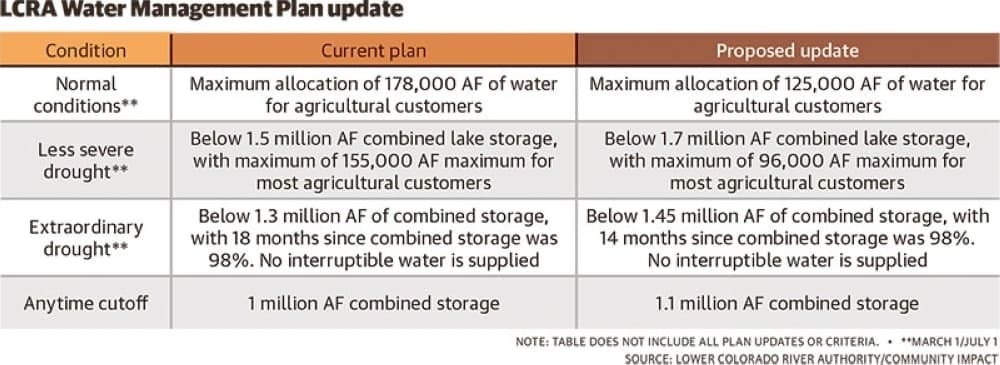
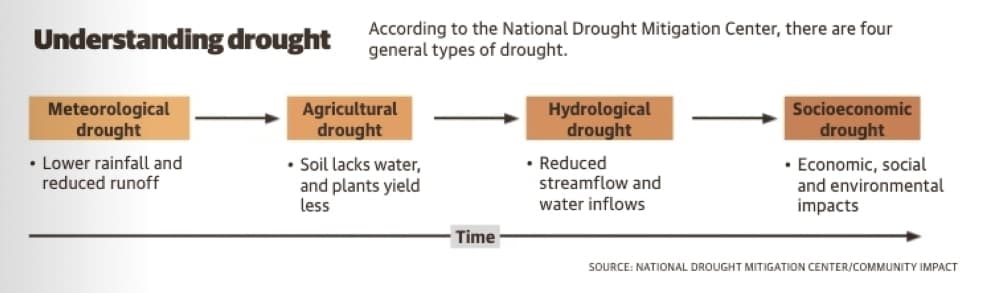
As drought conditions continue in Central Texas, the Lower Colorado River Authority is updating its Water Management Plan with more conservative water supply triggers and updated hydrology, or the study of movement, distribution and management of water.
The big picture
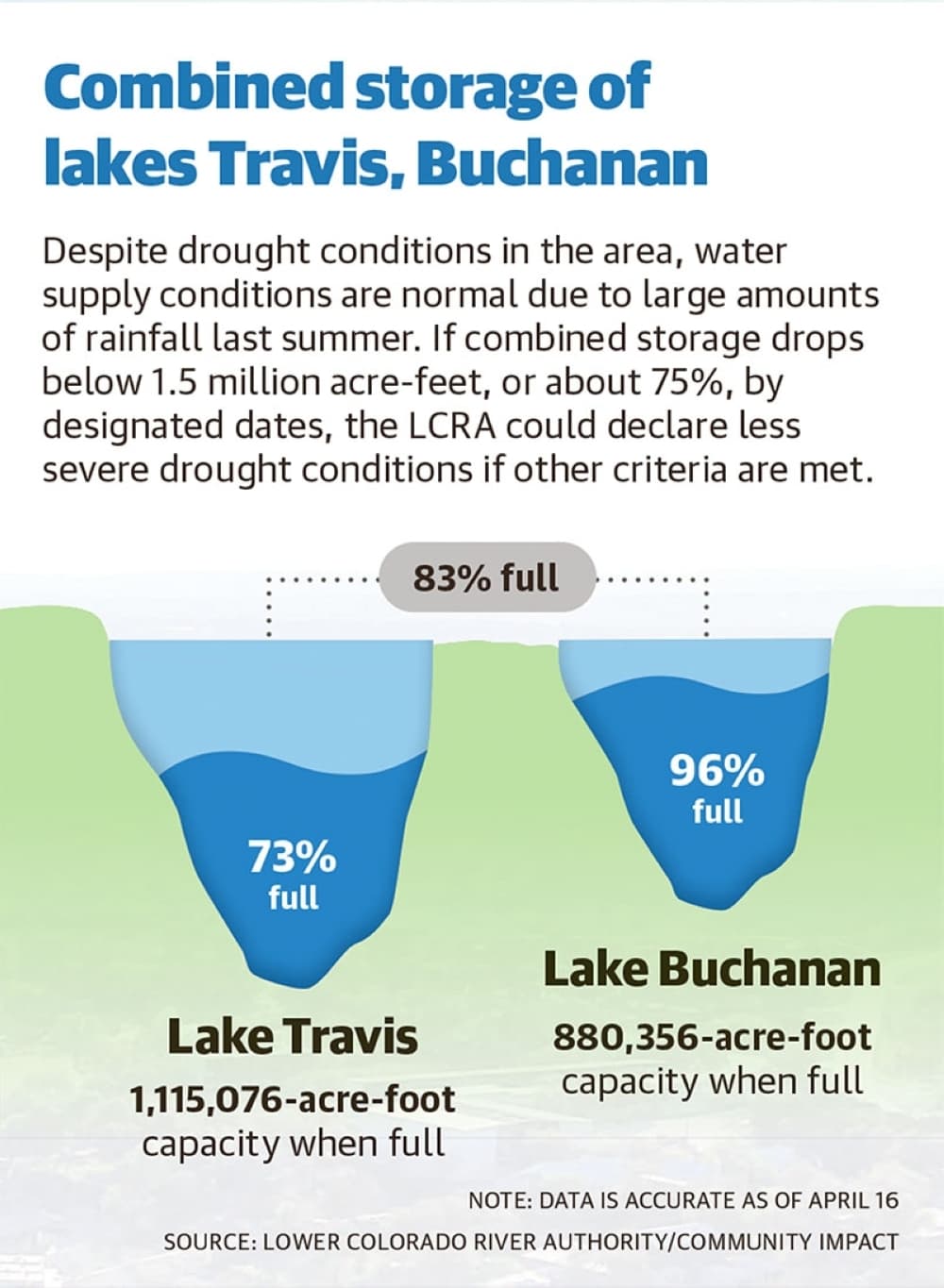
Central Texas has experienced intermittent droughts over the last few decades, with the drought of record occurring from 2008 to 2015. The majority of Travis County is in extreme drought, according to the U.S. Drought Monitor. However, LCRA officials said that water supply conditions are normal, with the combined storage of lakes Buchanan and Travis at 83% full.
Over July Fourth weekend in 2025, Central Texas experienced historic flooding, which led to the deaths of more than 100 people. The flash-flooding was prompted by heavy rainfall, with some areas receiving over 20 inches, according to previous reporting by Community Impact. The combined storage of Lakes Travis and Buchanan rose from 51% to 95% full, according to LCRA Public Information Officer Clara Tuma.
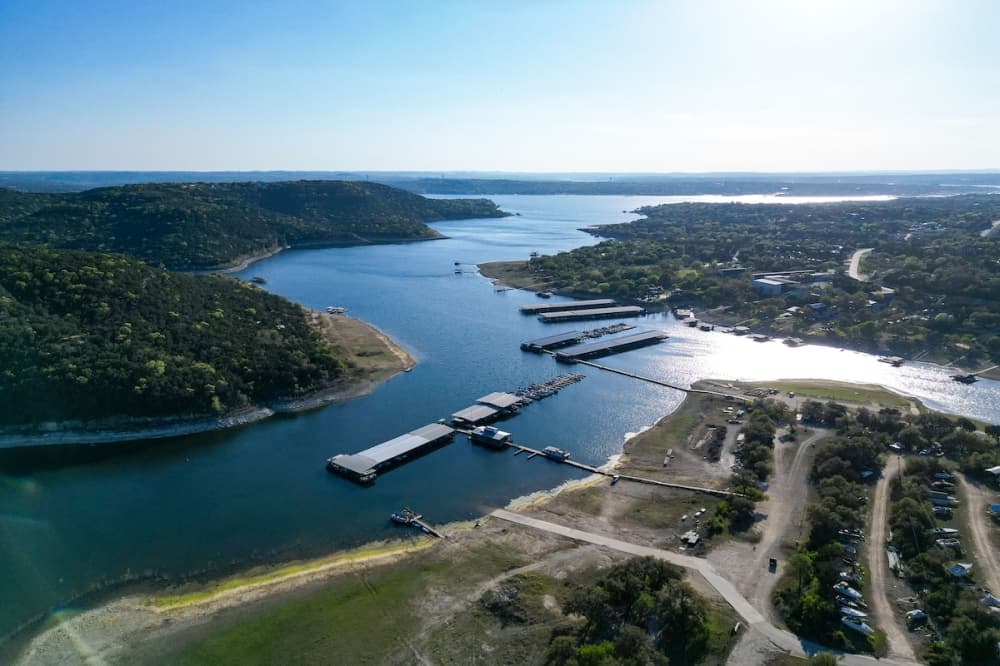
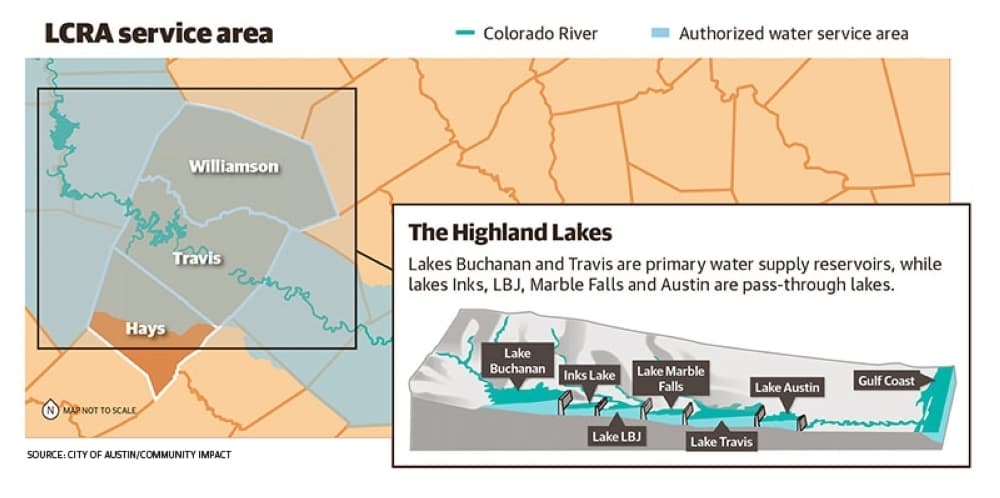
The Highland Lakes, including Buchanan and Travis, were created to retain water for homes, businesses and agriculture during drier conditions, and Tuma said Lake Travis is “designed to fluctuate.”
“Our water supplies right now are almost a million acre-feet better off than they were this time during the same period as the drought of record,” LCRA Executive Director of Water John Hofmann said. “The July rainfall events of last year were really beneficial for our water supplies.”
Despite the updates, local advocacy group Central Texas Water Coalition said the changes to the water management plan aren’t enough to protect all of the communities that depend on the Highland Lakes for their water supply.
The specifics
The LCRA submitted a Water Management Plan update to the Texas Commission on Environmental Quality in March, following several months of planning, hydrology review and public feedback. The TCEQ required the update process to begin in 2025. The plan updates firm water requirements as demand in the area has increased, as well as updated hydrology through 2032.
The LCRA distinguishes between firm and interruptible water customers. Municipal, residential and industrial groups are examples of firm customers. Interruptible customers have their water supply curtailed or cut off under certain water supply conditions, as outlined in the plan.
What they’re saying
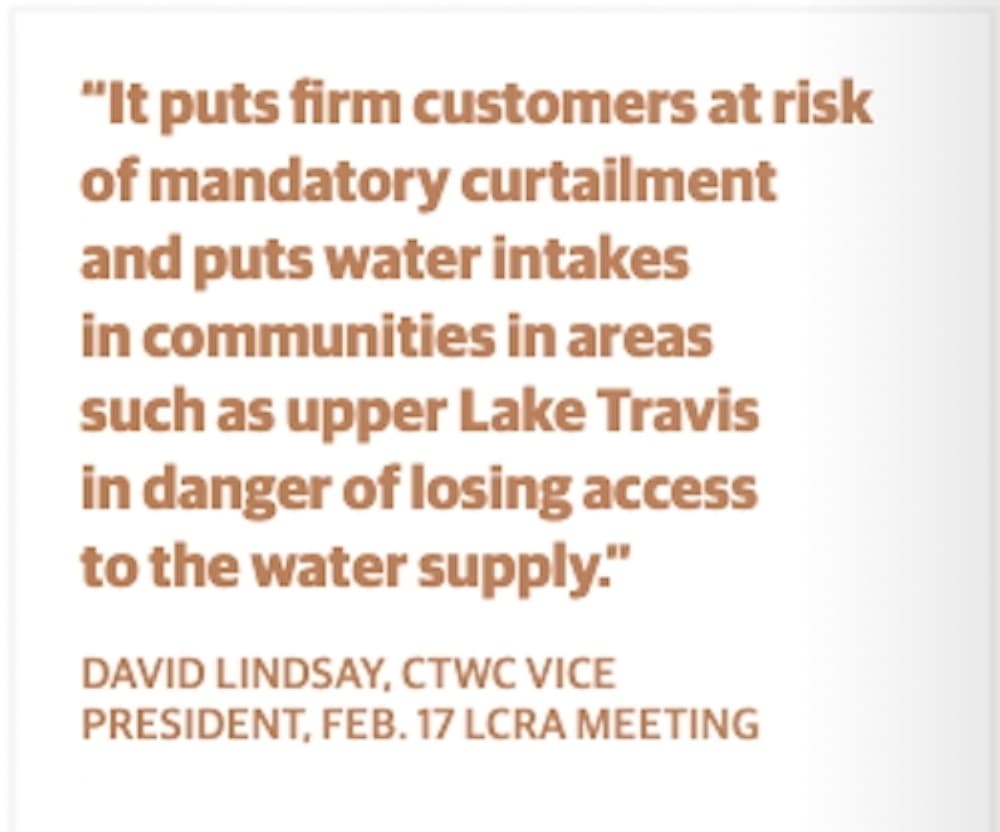
The CTWC was established in 2012, during the drought of record, to advocate for a sustainable water supply. While Executive Director Shannon Hamilton said that the plan is better, she is concerned for communities north of Lakeway that have fixed intakes for water.
The CTWC advocated for a higher combined storage to provide better protections for these areas, but these changes were not included in the plan update.
Diving in deeper
Water inflows play a significant role in lake storage. Hamilton said that man-made ponds are causing reduced inflows by retaining water that would normally flow into Lake Travis or Buchanan.
According to the Central Texas Water Coalition, nine out of 10 of the worst annual inflows have occurred since 2006, and 2022 was the worst year on record.
“It's something that we've been concerned about for a while,” Hofmann said. “We're kind of at the early stages of trying to see what [aerial] technology can do to allow us to better get a handle on how these impoundments might factor into the amount of runoff that we see in the water supply reservoirs."
Managing the impact
As of March 17, 66% of the Southwestern Travis County Groundwater Conservation District is under extreme drought conditions. Under extreme drought conditions, people tend to utilize more groundwater, according to SWTCGCD General Manager and hydrogeologist Lane Cockrell.
“As folks look to groundwater to keep their landscape alive, neighbors next door who use [it] for their indoor potable use might turn on their faucet one day, and their pump will pump air,” Cockrell said. “It really does put people’s water supply at risk, whether they use that for irrigation or indoor plumbing.”
While surface water supplies can be replenished by large amounts of rainfall, similar to last July, groundwater doesn’t work the same way. The rocks that make up the Trinity Aquifer—partially managed by the SWCGCD—don’t readily accept water, resulting in low yields. Cockrell said there are areas of the Trinity Aquifer that would take thousands of years to recharge, depending on how deep they are.
Looking ahead
There’s a chance that El Niño conditions will emerge this summer, Cockrell said. El Niño is a period of warmer sea-surface temperatures, often leading to increased rainfall.
“El Niño conditions can exist,” Hamilton said. “It doesn’t mean Texas will get rain. ... El Niño is a hope, not a promise. And it’s hard to hope for a flood because that is devastation.”
Tuma said that it will not necessarily take flooding to replenish the lakes, but it will require a significant amount of rainfall within certain conditions, such as location and soil moisture.
The TCEQ is currently reviewing the LCRA’s Water Management Plan update, but it could take a couple of years for it to be implemented if there are formal protests, Hofmann said.