

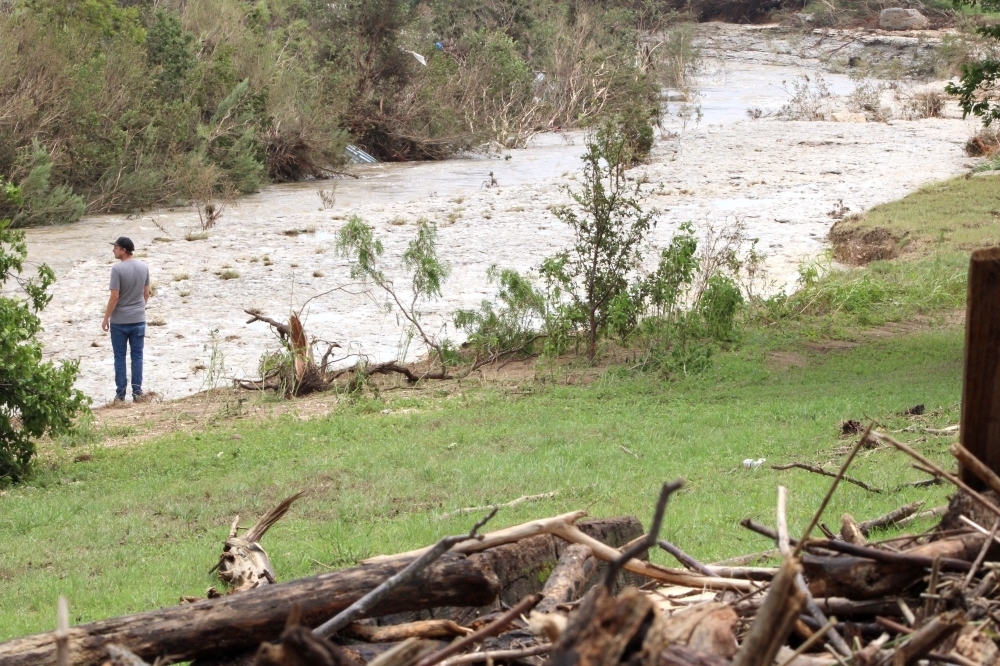
The funding comes less than six months after historic flooding hit parts of Central and West Texas over the July 4 weekend, killing at least 137 residents and visitors. During special legislative sessions this summer, state lawmakers approved requirements that 30 counties included in a July disaster declaration install flood warning systems with the help of $50 million in state grants.
The following counties in Community Impact’s coverage areas, among others, are required to install warning systems under the law: Bexar, Comal, Guadalupe, Travis and Williamson counties.
What you need to know
Gov. Greg Abbott signed Senate Bill 3 in September, directing the Texas Water Development Board to administer the grant funding and create rules for the installation of warning systems. TWDB staff said during a Dec. 16 meeting that the majority of the $50 million would go to counties, with a small amount reserved for the agency’s administration of the program.
Each county is expected to receive up to $1.25 million from the TWDB, according to the agency’s SB 3 landing page. Counties seeking more money will need their requests approved by the three-member board.
Counties are required to submit detailed project plans to the TWDB and can use the grants to install physical infrastructure such as sirens, rain gauges, flood gauges and solar panels to power the warning systems. The money can also be used for local flood education, outreach and training programs, TWDB staff said.
After Abbott signed SB 3 into law, he told Community Impact that the state will ensure flood-prone communities in Central Texas are better prepared to host campers and visitors next summer.
“If an event like this does occur again, those warning systems will go off in a way that will do everything possible to protect lives,” he said Sept. 5.
The process
The TWDB sent grant agreements to the 30 counties Dec. 17, an agency spokesperson told Community Impact. The agreements allow counties to receive up to 25% of the grant funding immediately after their projects are approved, with additional money available after local officials submit documentation of project costs, per TWDB documents.
Before projects can be approved, each county’s commissioners court must pass a resolution accepting financial assistance from the state. Local officials must also submit project plans detailing the infrastructure they intend to install, the project budget and more.
Counties can collaborate with other local entities, such as city governments and river authorities, to install the flood warning systems.
During the Dec. 16 meeting, Sam Hermitte, an assistant deputy executive administrator for the TWDB, said the board intended to begin approving counties’ projects and distribute funds in mid-January. TWDB chair L'Oreal Stepney said she wanted counties to receive funding “as quickly as possible.”
“I want to make sure that if communities are ready in December, then those funds are available in December for those communities,” Stepney said. “That's really important, I think, to this process, at least for me, that if communities are ready, ... that those dollars are available to them.”
A TWDB spokesperson told Community Impact on Dec. 18 that there was not a specific date by which counties would begin receiving funding, as it depends on when counties submit their final proposals. Some counties are currently conducting planning studies to determine what kind of warning systems their communities need and where specific infrastructure should be located, TWDB staff said Dec. 16.
Zooming in
In Kerr County, which was hardest-hit by the July 4 flooding, local entities said they were working together to strengthen community preparedness for future storms.
The Upper Guadalupe River Authority is collaborating with local cities and unincorporated communities, county officials, first responders, utility companies and residents to develop a flood warning system and improve emergency communications, UGRA general manager Tara Bushnoe said during the Dec. 16 meeting.
The UGRA, which is in charge of a roughly 38-mile stretch of the Guadalupe River in Kerr County, does not currently have flood warning sirens. During legislative hearings this summer, state lawmakers criticized the river authority for neither raising local property taxes nor accepting a zero-interest loan from the state to fund a $1 million flood warning system, Community Impact previously reported.
UGRA board member Jonathan Letz told the TWDB on Dec. 16 that local officials planned to have sirens and other flood warning infrastructure up and running by May 1. To do so, officials hope to have their project plans approved by Jan. 15 and sign contracts with vendors by March 1, he said.
One more thing
Lance Parisher, whose 20-month-old son Clay died after the family’s Guadalupe River home was swept away in the early hours of July 4, testified at the Dec. 16 board meeting.
“I'm here on behalf of our family and Clay to support these flood warning devices,” Parisher said. “I hope these will save lives in the future. Thank you so much for swiftly releasing these funds, and I know that the Upper Guadalupe [region] is going to benefit from these improvements.”
Stepney said stories from families like Parisher’s and others who lost relatives or friends “just reiterates the importance of this program, the implementation of the legislation ... expeditiously, and working with communities.”