The Georgetown ISD board of trustees unanimously adopted a balanced budget that provides select pay raises while keeping options open for a voter-approval tax rate election, or VATRE.
After hosting a public hearing that discussed the potential impacts of raising school district taxes by 7 cents, the board of trustees approved a budget slightly above $190 million June 15.
In a nutshell
Georgetown ISD's budget for the 2026-27 school year includes a general, food service and debt service funds.
While the district’s total expenditures are forecasted at about $191.74 million, the general fund will remain in the black with total revenues sitting at about $194.27 million, according to district documents.
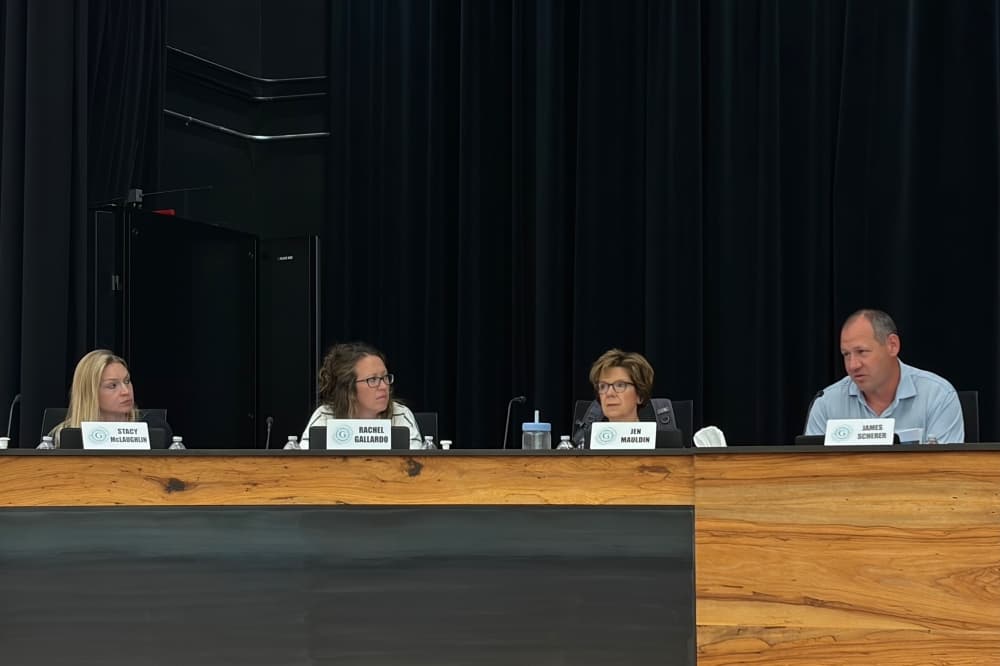
“We really do appreciate and value the fact that we’re able to maintain a budget that’s balanced, protect next year and the year after of GISD, and these teachers and their families and their positions inside our districts while so many people are getting downsized and cut,” GISD board of trustees President James Scherer said.
While GISD Chief Financial Officer Kenneth Adix said the general fund budget assumes the successful passage of a 7-cent VATRE, the district will still maintain a balanced budget regardless of whether the VATRE passes, Adix said.
As part of the 2026-27 budget, the district will provide $668,000 in pay raises for select positions, including teacher step increases for teachers, an experience-based raise. However, starting pay for teachers will remain at $57,000. These compensation increases, which are meant to improve competitiveness, were determined by incorporating recommendations from the Texas Association of School Boards.
As part of the budget, the district is increasing pay for specific roles, including bus drivers, school nurses, substitute teachers and school counselors. Minimum hourly pay for transportation staff will increase from $22 to $23 to meet market rates, Assistant Superintendent of Human Resources Amanda Johnson said. Likewise, Johnson said substitute teacher pay will increase from $115 to $125 per day.
“While these recommendations represent meaningful investments in our people, we recognize that it’s not enough,” Scherer said in a news release. “And it doesn’t address our desire to increase compensation for everyone.”
Additionally, the food service fund will cover $500,000 of shared operating costs that were once paid from the general fund, Adix said. Last month, the board of trustees approved an increase in meal prices, which will contribute to the food service fund.
The details
GISD’s contribution toward health insurance costs increased by $3,135 to ensure premiums remained stable for district employees, an amount that district officials noted could have been allocated toward more expansive raises for employees if it weren’t for the increasing cost of health care.
“We’re using the funds we have available and we’re covering medical,” GISD Superintendent Devin Padavil said. “In a different time, we would have been using those extra funds to do a pay increase for teachers and staff.”
Increasing medical costs have impacted the district. GISD left the health insurance provided through the state Teacher Retirement System in 2022.
“We appreciate the work to not give a fake raise and then take that right back in terms of medical ... to choose to do the meaningful work of offsetting those costs so that our employees don’t have to take a loss when we’re not able to give them the raises that they deserve,” Scherer said.
Diving in
Prior to adopting the budget, district officials gave a presentation that described the details of a potential VATRE.
The district's tax rate is split into two categories. The largest component, the maintenance and operations tax, pays for daily operations, while the interest and sinking component pays bond debt.
The district is currently considering increasing its combined tax rate to $1.0906, which would require a VATRE.
If the VATRE passes, the M&O tax could increase from $0.6931 to $0.7631 per $100 valuation. However, Adix said the increasing tax rate would be offset by falling property valuations as residents are being asked to pay increased taxes on homes with lower valuations.
Adix said this potential increase would be offset by falling property valuations, meaning that taxpayers would be taxed higher on a lower property value. At the same time, the district is considering lowering its I&S tax rate by three pennies from $0.3575 to $0.3275.
While compression, a state-funded mechanism that effectively lowers the M&O rate for taxpayers, factors into revenue calculations, Adix said that the M&O tax rate isn’t expected to be compressed since median home values are decreasing. However, the overall tax base is expected to grow. Compressed tax rates, which vary by district, will be announced later this summer.
District calculations indicate a median homeowner in Georgetown, one who is receiving a $140,000 homestead exemption and has tax increases capped at 10%, is paying $2,806 for school taxes with the current 2025-26 tax rate of $1.0506 per $100 valuation.
Since median home values are expected to drop from $454,897 in 2025-26 to $443,683 in 2026-27, that same taxpayer with the same exemptions would pay $2,798 with the increased tax rate of $1.0906 per $100 valuation, resulting in a slightly lower overall payment, according to district documents.
Another detail
If a VATRE were to pass, the district would consider a compensation amendment in November.
The compensation increase could include a 3% pay raise for teachers, a 2% bump for other staff members and increase starting teacher pay by $1,000 to $58,000. The district estimates these costs to amount to a little less than $4.68 million.
If a VATRE passes, Johnson said these pay increases would be given out retroactively.
The 7-cent increase to the tax rate—which the VATRE would authorize—is worth a total $6.4 million increase in additional revenue to the district, Adix said.
Since the district is required to publish the highest possible tax rate it is considering, the district could lower the proposed tax rate by the time it is required to call a VATRE in August, Padavil said. However, if the district were to theoretically consider increasing the rate by 8 or 9 cents, GISD would be required to republish the tax rate.
One more thing
Although a VATRE has not been called yet, a phone call and text-based survey will be conducted by a third party later this summer to measure community support for a potential VATRE. The deadline for the district to call a VATRE is Aug. 17.