New retail destinations, such as the H-E-B-anchored Parmer Ranch Marketplace, are bringing shopping options closer to home for the growing number of Georgetown residents located along Ronald Reagan Boulevard.
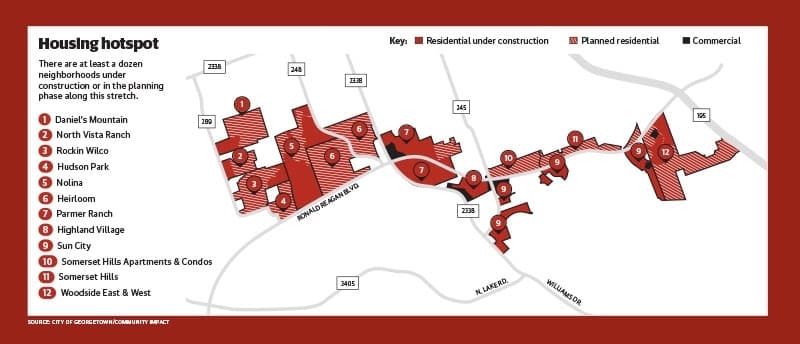
At least a dozen subdivisions are adding thousands of new homes to the stretch of road between Hwy. 195 and FM 3405, according to Georgetown’s development pipeline map.
These housing and retail projects are “plugging into the ecosystem” of northwest Georgetown’s rapid growth, opening up development opportunities in what was once an untapped market, said Logan Kimble, vice president of Columnar Land, the developer behind the area’s 620-acre Heirloom mixed-use project.
The overview
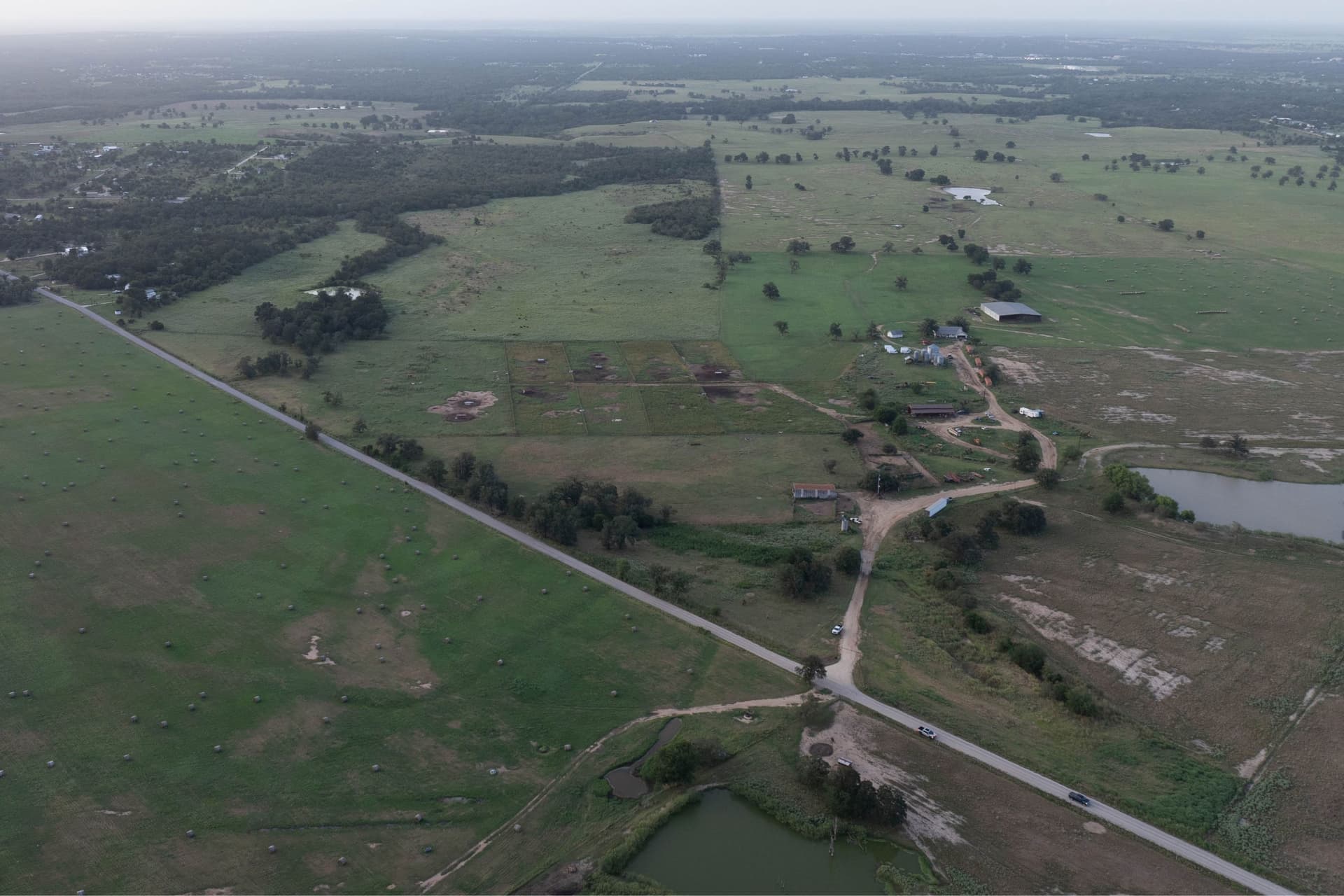
Georgetown’s growth is pushing outward into its once lower-density edges. This is especially true of northwest Georgetown, where new construction is separated only by a road from farmland.
When the Sun City neighborhood launched in 1994, its 7,000-acre site sat entirely on “rolling ranch land,” according to the Sun City Community Association’s website. Today, Sun City has more than 17,000 residents and continues to expand its active-adult community with 674 homes being built across nine new sections, according to Georgetown’s pipeline development map.
Other developers have proposed and received approvals for large projects along Ronald Reagan Boulevard from Hwy. 195 to FM 3405 that will add more than 8,500 new homes, retail space, parkland and a school site.
Precinct 3 Williamson County Commissioner Valerie Covey said commissioners two decades ago could not have anticipated the level of road infrastructure now needed in the area. County plans include widening Ronald Reagan Boulevard in the area into an eight-lane roadway.
“We’re doing it now because we needed to get started,” Covey said. “We needed to make sure we had the option to buy the right of way because, if we didn’t do it now, we wouldn’t be able to—there would be too many things in the way.”
Zooming in
Georgetown City Council approved the Heirloom mixed-use project in August, annexing the site into city limits. It will bring about 3,000 residential units across single-family homes, townhomes and apartments; a future Georgetown ISD school site; dedicated parkland; and more than 200,000 square feet of retail and commercial space.
Kimble said the project will offer more accessible, affordable housing, in contrast to the “larger lot” and “higher-end” homes that have been typical of the area.
“I think what we’re seeing [in the] demand for communities right now is a whole lot more about running the full gamut of product types, which brings different demographics [and] different kinds of vibrancy,” Kimble said.
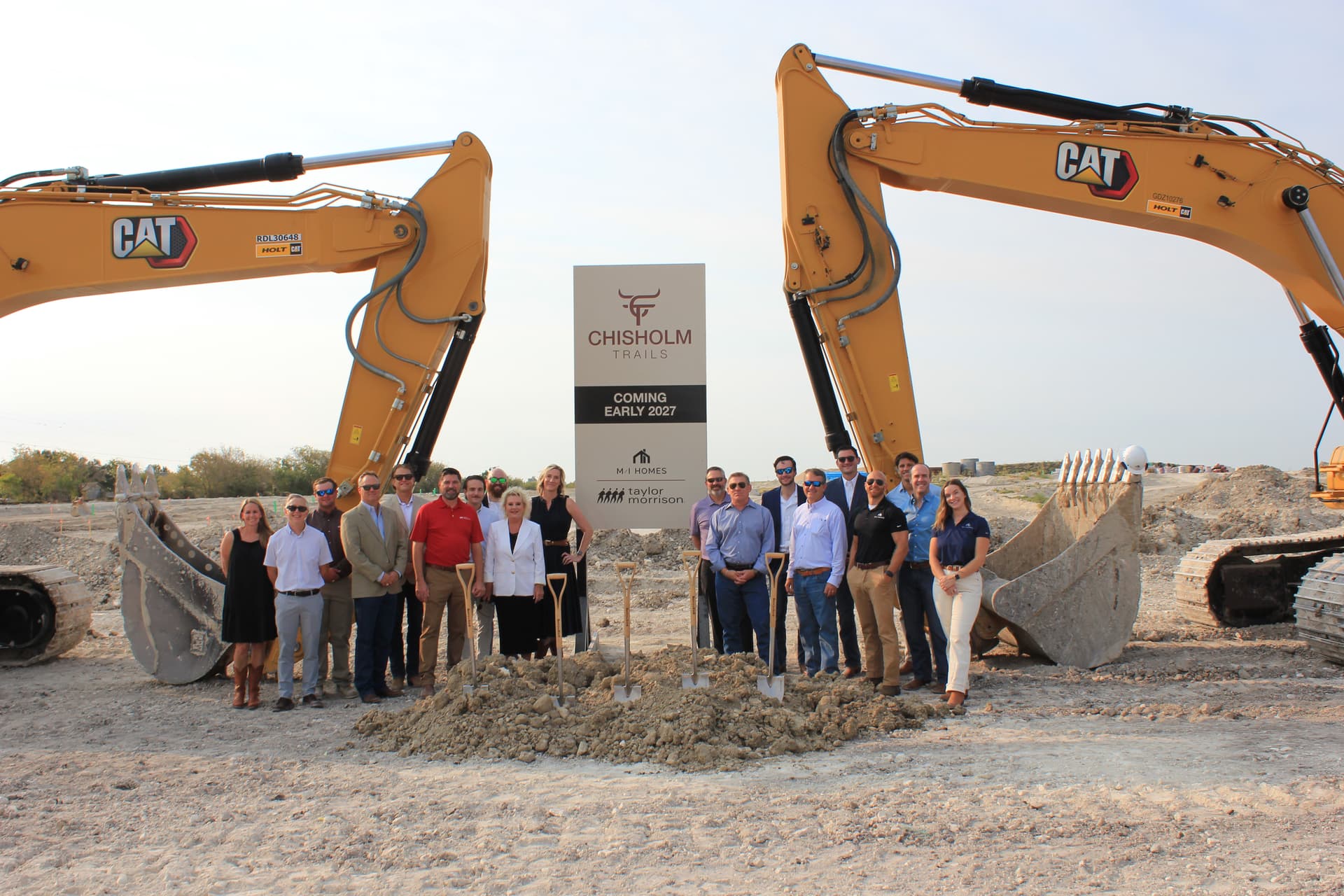
Another housing community, Nolina, has over 1,300 single-family houses from builders like Taylor Morrison and Perry Homes under construction or planned, according to its website. Some homes on the property are ready for move-in.
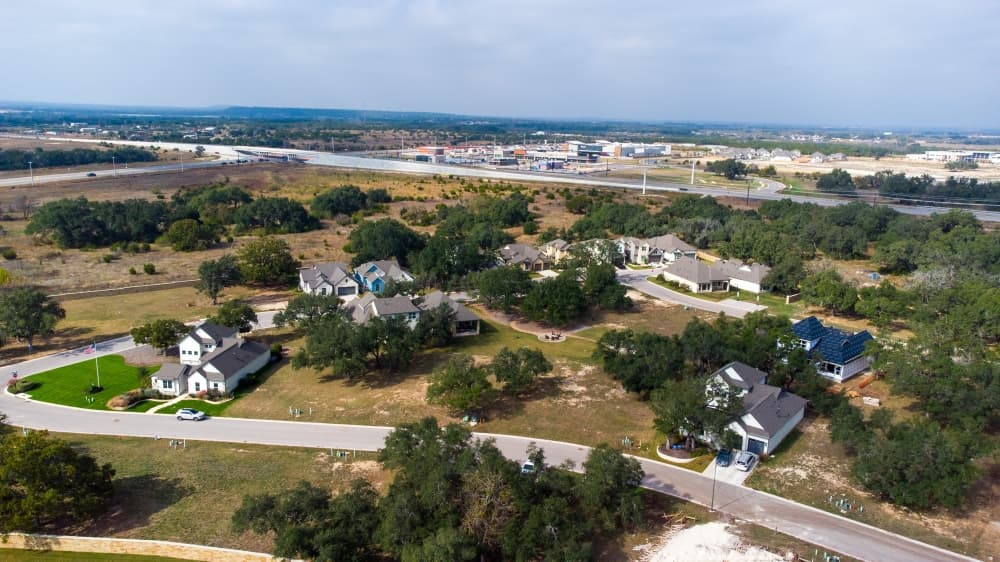
The Parmer Ranch neighborhood opened its first phase in 2021 and plans to have about 1,000 homes. Its amenity center opened this spring, and the community is still adding new builders like Coventry Homes as of this year, according to the neighborhood’s website.
The Somerset Hills development will bring single-family homes as well as apartments and condos. Over 600 multifamily units total are planned for the project, according to the city's development map.
New neighborhoods
These are the neighborhoods bringing the most houses to the Ronald Reagan corridor.
- Heirloom
- Number of units: 2,000 (single-family), 1,000 (multifamily)
- Status: in planning
- Woodside East & West
- Number of units: 1,170 (single-family)
- Status: under construction, in planning
- Somerset Hills
- Number of units: 384 (single-family), 608 (multifamily)
- Status: in planning
- Parmer Ranch
- Number of units: 952 (single-family)
- Status: under construction, in planning
The specifics
The residential growth is accompanied by several new retail developments. Kimble said Heirloom will create a “commercial loop.”
“It’s like, ‘Oh, we put more people out here; we can attract more retail, more commercial,’” Kimble said. “One feeds and leads to the next.”
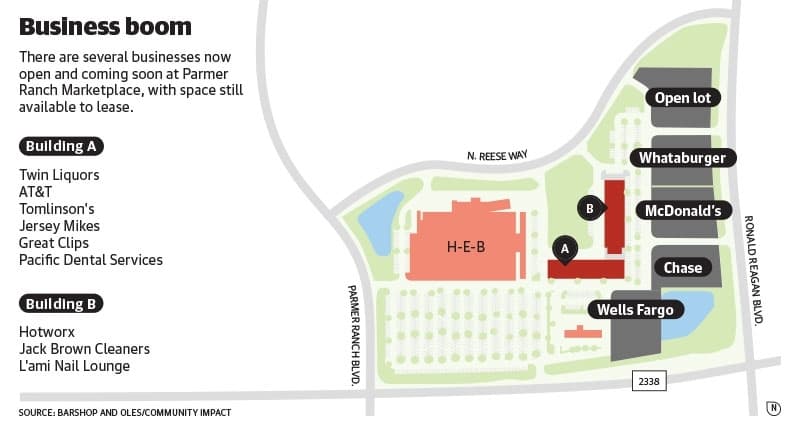
Site plans from Nolina show commercial opportunities integrated into the neighborhood, and the Parmer Ranch Marketplace is surrounded by neighborhood homes. H-E-B, which opened in September, is the anchor tenant of the Parmer Ranch Marketplace shopping center.
“There’s a lot of other retail that will go along with that H-E-B as well,” Georgetown Assistant City Manager Nick Woolery said. “I would expect there’s a huge need for more retail to serve this whole broader area of the region.”
Something to note
County and city officials have planned infrastructure upgrades in response to development in the Ronald Reagan corridor, much of which is in Georgetown’s extraterritorial jurisdiction.
This means that while not incorporated into city limits, Georgetown does provide some services, such as water and wastewater, and works together “frequently” with Williamson County, especially on the Ronald Reagan corridor, Woolery said.
The county is working with contractors to widen Ronald Reagan Boulevard between Hwy. 195 and FM 3405. Currently in design, this portion of Ronald Reagan will be constructed in two separate phases to expand the road to eight lanes.
Construction on the first phase, which stretches from Hwy. 195 to Williams Drive, will begin in the spring, with the portion from Williams Drive to FM 3405 to start in the summer, Covey said.
“Ronald Reagan’s been a plan for 20 years ... and I’ve been in office for 19, and so it’s been one of my main focuses is to make sure that Reagan gets built,” Covey said.
What else?
GISD is expected to use land in the Heirloom development to build its future fifth high school and is coordinating with Columnar Land for the site plans, Kimble said. Georgetown will also work with Heirloom for a future fire station, Woolery said.
Other city infrastructure in northwest Georgetown includes a wastewater treatment plant, scheduled to be operational in 2030, Woolery said. The plant will add 3 million gallons per day of wastewater treatment capacity to the city.