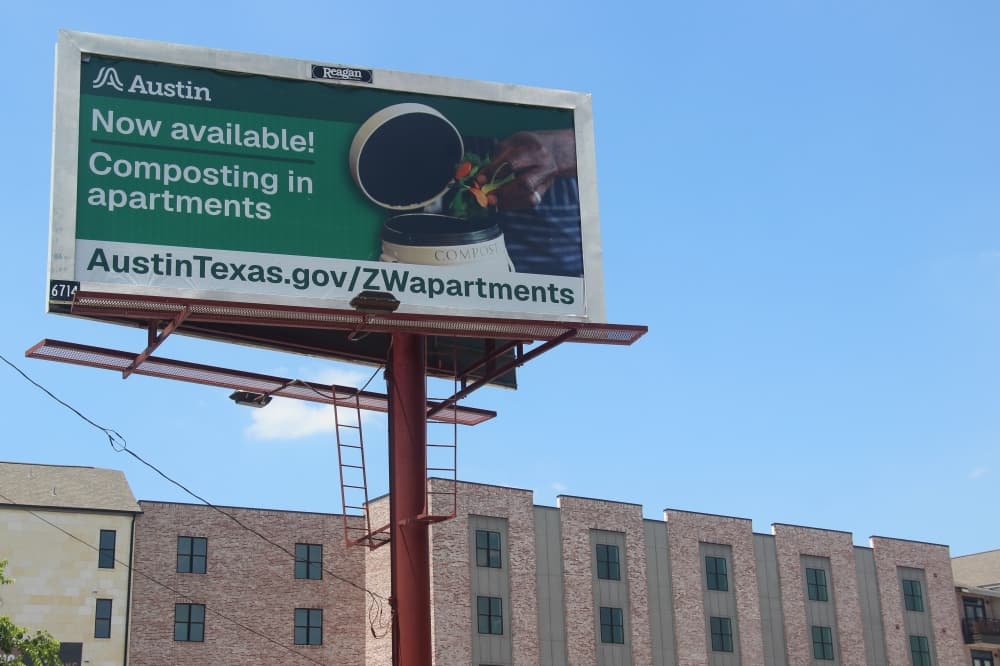
A requirement for all multifamily properties in Austin to offer composting collection has been widely adopted, with some reported compliance issues, as the city pushes for more adherence under its "zero waste" strategy.
"As the city strives to reach zero waste, multifamily resident participation is a crucial piece of the success of the composting collection requirement," Austin Resource Recovery Director Richard McHale wrote in a May 12 memo.
The big picture
Austin's zero-waste goal aims to divert 90% of the trash sent to landfills by 2040, in favor of recycling and composting options. That goal is a key part of ARR's waste collection service and comprehensive planning.
Residential composting collection has been offered by the city for years. After expanding in the 2010s, the service is estimated to have diverted tens of thousands of tons of compost away from landfills.
Building on Austin's Universal Recycling Ordinance, which required recycling options for residential and commercial tenants, officials also established a similar standard for multifamily composting in 2023. That new mandate for composting services went into effect in October 2024 and has since been implemented at hundreds of multifamily properties citywide. The standard applies to sites with five or more units, including apartments, dorms, condominium communities and nursing homes.
Zooming in
The city's recent composting charge is not optional, and property owners and managers are responsible for providing the required services under city code. That includes offering "convenient access" for tenants to deposit materials like food scraps and compostable products, having the capacity to handle at least one gallon of materials per unit, and at least weekly pickups. Properties must also post signage about recycling and composting, and provide documentation about their offerings to the city in an annual plan.
As the new standard went into place, Austin also rolled out an educational campaign and offered zero-waste rebates to affected property owners for implementation. Since first sending out information about the change in summer 2024, the city reports that about two-thirds of Austin's more than 2,100 multifamily properties are now compliant.
"Growth is expected in the coming years, as the program matures, to align with the recycling service compliance rate of 74%," McHale said. "Anecdotal evidence from City staff indicates that high turnover in multifamily property managers from year to year can lead to inconsistent reporting each year, despite service level remaining intact."
At least 600,000 gallons of capacity are now available across properties that are composting. The exact amount of composting activity isn't yet available, but ARR is planning to analyze collection totals through a third-party research study next year.
The approach
A city team is responsible for monitoring properties' compliance with the regulations. Of their thousands of annual contacts with property managers, that team has worked directly with 185 multifamily properties that weren't meeting the compost requirements.
After an initial round of communication with owners and with relevant informational materials available online, McHale said ARR is now moving to ramp up to a "more proactive enforcement approach."
"This transition represents a significant step toward consistent and equitable enforcement of [Universal Recycling Ordinance] requirements across multifamily properties," he said.
Those violating the city ordinance can work with ARR to meet city standards, while those who don't respond or move toward compliance may be penalized. A total of 130 properties have been referred to Austin's code compliance office for enforcement since October, 29 of which have since moved in line with city requirements.
More information and resources about Austin's composting standards are available online for both residents and property owners.