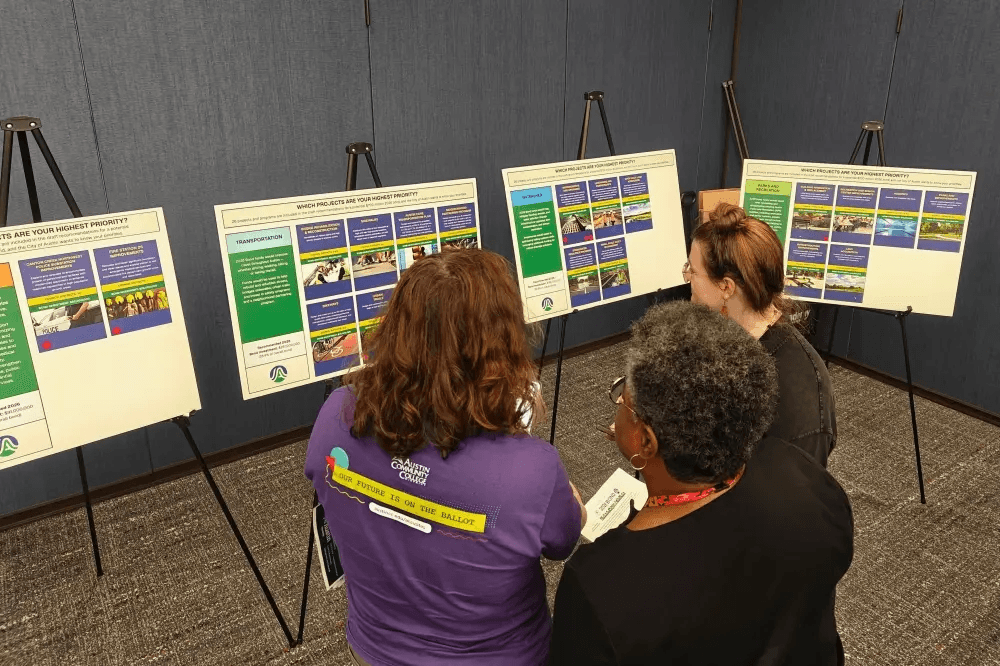
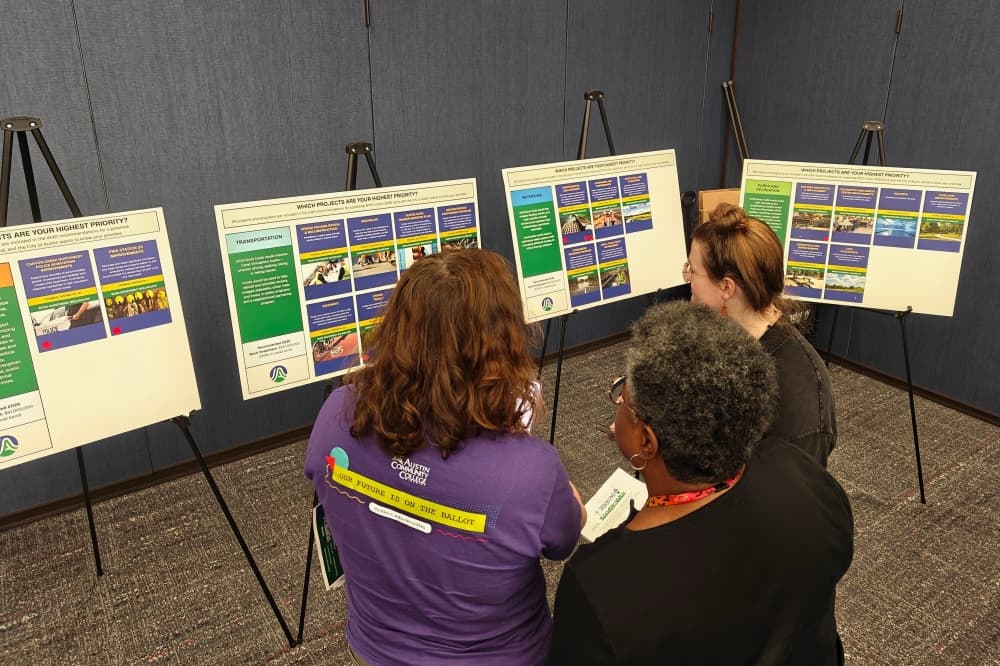
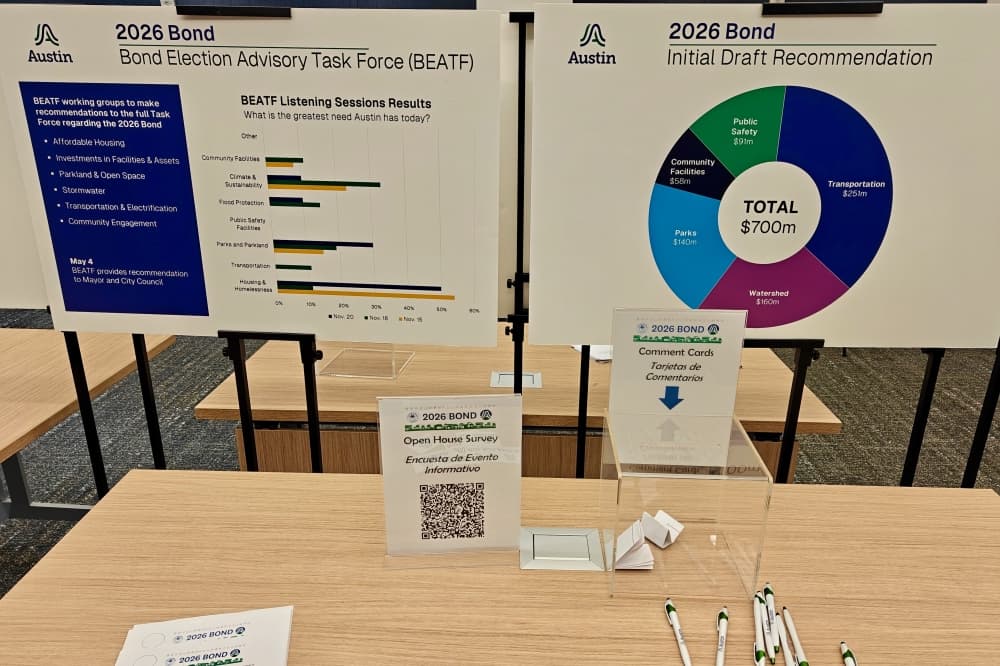
Austinites participated in a city open house for a potential 2026 bond package in February. (Ben Thompson/Community Impact)
A potential fall bond election could ask voters to approve hundreds of millions of dollars of debt. Austin officials and community members are pursuing different approaches to shape the final package.
How we got here
City Council kicked off planning for the city's next comprehensive bond—the most recent was a multipart $925 million package in 2018—two years ago. Since then, the resident-led Bond Election Advisory Task Force, or BEATF, has taken public input and deliberated what should be in the 2026 measure that's now in development.
Staff across city departments also worked to highlight nearly $4 billion in needs that could be funded through bonds last year. However, city finance officials have recommended a 2026 package of no more than $700 million due to Austin’s current debt capacity. Residents would also see rising property tax impacts; that level of new debt is projected to add more than $100 to the typical homeowner's next tax bill, with growing costs over time.
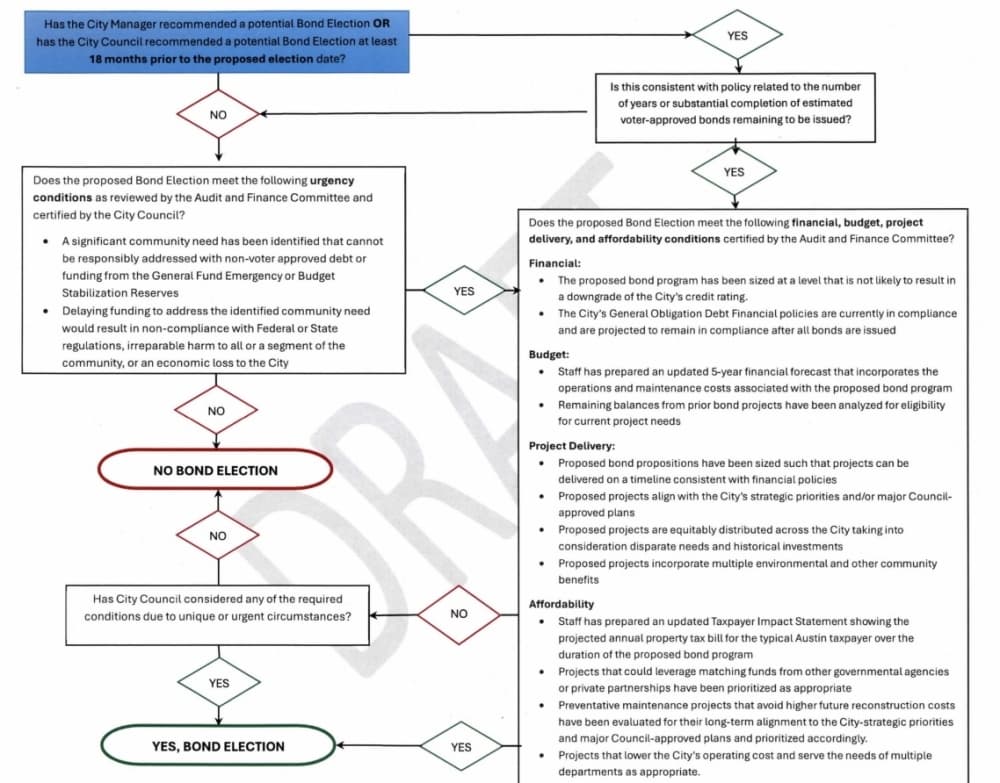
City Council approved a decision tree policy to guide the development of Austin's bond packages. (Courtesy city of Austin)
Narrowing last year's multibillion-dollar needs assessment, city staff already presented a $700 million bond outline in January. The bond task force will present its own recommendation in May, and both proposals will inform any package that's put to voters. Elected officials will have the last word on what a 2026 bond contains later this summer.
What's happening
While the BEATF has yet to produce its final list of projects, an initial recommendation totals $750 million. It spread equal funding across parks and open space, public facilities, transportation, drainage and affordable housing—a category that wasn't featured in the city staff recommendation, following 2022's $350 million housing bond. Task force members met April 13 to review their draft list, and whether to raise or lower each category's funding share.
Also this month, a subquorum of council members asked to consider a smaller debt package of $375 million-$400 million that could be followed by a complementary 2028 bond. Their alternate strategy would only fund parks, public facilities and transportation projects for now, leaving other categories for the future.
Council member Ryan Alter said his subquorum's new request was based around a lowered financial impact on voters and the ability to circle back to other projects in 2028.
"We believe such an option strikes the right balance of meeting the critical needs of today and the cost to taxpayers of less than $5/month, if approved. It is our intent to review this option through the process currently envisioned for any other proposal—including the bond decision tree," he wrote on council's message board.
The approaches reflect varying views of Austin’s wide-ranging infrastructure and facility needs across the billions of dollars in civic updates that staff say could use more funding. Many BEATF members have pushed for even higher totals, especially related to climate and affordable housing initiatives, while some officials are eyeing a reduced total while contending with less flexible city finances.
“Tight budgets suck, and this is hard,” BEATF member Donald Jackson said of the planning process.
Impacts from last year's failed tax rate election and this year's forecasting for slower budget growth also tie into the bond outlook. Eric Bailey, deputy director of the city's project delivery department, noted some projects included on bond wish lists may not be possible to operate into the future.
"The last thing we want to do is build a nice new facility and not have the ability to staff and/or clean it," he told the BEATF. "It's not just the $50 million for a new library; you're also committing to the ongoing costs to staff, clean, maintain, keep the power on, keep the A/C running. All the other recurring costs that go along with that that need to be adopted as part of the city's operating budget."
What's next
Once the BEATF presents its final recommendation in May, its resident-informed outline will be integrated with the city's internal list from January for a joint proposal in the $700 million range. That list of projects may also be weighed against the package now being sought by the council subquorum with hundreds of millions of dollars removed or delayed to a future year.
The full City Council will define the contents of a 2026 bond package and call an election in August.
The city has collected resident feedback about a potential 2026 bond package. (Ben Thompson/Community Impact)