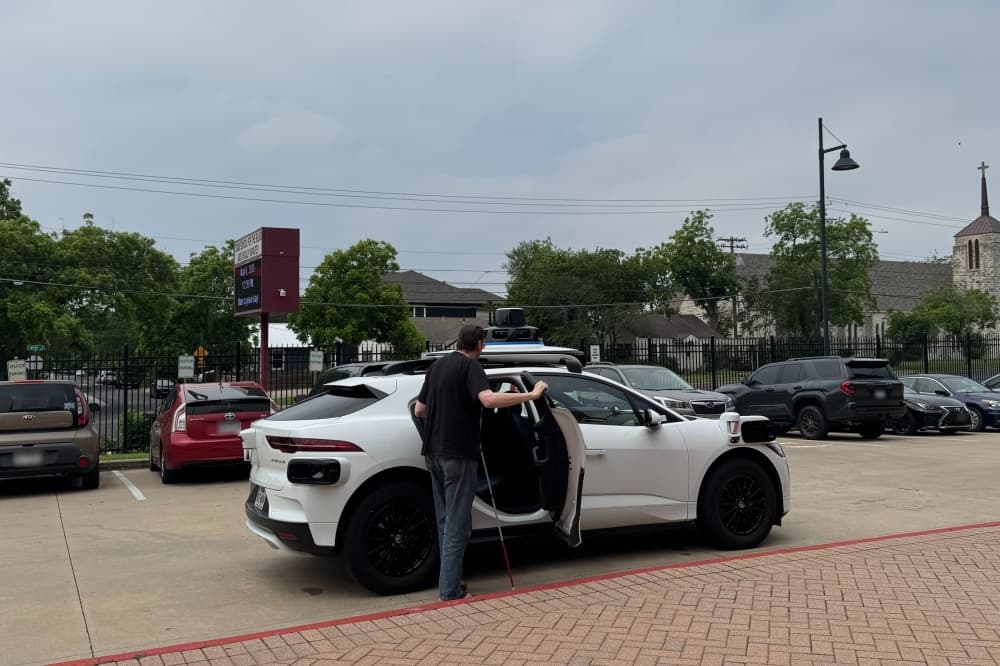
Texas School for the Blind and Visually Impaired has partnered with Waymo since before the company launched its first autonomous vehicles in Austin in 2025. The partnership gave students and staff early access to the technology, which has since helped the company shape its accessibility features.
The gist
TSBVI Superintendent Emily Coleman said the partnership began back in 2022. Prior to the vehicles being available to the Austin community, staff and students were invited to try out the vehicles which gave Waymo user-specific data about the blind or low-vision population they might not have been able to get elsewhere, Coleman said.
“They are very forward thinking when it comes to accessibility and the impacts that their vehicles would have on people with disabilities, and so they wanted to work with us right away to find out how our employees and students who were blind or had low vision could utilize them as a resource,” Coleman said.
According to Coleman, the partnership builds on the school’s existing programming, which includes teaching students how to use public transportation and ride-hailing services such as Uber or Lyft.
Students on TSBVI’s campus typically range from ages 7 to 22, with about 35% being age 18 or older, Coleman said. While riders must be 18 to independently book a ride, younger students, including those who would typically be of driving age, practice with instructors as part of the program.
“Mobility is one of the greatest barriers to employment and recreation and a social life, and so it's a big part of what we do—training students on how you can get around independently to set them up for future success,” Coleman said.
Diving in deeper
According to Amanda Ventura, who works with Waymo’s public affairs team, some of the accessibility features that have been implemented into the platform that could help blind or low-vision riders include turn-by-turn directions and a “horn honking” function, which plays a melody outside the vehicle. Both are used to more easily locate the vehicle.
Some accessibility features have a “universal design” and have ended up being beneficial for all riders, Ventura said.
“One of my personal favorite examples is one that I have turned on all the time, which is robust audio description,” Ventura said. “During your ride, you'll get more information about what's happening outside the vehicle. It’ll say, ‘waiting for the intersection to clear; waiting for a pedestrian.’ It'll give you information, like, ‘proceeding along XYZ Street.’ ... It’s useful for me, even though I'm sighted and can see the screen, but really useful for someone who's blind or low vision.”
One newer Waymo feature is a seat adjustment option, Ventura said, which allows riders to adjust the seat in front of them, which could be useful to accommodate a service animal.