


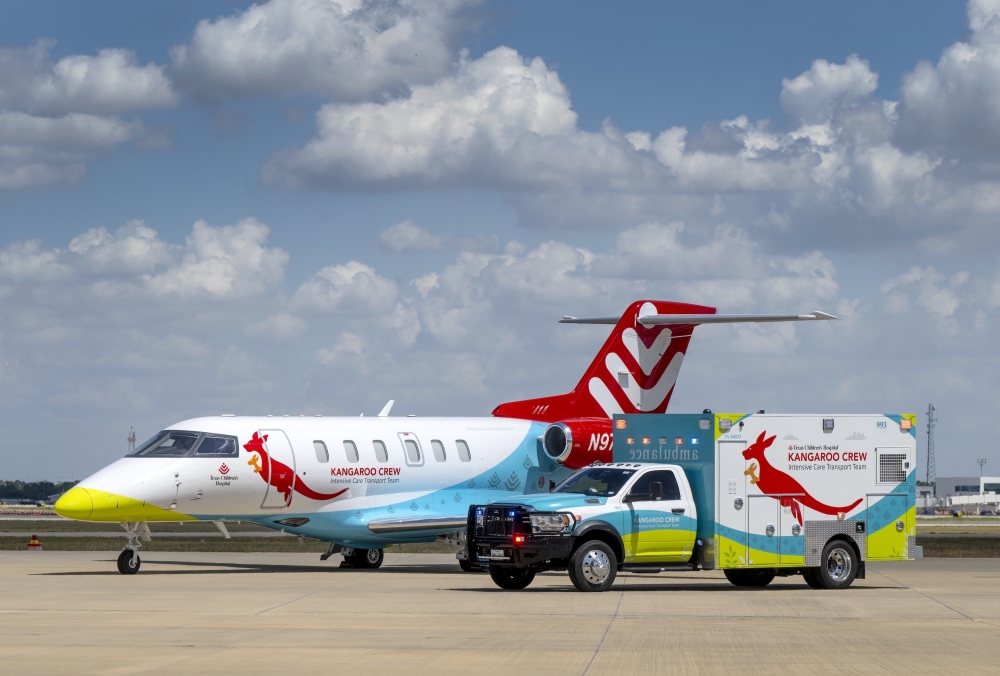
One way the hospital will be investing more in the program is by introducing its own helicopter at Texas Children’s North Austin Hospital, set to arrive in early January.
How we got here
Assistant Clinical Director Kami Stone said the team spent months identifying a location to store the helicopter that would offer the quickest access to patients at the North Austin hospital.
The Kangaroo Crew spent an additional six months training and securing supplies to make sure they would be on track for the January launch date.
Stone said while the city of Austin is fairly small and everything is close together, it becomes more difficult to reach patients via ambulance in rural areas nearby, such as Fredericksburg and Lampasas.
“Those places become really hard to travel, and it was really important to us that we get to our patients quickly and safely to give them the best opportunity for good outcomes whether they have a minor emergency or a major emergency,” Stone said.
How it works
Stone said the helicopter will be used in situations where a patient is too sick to wait for the responders to arrive via ambulance and cases of “surgical and medical emergencies” in which a patient is stable but there is a high risk of something going bad.
“A common one we see in kids is testicular torsion or ovarian torsion,” Stone said. “That's where your ovary or your testicle twists on itself. If you don't have life-saving surgical treatment right away, you could lose that ovary or testicle. You cannot wait to come by ambulance for four, five, six hours.”
The time difference between using an ambulance to reach these rural areas versus a helicopter is noticeable. Stone said the team frequents Darnall Army Medical Center, which takes an hour and a half to travel to the center using an ambulance and 20 minutes travel time to the center using the helicopter.
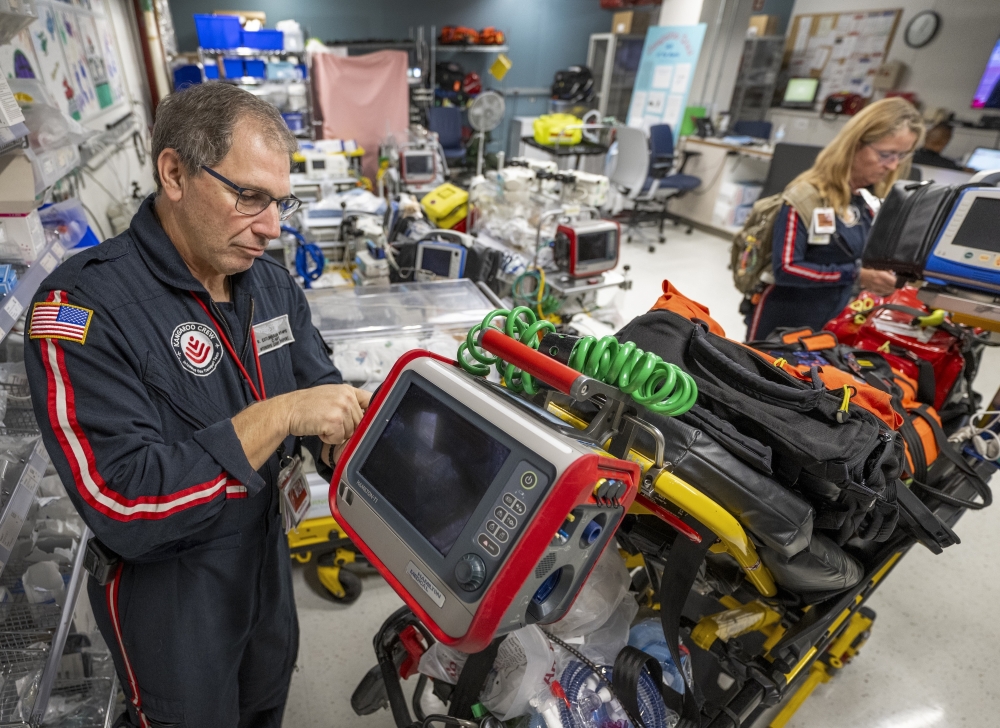
The crew is trained on helicopter safety, the mechanics of getting in and out of the aircraft, night vision goggle training, and patient-specific scenarios. Scenarios include loading and unloading a baby in an incubator or a large adult who requires more space.
Additionally, crew members are trained on drill accidents where they practice what to do in the case of an incident such as hitting a bird or if there is too much fog.
The impact
The first Texas Children’s designated helicopter was launched in Houston in 2024. Stone said the hospital system was determined to open the second helicopter in Austin to make sure patients north, south, east and west of the city would be served by Texas Children’s.
“I think strategically having two helicopters to cover the entire state of Texas is going to be a big game changer,” Stone said. "We are also the first hospital here in Austin to have our own dedicated helicopter for our hospital. We are not sharing resources with any other hospitals or 911 agencies. This is dedicated to the patients, the children and the women of Texas Children’s.”
Texas Children’s has a total of 115 members trained for their Kangaroo Crew in both Austin and Houston.
The Kangaroo Crew works in 12 hour shifts and has seen a great impact from the helicopter at its Houston hospital. Stone said it’s common for the team to complete two or three transports in one shift.
Get involved
Community members interested in helping the hospital’s mission and Kangaroo Crew can look into joining the Texas Children’s Ambassadors Program.
Individuals can make a one-time donation or an annual donation and receive exclusive perks, assistance navigating the hospital system and assistance scheduling appointments. The program also hosts family-friendly events, and networking and volunteer opportunities.
“Most recently, which we'll do here in Austin in 2026, last month in November we allowed the ambassadors in Houston to come to the hangar and meet the Kangaroo Crew and take helicopter rides with us,” Stone said.
Find out more information about how to join the program by visiting the Texas Children’s website.
- Arriving early January
- 9835 N. Lake Creek Parkway, Austin
- www.texaschildrens.org/departments/kangaroo-crew