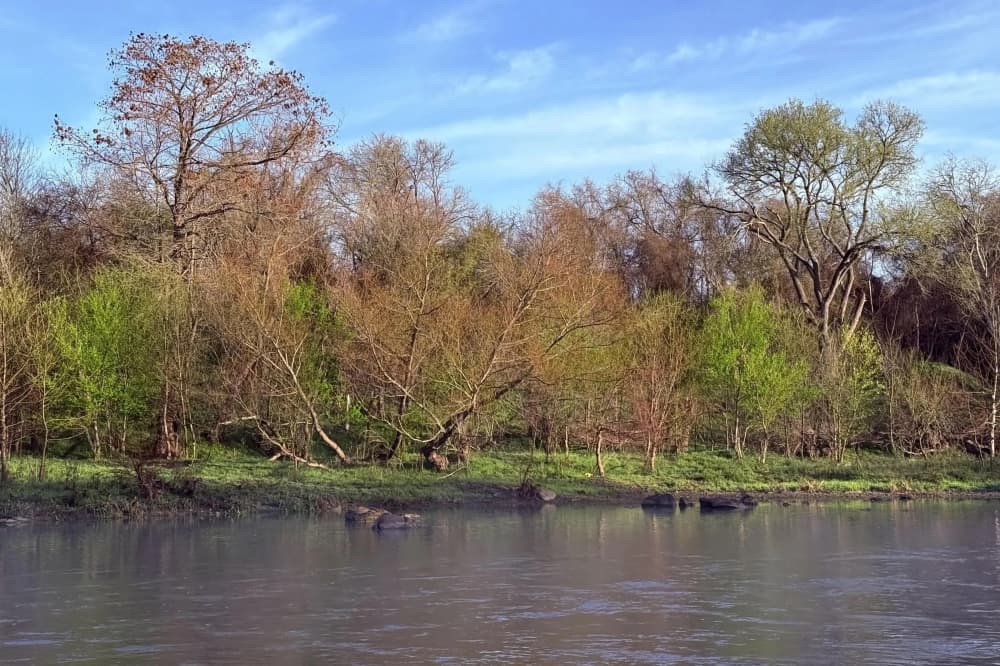
A $3.2 million project to stabilize the riverbank along the Colorado River in Bastrop is moving forward after city officials amended the scope of work.
The details
The project—which is aimed at reducing the long-term risk of floods through work on 1,200 feet of the east bank of the Colorado River—will largely be funded through a nearly $2.4 million grant the city of Bastrop secured from the Community Development Block Grant-Mitigation Program through the Texas General Land Office, according to city documents.
The city of Bastrop will also contribute $686,900 for design costs and $113,100 for project management services that will be paid for with series 2023 certificates of obligation, according to city documents.
About the project
Bastrop city staff submitted its grant application to the GLO on June 16 after Bastrop City Council approved a resolution in favor of the stabilization project June 10.
Improvements will include:
- Structural stabilization such as concrete drilled shafts or steel sheet piles
- Rock vanes to redirect flow and promote natural sediment deposition
- Riprap slopes and toe protection to resist scouring forces
- Riparian vegetation and tree planting to encourage long-term bank stability
Riparian restoration is a technique that relies on the addition of native plant species along creek and riverbanks to help degraded areas with erosion and flooding downstream, according to the Lady Bird Johnson Wildflower Center in Austin.
Zooming in
Although the project initially planned to tackle 1,200 linear feet near the Old Iron Bridge, the city of Bastrop reconfigured the scope of the project following coordination with Halff Associates and the GLO, according to city documents.
Now, 600 linear feet near the Old Iron Bridge and 600 linear feet further east of Ferry Park will be addressed, according to city documents.
“This would effectively stabilize two portions of the Colorado Riverbank near the bridge, Fisherman’s Park and Ferry Park,” Bastrop Assistant Finance Director Laura Allen said in a staff report. “While the cost to the city hasn’t changed, staff believes the reconfiguration of the project limits will create the most cost-effective benefit to the city and its residents.”