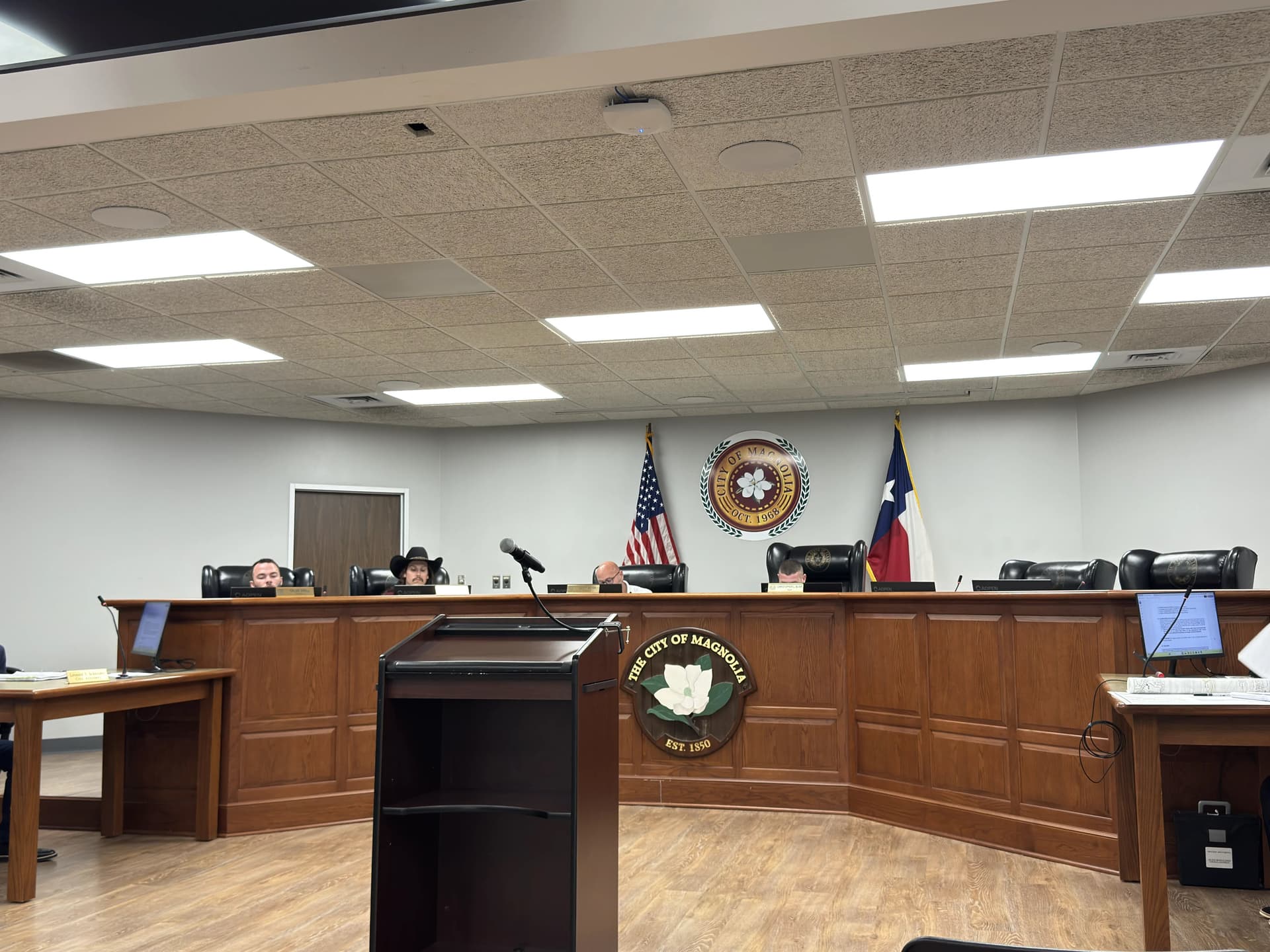
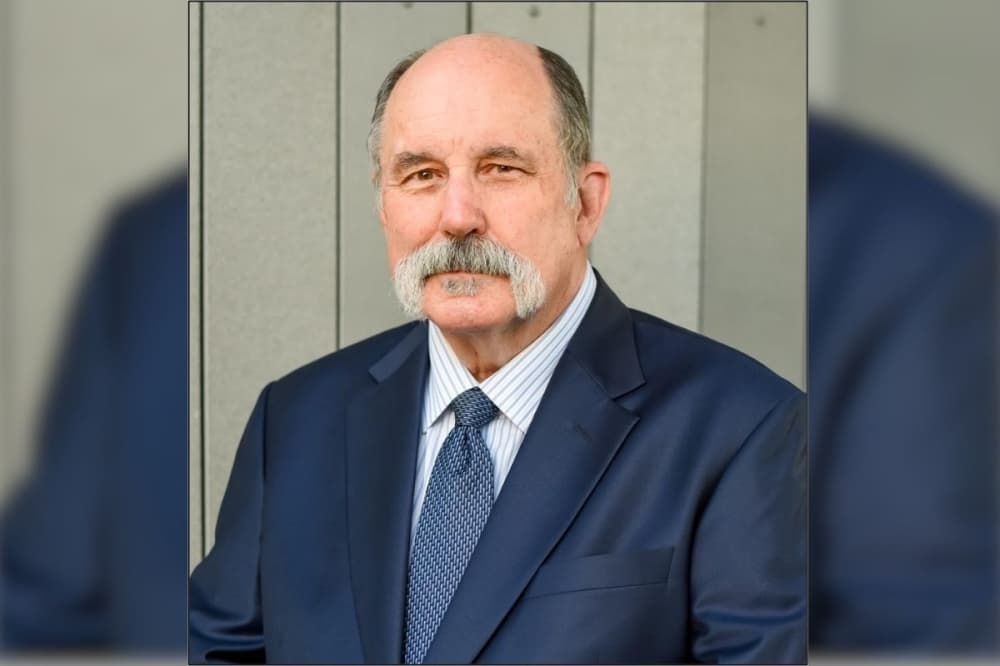
Bob Harvey officially began serving as Magnolia’s city administrator July 14, marking both his first day on the job and his first City Council meeting in the position. City Council extended an offer to Harvey following its June 9 meeting.
Harvey’s professional background includes executive operations, supply chain management, logistics and manufacturing restructuring, contract negotiation and oil and gas operations. He has also served on multiple boards of directors and previously ran for Montgomery County Precinct 2 commissioner.
Harvey spoke with Community Impact about his priorities, Magnolia’s rapid growth, infrastructure needs, staffing changes, the city’s budget and improving communication with residents.
Editor’s note: Harvey’s responses are presented in his words from the interview. Punctuation and paragraph breaks were added for readability. Interviewer filler was removed. The questions follow the order in the interview notes.
What are your top priorities as city administrator, and what do you hope to accomplish in your first year?
I have two top priorities. One of them is internal, and one of them is external. For the internal priority, because of my past history and jobs that I had in my real life before I got into governance, I was a turnaround specialist, so I would go into companies and turn them around.
One of the reasons I was asked to become the city administrator here is because of that background. They've had a lot of excitement here in Magnolia over the past few years. They have very high turnover here, and I build what I call championship teams, and I put the best people I can find in those positions. The objective is to build a very firm foundation for the city of Magnolia, for the employees here, and that turns into good governance and good support for the residents.
The external part is transparency and building a relationship with the community, and primarily with the homeowners here in the city of Magnolia. The reason for that is because when I was in business, the shareholders are people that buy stock in the companies and I've always believed that the citizens and the residents are the people that are buying stock here, the taxpayers.
And so I want to focus on building a relationship with them, and that'll be done primarily through workshops, getting together with HOAs. I've already started this.
The objective is how do we get people that are ‘I don't want you here’, and ‘guess what, we're coming’. How do we get them on the same page? Growth is coming. I believe in strategic, controlled growth, and the best way to do that is to get all three parties, which is the city, the residents and the developers sitting down at a table together and working out their differences.
What interested you in taking the city administrator position in Magnolia?
I was interested in coming to the city of Magnolia because of the mayor, Chris Blair. He and I, you know, knew each other a little bit from when I campaigned. He was a supporter of mine, and when he decided to run for mayor... He said, 'I'm going to win and when I win, I'm going to need someone exactly like you for a city administrator.'
And it kind of took me by surprise, to be honest with you. But we do think along parallel lines, very, very close. And so I've always loved a challenge. I've loved turning things around. So it was fairly easy for me to see somebody who was like-minded about giving back to community and going to work to help him achieve his goals for the city.
Magnolia continues to see rapid growth. What do you see as the city’s biggest challenge in keeping infrastructure and services ahead of that growth?
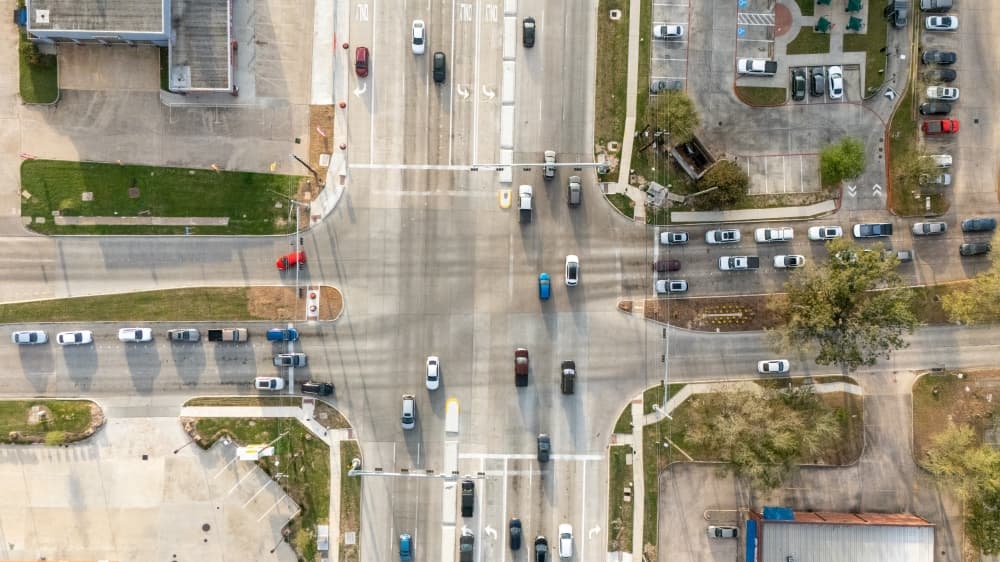
One of the things that's been consistent throughout Montgomery County for the last 15 years for sure has been uncontrolled growth, lack of infrastructure, roads and the traffic and drainage.
Those four issues are primarily the problems that we've got all throughout the county.
And the focus on controlled strategic growth in the city of Magnolia. Magnolia had a program that they put out in 2012, 2013. It was called Magnolia on the Move. They identified all four of those topics, and all four of them had to grow in parallel. They did not. They went nuts on the growth side of it. Infrastructure lagged behind, along with the roads and the drainage, and you ended up having a moratorium on building because we ran out of water.
And so that is the exact opposite you can do. All four of them, you need to do them in tandem because they go hand in hand with each other. It's like anything else. One thing gets out of control, everything else collapses behind it and that's what happened in the city of Magnolia.
Water, wastewater and lift station improvements have been ongoing priorities for the city.
Where do you believe Magnolia’s greatest infrastructure needs are right now?
Other than the delivery mechanisms and finding more water to be able to deliver, the problem is everything that we have was not really well thought out.
In other words, we have water plants that are—we have two different sets of engineers that have been working on them. We don't have the same software. Every single one of our plants that we have out there is using different software, so our software doesn't communicate with each other. We don't use the same valves. We don't use the same pumps.
So what you've got, think about it as it rolls out from there. That means you've got a lot more money tied up in inventory out there because you've got to have four different types of valves out there. Nothing is standardized.
So the biggest problem that we have is actually putting together, as we're doing now, we're putting together well-engineered plants. I like to say we're consistently inconsistent, and what we're going to do is standardize everything.
I'm going through the software programs that we have now. Why do we have to have all these different software products when we can have one program that's going to be able to run the operational side of things, and then we have to have one or two programs that are going to take care of the water plants for their specialties, meter reading and things like that.
How should the city balance continued development with concerns about roads, drainage and existing infrastructure?
That's one of my key issues when I ran a campaign for commissioner. You have to have a vision of where you want to be, how we're going to get there, and then you sit down there and you communicate and talk with the parties that we talked about before.
What's happened prior to that is you had people that were coming in focused on this area and everything, again, got out of balance. So how you keep focused on going forward with all of this is basically sitting down with the developers, as we do right now…
Our response as a city is we need to bring retail into the city. We need the tax revenue to come from that retail. This is going to build. It's right on [FM] 1488. You want to preserve the quality of your neighborhood behind that. The developer wants to put in a nice facility up front so it doesn't look like [FM] 1960. He's got pride in his development.
So we are now sitting down. I've met with everybody individually, the mayor and I, and what we're doing now is we're saying, okay, what is the next step? You're in agreement with how we want to turn the look of the city.
We want to have a standardized look of Old Town Magnolia, not a different type of building here with a different type of aesthetics over here and a different type of a building over here. How do we get the feeling of community if we have something that's recognizable?...
Where it was steel and glass before. Now they've gone, it looks like Old Town Magnolia. The glass and the windows look beautiful, but the Old Town facade with the strolls and the overhanging awnings and things like that brings back the feel of Magnolia of 50 to 80 years ago.
What do you think is needed to bring stability and consistency to City Hall?y Hall?
Great leadership, more than anything else. There's—the folks here have been through an awful lot and they have also had to work with a lot of gaps in our workforce because of people leaving.
Other than that, we train the people, bring the people up, recognize the people, figure out who the leaders are and we move them up from within.
In the case of what we've had here, there was such a hole. Since I've been here, and I've been here two months, we've got a brand new city administrator. We've got a brand new city engineer. We've got a new—we're going to have a new city secretary. We've got a new HR director. We've got a new buildings manager, and it just goes on and on. We've got a new public works administrator, and we have a new permits technician, and we've got an assistant engineer.
Then these people are like-minded. They understood what they were walking into with all of this turmoil. But the bottom line is that they're looking at the leadership. They're saying, We believe in your vision, and they're doing a great job, and everybody is assimilating together and working well together. And that's not necessarily what we've had in the past here, unfortunately.
What is the city’s budget priority?
Two key factors. I call it operational and capital efficiency. It's not the budget itself and pointing out, you know, we're spending too much on police cars. It's not that. It's basically we don't understand how inefficient we are.
The software I mentioned is a classic example. We have a software package that we've been paying on for two years. That software package was never installed.
Okay, so what's my job? Find out about that software package, go back to the people that we've been leasing that off of, and turn around and negotiate an exit on that or a refund on that because it's never been installed.
So it's basically looking at what we're doing, how we're spending our money and getting the biggest bang out of the buck. So it's not keep spending money and buying more things. It's let's get rid of a lot of the stuff that are unnecessary, and that brings value to the taxpayers because basically they're saying, Ah, you are spending our money wisely.
How do you plan to improve communication and transparency between city staff, City Council and residents?
Let's start with the residents because that's kind of the easiest one. It's going to be, it's basically interior, we've got to build confidence in each other, okay? So that's going to be the primary focus.
But externally, transparency, letting people know what we're doing, how we're doing it, when we're doing it, why we're doing it, what all is involved, keeping them engaged with us through workshops, as I mentioned earlier about talking with HOAs and going out and meeting the residents.
Bringing them in and saying, there's two sides of every story, guys. There's actually three. There's yours, there's mine, there's the cold hard truth. But the bottom line on this is they don't understand what the city is facing. They see the face that the city is basically the boogeyman and so what happens is when you educate them and say, here's the issues that we have. As we go through to stabilize this city, we're going to come through the operational and capital efficiencies. We're going to be able to say, here's where we found that we had a mistake and here's how we cleaned it up. What are we doing that for? Because we're saving money. We're saving you tax dollars.
When we educate them with that, how do we do it? We're going to do it through workshops. We're going to do it through—we're upgrading our, or we will be upgrading our website here very shortly. We've already got preliminaries back in on that. We want to go to live streaming of our city council meetings as well.
So changing the attitude, understanding the challenges that we face, okay, where we've got these inconsistencies, listening to what their challenges are.
But they need to understand that the people that they have elected in this last round, particularly the mayor, has a vision of what he wants to bring here. Engaging [residents] and listening to you and dealing with all of your issues is exactly where we want to be.
Are we there now? No. Are we going to be there a year from now? We will definitely be there a year from now.
When you look three to five years ahead, what do you hope Magnolia looks like and what needs to happen now to get there?
The biggest impact we can have on three to five years from now is taking existing decisions that were made, as developments as an example.
We're talking very actively with the big box store that's going in behind Walgreens, okay? That's a 14-year project. They've been talking about that for 14 years. There isn't a deal on that right now. There's a 380 that's put out there and all there is, but no development plan has been approved.
You want to build that here. You're going to build it the way that we want it so that our residents, when they look down the road, everything looks nice. It looks like their home.
Is there anything else that we haven't talked about that you would like to add?
One of the things that I would like to bring up is this. I've really been quite surprised about some of the active social commentary out there on social media that have—they have no knowledge of what's taken place in the past, from the standpoint of we have a huge problem.
We've got people that have been here for about a year, a little over a year, that have been doing an excellent job. You would not believe so by the publicity that comes out. A lot of the results that are being published now are because they weren't published a year ago when they should have been.
So what's happening is we've got people that are putting a lot of time and energy to do the right thing, and then they're being torn to pieces in social media, which I think is very, very unfair. Because you have to understand something. When you bring in brand new people, if you start attacking them immediately, why do they want to work here?
And so, what does bother me is the city and the folks from around here don't understand what the city's facing and won't give the folks the opportunity to provide them with the results that they're requesting.
They're fixing broken stuff. Once they've got it fixed and we're working with better equipment and the rest of it, you'll start seeing improvements in all of these things. Give them a kind word every once in a while instead of sitting back there going, Oh, they did this and they did that. You have no idea what they're fixing out there.
You're not going to find people that are going to run for office if you're constantly tearing them apart. You're not going to find good people that are going to put their reputations out there to help you and then turn around and sit there. Their families read those social media posts.
It's, it's, it's a concerning issue. You can't attract good people if they know that their name is going to be dug through the mud for trying to help.