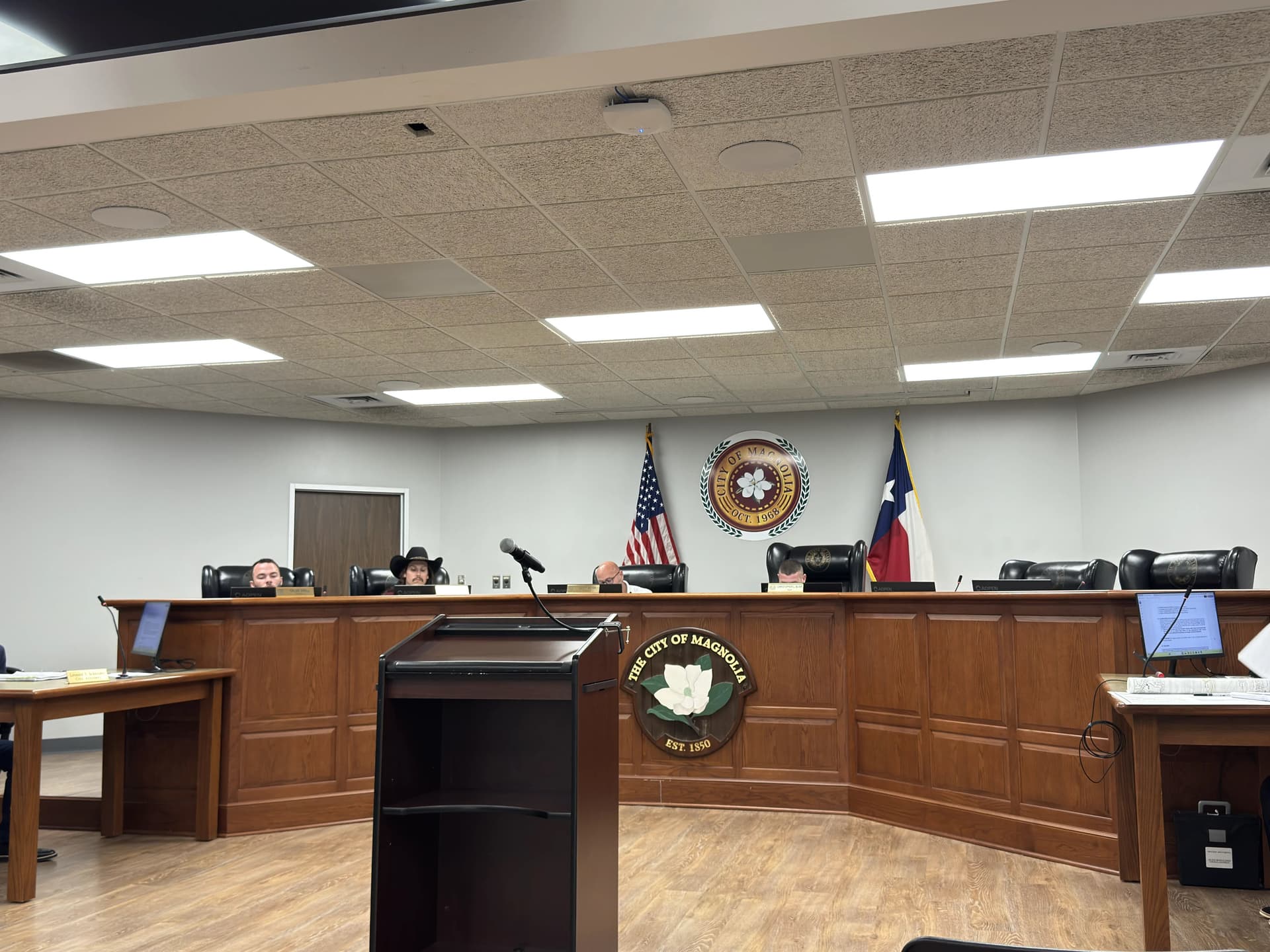
At the Oct. 13 workshop board meeting, the Tomball ISD trustees received an update on the curriculum and student standards for the proposed virtual cybersecurity program.
What parents should know
TISD Chief Academic Officer Michael Webb provided the board with some clarity on how the proposed online program would operate. As previously reported, the proposed program is in partnership with Sam Houston State University and would allow students to earn an associate degree or 60 transferable college credits in cybersecurity or computer science alongside their diploma.
After the initial meeting in September, the district conducted a community survey to gauge the interest of local 7th and 8th grade parents. Among the 494 responses, more than 80% combined were somewhat to extremely interested.
Through the survey, respondents also left various forms of feedback on what they are most interested in and what they'd like to see improved or clarified.
The four most popular areas of parent interest are:
Some aspects of the program that parents have concerns about are the workload and course balancing for students, along with the environment of the virtual academy and whether TISD will be equipped to provide academic support to any students who may fall behind.
Some parents expressed concerns about the commitment required of students for the virtual academy, as well as whether the commitment will affect their children's ability to socialize or participate fully in school clubs or sports.
The framework
To meet workload requirements, students will be required to spend 240 flexible minutes per day on materials or 1-on-1 sessions with administration or tutors. For students to move forward, they must achieve at least 80% unit mastery of the program.
Webb said that each student in the program will have nine professionals on hand to support and guide them through it. These include seven teachers with experience in virtual learning alongside a success coach and a TISD facilitator.
Students would be required to have two 45-minute synchronous meetings with the success coach to receive feedback and motivation. Students who may be falling behind will be required to participate in what's known as a "live interaction."
This is in-person intervention support alongside a group of fellow students focused on whatever issues they need help with.
The specifics
All students in the virtual academy program will be subject to the same standard TISD grading and attendance guidelines. Virtual academy students will also be provided with devices equipped with third-party systems to track engagement and attendance daily.
Webb said that parents will be able to attend quarterly synchronous sessions to help create an ideal virtual environment at home for their children. There will also be a third-party parent portal to allow parents to speak to a TISD facilitator or teacher of record if needed.
The cost
The district has four estimates for the program's revenue depending on the number of students approved.
Webb said that for the first year, if TISD is able to admit 60 students, total revenue would be $372,900, with the district keeping $22,110 after expenses. For a four-year planned budget, TISD would admit 240 students, which would lead to a total revenue of $1.49 million, leaving the district with $237,440 after expenses.
On the other hand, if TISD can only admit 30 students, the revenue would be $186,450, with the district facing a deficit of $22,695. The following year, TISD is estimated to have revenue of $372,900, with the district losing $1,110. Webb said that in this scenario the deficit would be eliminated by years 3 and 4 as the program grows.
None of the proposed revenue, however, includes other financial factors such as CTE weights, JET grants or the LASO grant. It is currently only based on conservative minimum attendance rates.
One last thing
The board will vote on the project's official approval this October and submit its Early College Amendment application to the Texas Education Agency by Dec. 4.