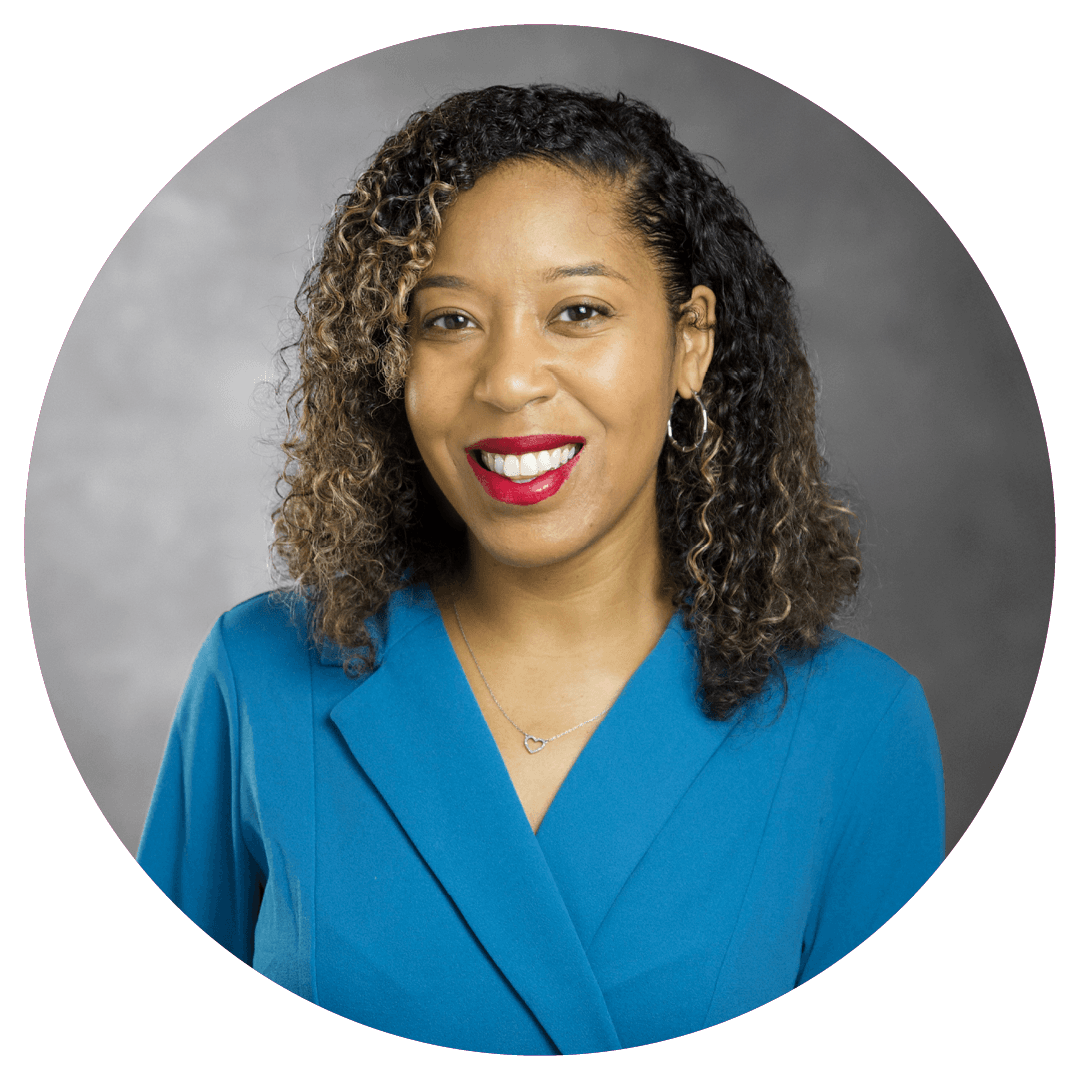
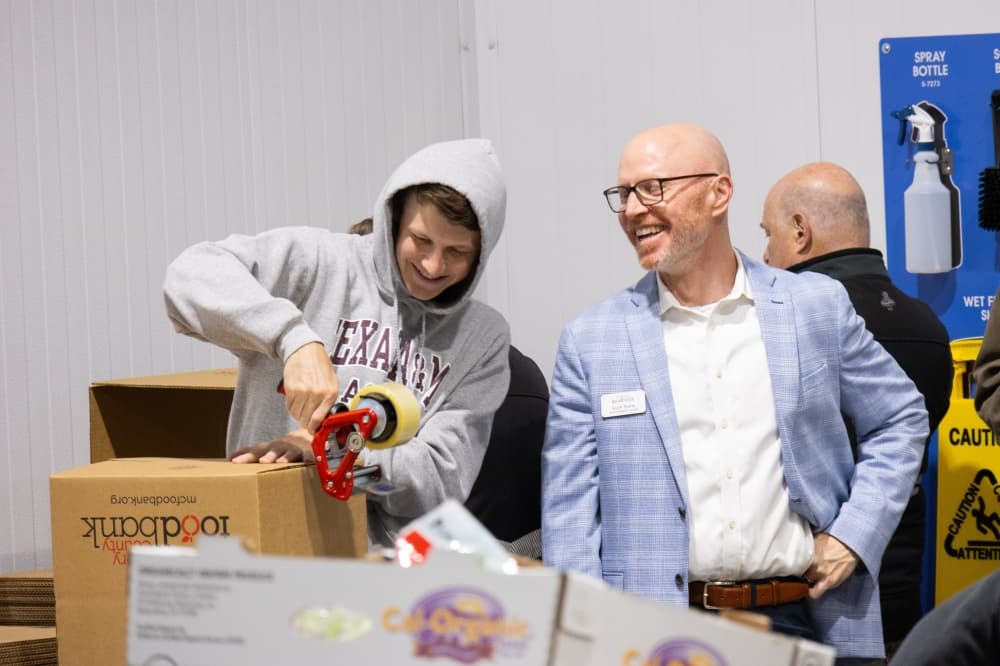
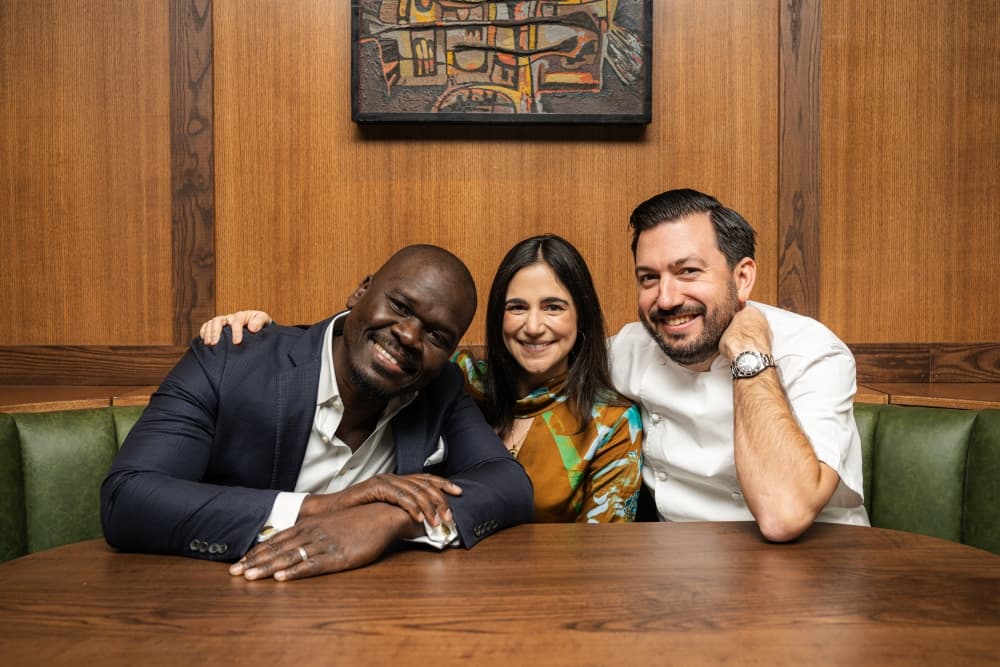
The Montgomery County Food Bank is the largest food nonprofit in Montgomery County, seeking to unite the community to fight hunger. Scott Burns is the president and CEO of the food bank and joined in its mission last year as vice president of growth. He said he hopes to continue the food bank's growth as it continues to serve more than 10 million meals annually.
What led you to get involved with the Montgomery County Food Bank?
I had spent the last 25 years in corporate roles, most recently at NRG ... and I was the vice president of innovation there. During the last several years, I've been kind of praying about how I can take what I've learned and apply it to serving others.
I've been doing a lot of volunteer work on the weekends and at night, but really wanted to spend my days helping to serve others. ... Getting the opportunity to meet different people around the community and ... all four corners of the county has been just phenomenal. And people here are so great and so giving, and so caring of others, it's just been a huge upside to this opportunity that I hadn't expected coming yet.
What are your goals in this new leadership role?
My goals are to kind of continue the really great work and the foundation that's been laid over the last several years between Kristine Marlow, the leadership here and our board of directors. My intention is to continue the momentum. We've continued to grow significantly every year. When I got here in 2024, we had served nine million meals. Last year, we did 10 million meals, and this year we're well on our way.
We’ve exceeded 11 million meals and so I want to continue that momentum. Coming from a corporate and innovation background, [I want to] figure out how we can bring in technology and do more with the incredible team that we have to serve in a more effective way ...
What is the Montgomery County Food Bank’s mission?
Our mission is to unite the community to fight hunger. That's our mission statement. But what it means is that we are kind of the largest food charity or nonprofit here in Montgomery County.
Our goal is to go and source food in the most cost effective way possible for our partner agency. So we not only run a big logistics operation, where we work with organizations like Walmart, HEB, Kroger, Costco, and we source the food from them [that] generally ... would get wasted otherwise. ... We serve as a food rescue organization, getting the food from around the county, we bring it into our warehouse, quickly sort to determine what food is good—and I would say the vast majority of the food is consumable—and we basically are the hub for a network of partner agencies that distributes this food around the county.
What does the need look like in Montgomery County?
We have over 100,000 people in our county that are food insecure and [for] many people, that's a shocking number in Montgomery County because depending on where you live, you may not think you see food insecurity, but it absolutely is here. Whether it's a working family or a senior on fixed income, or a household that looks just fine from the outside, but has had some sort of trial that put them in a situation where they need food. Our goal is to very effectively at a very low cost, run very, very lean, which is something I do want to highlight ... that we emphasize doing this at the lowest possible cost.
How can the community make an impact?
This past year, our mission support rate or our overhead rate was 4%, which, for an organization of our scale, is a great number, because we want to make sure that when people give us, whether it's food or give us donations, we want them to know that it's going towards our mission of providing food to people in need. One is through our brick and mortar pantries, so these are churches and community centers that will take shipments from us.
They have inventory there that they've been distributing. Another way we serve is through our school programs. We have a backpack food program that is generally elementary school kids, where the counselors have identified children that are in need. The other model is for the older kids that are in junior high and high school. Generally, we have pantries where they've set up a pantry there at the school and kids during the day can grab a banana, granola bar ... whatever makes sense.
Schools are [a] very important part of the program, a very eye opening statistic to me as someone new to this space, is that 48% of kids in public schools in Montgomery County are on either free or subsidized meal programs.
Another way we get food out to our neighbors is seniors. So we have many senior apartment complexes around Montgomery County, and in many cases, seniors don't have access to transportation. They are lower income and so we will actually go door to door.
We work with the apartment managers to identify those seniors that are in need, and then we will go do senior distributions. We'll bring the food to the apartment complex and our volunteers will go door to door and with those seniors that are part of the program and give them boxes of food so that they have access to that. We also do mobile markets. ... We partner with Combined Arms and others to do veterans' distributions as part of that community.
What’s next?
Anthropic is the parent company for the Claude AI platform. Claude is a platform that's growing by leaps and bounds, and many corporate corporate clients, because it's designed to help organizations be more effective. We were announced as a part of Claude Corps. They are funding a professional to spend a year here at the food bank and help us get up to speed on AI and [learn] how do we leverage those tools to be more effective in how we do our missions. So we're going to have a person onsite [and] giving us funding for some of the AI tools. They're going to train us as well so that we can use these AI tools for our inventory management, our analysis of our neighbor needs [and for] our logistics, like what's the most efficient truck route. I want any nonprofit dealing with food ... to feel like one integrated organization, right? How can we help?
How can we be an extension of what these other nonprofits are doing? I do think that that collaboration is really important.