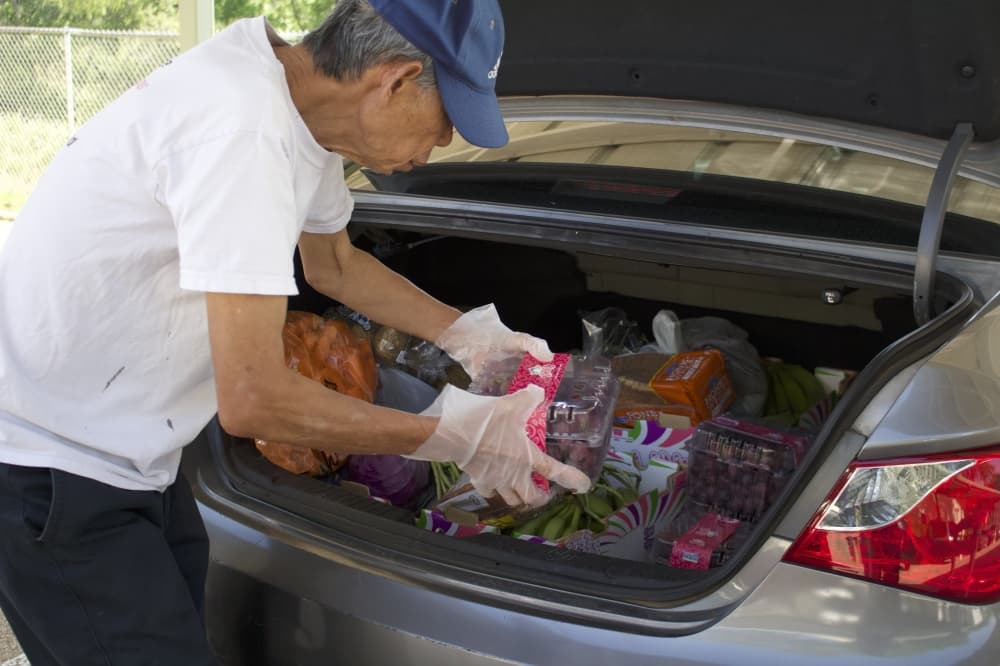
Chang Hzutu, a former chef, has volunteered at the Fort Bend Care Center's food market since it launched last May. The organization was founded in 2018 to help the long-term needs of the community. (Kelly Schafler/Community Impact)
Nonprofit Fort Bend Care Center grew from a group of local church members who wanted to help the community recover from Hurricane Harvey.
The gist
Evolving from a ministry of the Fort Bend Community Church, the organization became an independent nonprofit in March 2018 to meet the community's long-term needs, President Mei Wong said.
The organization currently occupies space in the Missouri City church, where volunteers and staff aim to provide a holistic approach to community development programs. Now, officials plan to fundraise $5.6 million to construct a 14,000-square-foot facility on the church’s property to expand the nonprofit's services.
“Our goal is to build them up and transform them so that they can be healthy, viable and gainfully employed,” Program Director Lily Shih said.
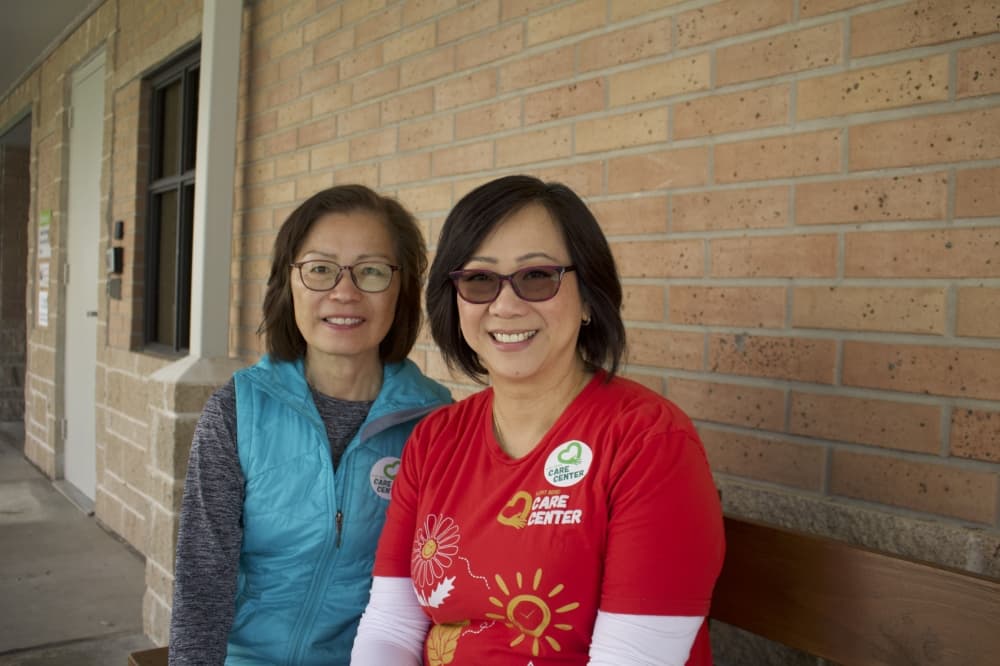
President Mei Wong (left) and Program Director Lily Shih sit outside Fort Bend Community Church after Fort Bend Care Center's April 8 food distribution event. (Kelly Schafler/Community Impact)
What it does
With help of more than 700 volunteers, the faith-based nonprofit provides the Fort Bend County community with literacy, health care, education, spiritual and wellness programs, Wong said. Offerings include:
A weekly food market through a partnership with the Houston Food Bank
Enrichment programs for children
On-site health services from AccessHealth, a federally qualified health center
Adult literacy programs, such as language courses, GED preparation and job skills training
An annual event providing free vision screenings and eyewear for about 700 local students
Vilma Toledo said she began using the center's services six years ago as an English learning student. Now, as one of four part-time staff members, Toledo helps translate for Spanish-speaking clients.
Shih said this feeds into the nonprofit's mission to lean on community strengths and provide asset-based community development.
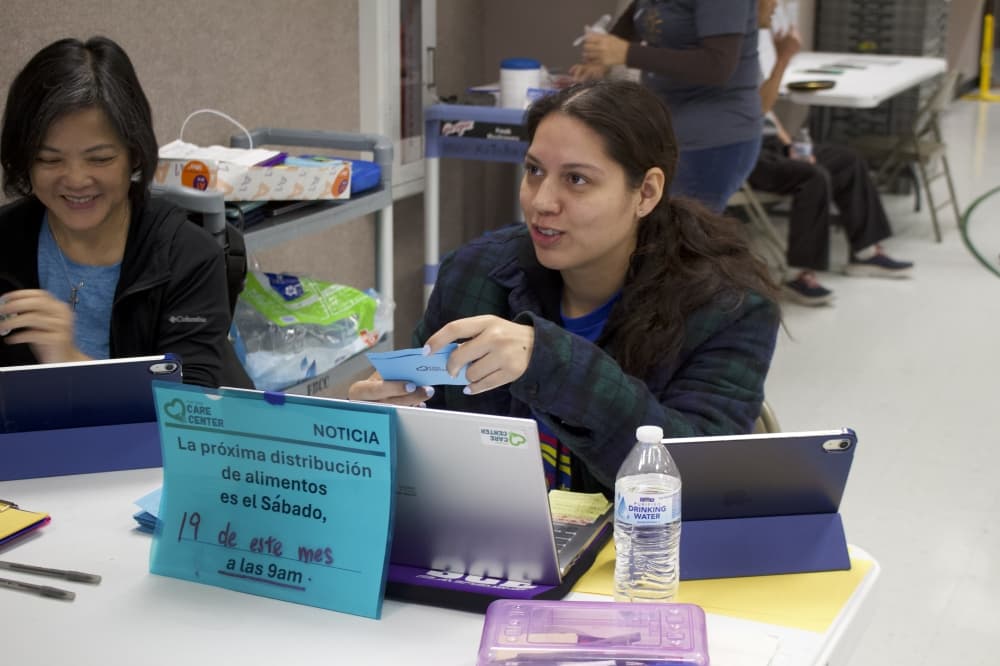
Staff member Vilma Toledo's daughter, Briana Toledo (right), also works at Fort Bend Care Center and helps translate for Spanish-speaking clients. (Kelly Schafler/Community Impact)
Why it matters
The demand for the center's food services has grown over time, leading to the food market increasing in frequency from monthly to weekly, Shih said. About 100 families register weekly for the food market, with the nonprofit distributing over 30,000 pounds of produce monthly.
A bulk of food market clients come from ZIP codes east of Missouri City, such as Fresno, Arcola and Rosharon, Shih said. These areas are considered food deserts, she said, indicating it's difficult for a large percentage of residents to access affordable or quality fresh food.
“They’re everywhere in the county,” Shih said. “There’s pockets in Rosharon, pockets in Richmond and definitely big pockets in East Fort Bend.”
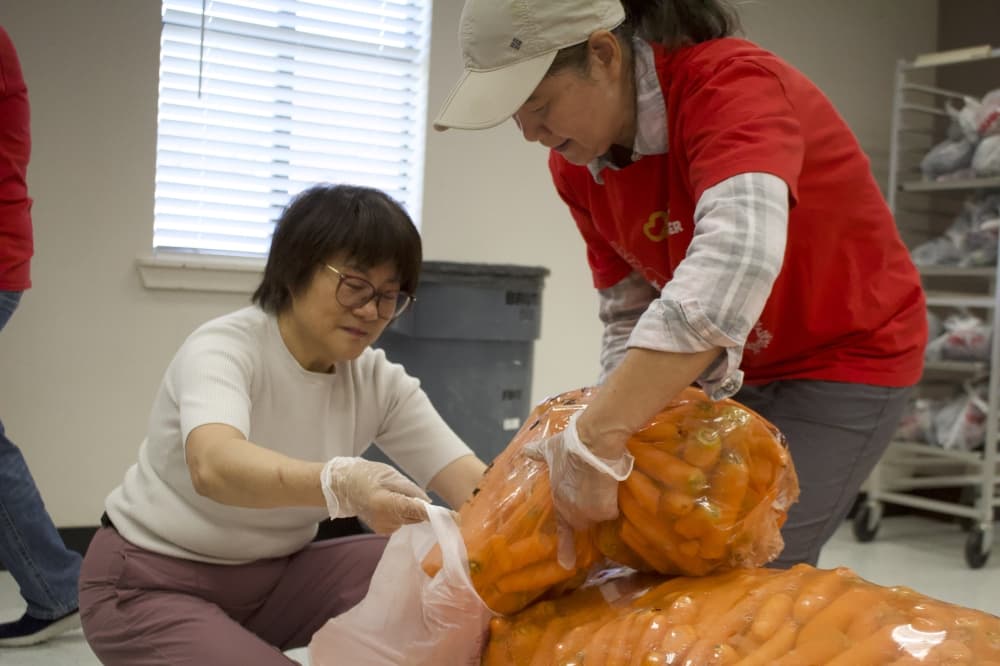
About 100 families register weekly for Fort Bend Care Center's food market. The nonprofit distributes over 30,000 pounds of produce monthly through the event. (Kelly Schafler/Community Impact)
How to help
The organization launched its capital campaign last fall for the new building. This will allow Fort Bend Care Center to expand its services with tuition-free early childhood education courses for ages 3-5, Wong said.
“We realized this is a very important way to prepare the next generation, because for the entry-level kindergarten, actually half of these kids do not meet the standard level to enter kindergarten, so we really want to close that gap,” she said.
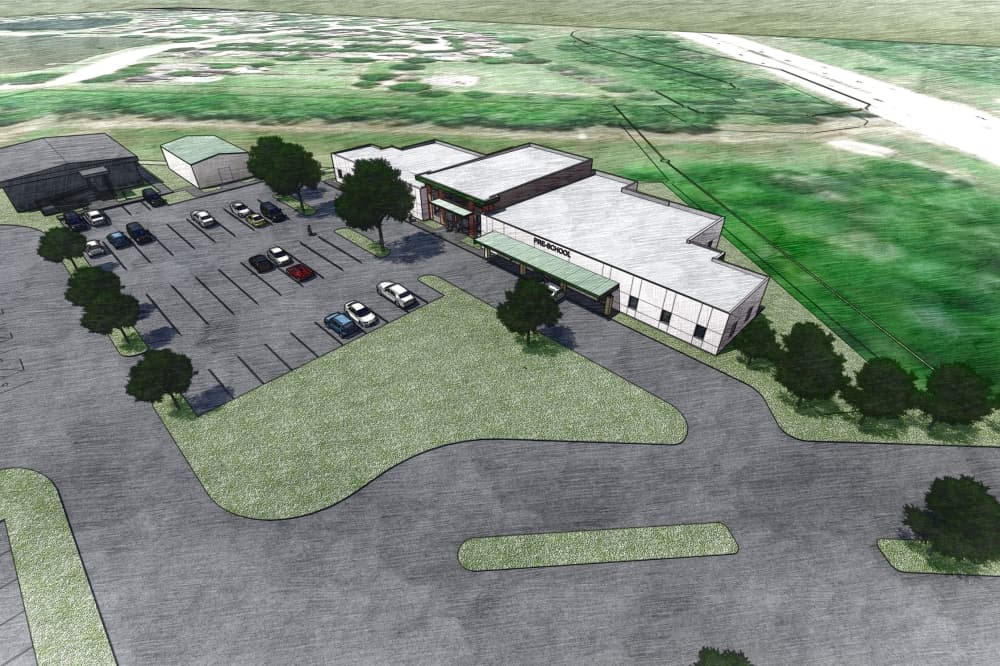
The organization launched a campaign to fundraise $5.6 million to construct a facility on the church’s property. (Rendering courtesy Fort Bend Care Center)
The center will also include spaces for:
Meeting rooms and offices
Adult education courses
A permanent food market with refrigerated items
The nonprofit is accepting donations through its website for the capital campaign, with the goal of starting construction later this year upon reaching 70% of the fundraising goal, Wong said.
“We can be a hub. When they come here, they can get food, they can get health care, they can get education," Shih said. "Now that we're established, we know the spaces we need."