As one of the fastest-growing counties nationwide, Fort Bend County is expected to reach 1 million residents by 2030—with the population potentially doubling to 2 million by 2050.
The growth will build on the county's 169.2% population increase from around 354,000 in 2000 to almost 954,000 in 2025.
What residents need to know
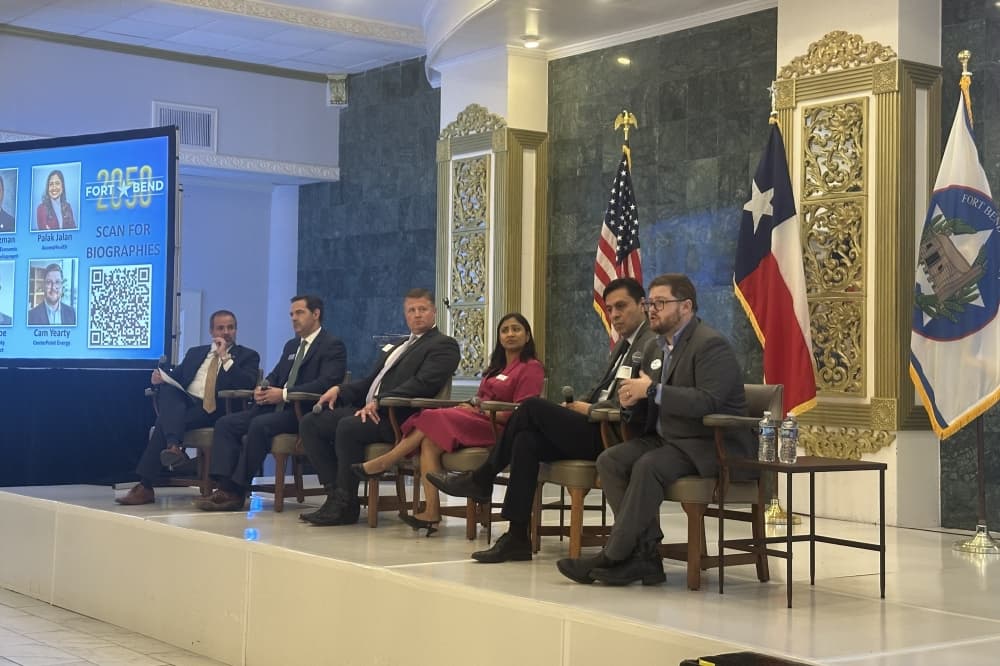
In conjunction with University of Houston associate professor Jeronimo Cortina, the Fort Bend Regional Partnership has released its new Fort Bend 2050 Report, which is aimed at providing a roadmap to guide the county’s preparation for the incoming growth.
Key findings include:
- 109.65% population growth expected by 2050
- 2.67% annual growth in household formation from 2025-30
- 3.01 average household size expected by 2030, down from 3.11 in 2020
- Mobility ranked No. 1 priority for stakeholders
“The report gives us a roadmap of how to meet the growth—it’s not whether we'll grow, we will—it’s whether our roads, water, housing and government can grow with us,” said Tariq Zafar, chair for the Fort Bend Regional Partnership.
The details
The report, which was released May 13, offers planning suggestions for the county in several key areas, including opportunities to shape mobility, housing, infrastructure and public safety as the population climbs from 953,983 in 2025 to over 1 million by 2030.
At the center of the report is maintaining quality of life for the diverse county, Cortina said. Prioritizing that growth is done in a way that prepares the area for future generations to come.
“I think the most important thing we found in the report is that there are a lot of opportunities—a lot of opportunities to do things very differently,” said Cortina, who serves as the director of faculty research initiatives for population health. “And differently not because things in the past were done bad or whatnot ... but being innovative about how you come up with new things, especially public policy.”
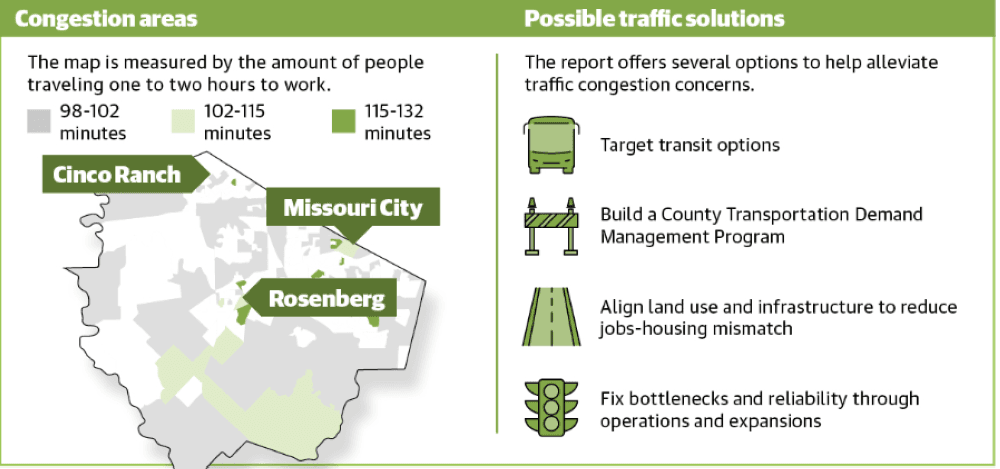
Mobility is considered the county’s core constraint, with congestion and long commutes stemming from housing-led expansion and a transportation system still built for single-occupancy vehicles, per the report.
Other stakeholder priorities include economic development and job creation, population growth and housing needs, water resources as well as energy and power resilience.
Zooming in
The current mobility system leaves residents stuck in traffic and competing with other priorities, including sleep, caregiving, school participation, preventive health and community participation, the report shows.
“We need to start thinking about mobility as an aspect in the sense of how we can improve our transportation system, not only by building more roads but also by thinking outside the box in terms of what else can complement this issue with mobility,” Cortina said.
Diving deeper
Fort Bend County was described by stakeholders as a bedroom-community model, which is a residential area where most residents commute to another area for work.
As the county grows at different rates, Fort Bend has been designated a “two-speed county,” meaning there are different rates of development across the county—with high-growth nodes seeing marginal demand for services and infrastructure rise quickly, while mature neighborhoods shift toward reinvestment and maintenance.
Survey results show stakeholders are looking for a countywide shift to prioritize economic development with:
- Job centers
- Shovel-ready sites for development
- Selective industry strategies with focus on technology, manufacturing, health care and education
Also of note
The housing supply is expected to remain on pace with growth, increasing 14.1% from 2025 to 2030. Owner-occupied housing is set to remain the strongest at 73%-74%, data shows.
However, the report shows housing post-2030 could continue to arrive where infrastructure is the least prepared. To combat this, recommendations include infrastructure alignment to better accommodate this growth before it happens.
What else?
The county will also see an increase in need for water resources and energy resilience, which are items often considered as “growth gates,” according to the report. These are systems that must scale ahead of development rather than being retrofitted.
Key power planning implications include a “power-ready site” program, peak-smart incentives for new and expanding firms, as well as industrial parks with microgrid options, per the report.
Meanwhile, the report shows the county’s approach to water is a strong starting point, with a focus on detention.
Looking ahead
Following the release, Keri Schmidt, president and CEO of the Fort Bend Regional Partnership, said the organization will form working groups composed of both the public and private sectors to promote cross-collaboration as implementation planning begins.
"It’s important to realize that no single city or organization can prepare for the historic growth that we’re about to experience—Fort Bend 2050 creates a framework for moving forward together," Schmidt said.